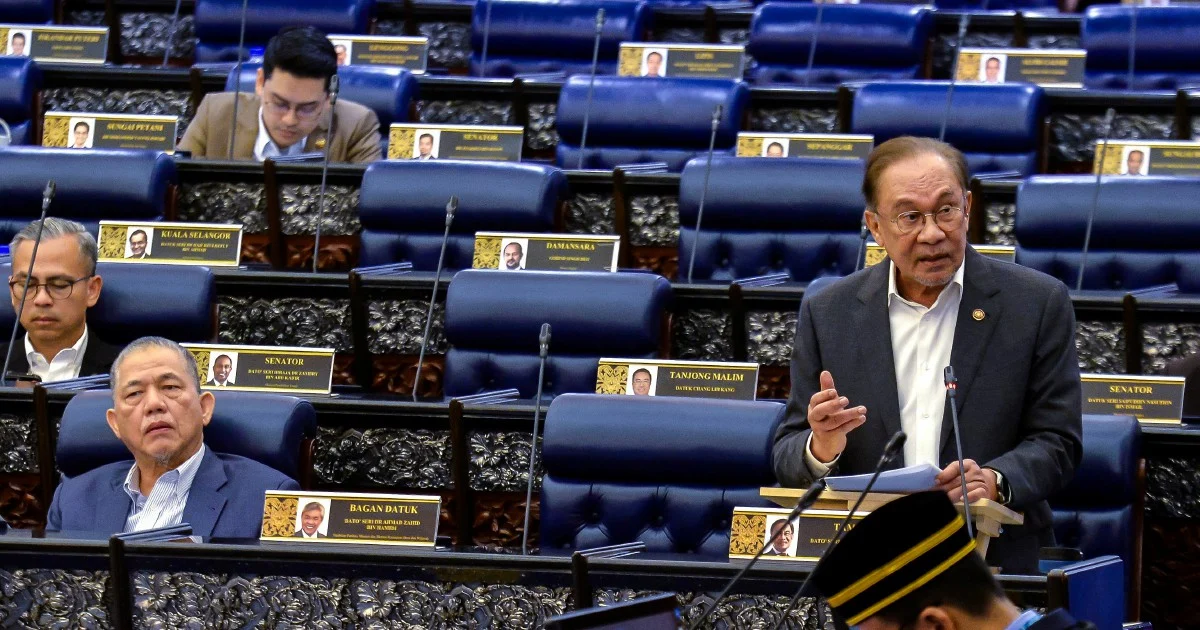
Malaysia's households are carrying unprecedented debt levels, with total outstanding liabilities reaching RM1.73 trillion as of the end of March 2026, Prime Minister Datuk Seri Anwar Ibrahim revealed this week. The figure underscores a critical economic concern: household debt now represents 84.4 per cent of the nation's gross domestic product, a measure that economists carefully monitor to assess the financial health of ordinary Malaysians and the broader economy's stability.
This debt-to-GDP ratio places considerable strain on millions of Malaysian households already grappling with rising living costs, modest wage growth, and elevated financing charges. The scale of the obligation reveals how deeply indebted the nation's consumers have become relative to the country's total economic output, making household finances increasingly vulnerable to economic shocks or abrupt interest rate movements that would tighten borrowing costs further.
The composition of Malaysia's household debt typically centres on mortgages, vehicle financing, and personal loans, though credit card balances and other consumer credit instruments also contribute substantially to the aggregate figure. Many households have taken on multiple layers of obligation simultaneously—securing home mortgages while maintaining car loans and servicing personal debts—creating complex financial structures that can collapse if a primary breadwinner loses employment or encounters unexpected medical expenses.
The timing of this disclosure carries particular significance given Malaysia's economic trajectory and inflationary environment. As the central bank has maintained relatively firm interest rates to combat price pressures, borrowing becomes more expensive, making debt servicing more burdensome for households already stretched thin. This dynamic creates a feedback loop where higher debt-servicing costs reduce disposable income, constraining consumption and potentially slowing economic growth across sectors dependent on domestic demand.
Regional comparisons reveal that Malaysia's household debt-to-GDP ratio, whilst significant, reflects patterns common across Southeast Asia where rapid urbanisation and expanding credit availability have fuelled consumption-driven growth models. However, the sustainability of such debt levels remains contested among economists and policymakers, particularly when wage growth fails to keep pace with debt accumulation and living cost increases.
The household debt surge likely reflects several underlying factors including property market dynamics, where rising house prices have forced Malaysians to borrow larger sums to access homeownership. Additionally, the proliferation of financial technology platforms and easier credit access through online channels has democratised borrowing, allowing consumers with previously limited banking relationships to access loans more readily, though not always through prudent lending standards.
Anwar's disclosure suggests the government is focused on ensuring policymakers and the public understand the scale of household financial commitments. Such transparency, whilst potentially alarming, enables more informed discussions about economic policy, financial regulation, and consumer protection measures. The figure also provides a baseline against which future household debt levels can be measured, allowing observers to track whether the burden is stabilising or continuing to escalate unsustainably.
The implications for monetary policy are substantial. Central bankers must balance the competing pressures of controlling inflation through higher rates against the reality that rate increases worsen the debt servicing burden for already-stretched households. This tension has become especially acute across Southeast Asia, where central banks face similar policy dilemmas between price stability and financial stability objectives.
For Malaysian consumers, the RM1.73 trillion figure serves as a sobering reminder of household vulnerability. Financial advisors increasingly urge Malaysians to consolidate debts, restructure repayment schedules, and build emergency savings buffers—recognising that unexpected disruptions to income could trigger cascading financial difficulties when debt obligations remain this substantial. The psychological weight of carrying such large collective debt also potentially dampens consumer confidence and spending patterns, even among households with adequate income to service current obligations.
Government policy responses will likely include intensified focus on financial literacy programmes, lending standards review, and potentially targeted relief measures for vulnerable household segments. Policymakers must navigate the delicate balance between maintaining vibrant credit markets necessary for economic dynamism and preventing excessive debt accumulation that threatens household stability and macroeconomic resilience.
The 84.4 per cent debt-to-GDP ratio positions household finances as a critical policy consideration alongside traditional macroeconomic indicators. As Malaysia pursues its development objectives and navigates global economic uncertainties, the sustainability of household debt levels will increasingly determine whether the nation can maintain steady growth whilst preserving social stability and financial security for ordinary Malaysians struggling under mounting obligations.

