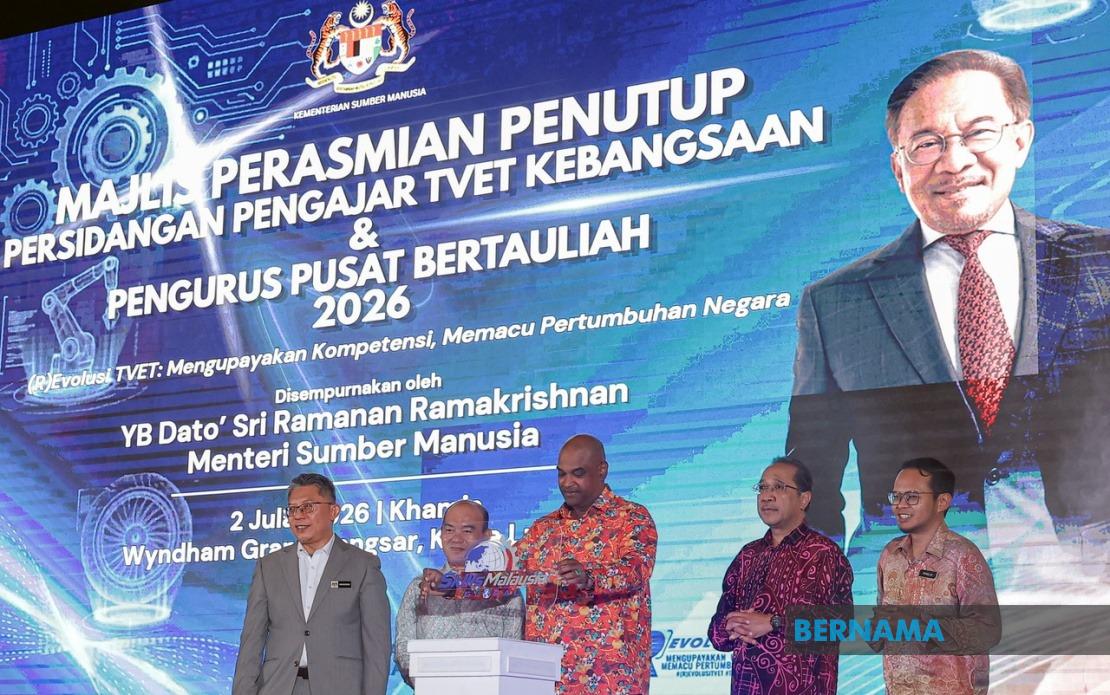
The Ministry of Human Resources has initiated a significant policy shift aimed at easing the financial strain on Malaysia's technical and vocational trainees. Human Resources Minister Datuk Seri R. Ramanan announced the ministry's intention to transform the Skills Development Fund Corporation's RM100 million financing mechanism from a loan-based system into outright grants. The proposal represents a recognition of the genuine hardships faced by individuals pursuing skills development while their earning capacity diminishes.
Ramanan's announcement comes at a critical juncture for Malaysia's workforce development strategy, as the nation grapples with skills shortages in key sectors and the persistent challenge of matching educational outputs with industry demands. The minister indicated that the conversion proposal will be formally submitted to the Cabinet for deliberation, requiring approval from the Prime Minister and senior government officials. This procedural step underscores the financial significance of the initiative, which would redirect substantial resources from loan repayment obligations toward immediate educational accessibility.
The rationale underpinning this policy proposal directly addresses the economic realities of vocational students. Many TVET programme participants are forced to abandon their employment to pursue full-time technical and vocational training, creating a temporary but substantial income gap. Compounding this loss of earnings through mandatory loan repayments creates a dual financial squeeze that discourages capable individuals from upgrading their skills. By converting these obligations into grants, the government seeks to remove this barrier and facilitate greater participation in skills development programmes across the nation.
Ramanan's comments were delivered during the opening of the National TVET Instructors and 2026 Accredited Centre Managers Conference in Kuala Lumpur, where he articulated a broader vision for vocational education's pivotal role in national development. He emphasised that TVET has transcended its traditional positioning to become a cornerstone of Malaysia MADANI's human capital strategy. This reframing reflects a fundamental shift in policy emphasis, positioning vocational pathways not as secondary alternatives but as essential components of economic upgrading and talent development.
The minister characterised technical and vocational education as a transformative mechanism for addressing skills misalignment within the economy. By ensuring that workers possess capabilities directly aligned with employer requirements, the nation can theoretically eliminate the paradox of simultaneous unemployment and labour shortages. This approach also supports Malaysia's aspiration to establish itself as a Regional Innovation Hub, positioning the country as an attractive destination for multinational enterprises seeking a skilled, adaptable workforce capable of engaging in high-value manufacturing and service sectors.
Concrete numerical targets underscore the ambition behind this policy framework. Ramanan outlined a specific economic objective of achieving a gross national income per capita of approximately RM77,200 annually. This target demonstrates that skills development is strategically linked to income generation and broader prosperity goals. The correlation between vocational capability and earning potential forms the economic logic justifying government investment in removing financial barriers to TVET participation.
Complementing the grant conversion initiative, the ministry unveiled an Internationalisation Action Plan spanning 2026 to 2030. This forward-looking framework is structured around six strategic pillars designed to enhance Malaysia's standing in the global skills landscape. The plan prioritises achieving international recognition for Malaysian vocational credentials, which currently lacks the cross-border acceptance that characterises tertiary qualifications. Particular emphasis is placed on upgrading the Centre for Instructor and Advanced Skill Training into a genuinely world-class institution capable of delivering instruction matching international benchmarks.
A critical dimension of the internationalisation strategy involves harmonising Malaysia's National Occupational Skills Standards with international equivalents. This technical alignment would enable Malaysian Skills Certificate holders to gain professional recognition from foreign bodies, substantially enhancing their employment mobility. Such recognition would transform the Malaysian SKM into a globally portable credential, opening pathways for qualified technicians to pursue employment or advancement opportunities across regional and international labour markets.
The governance framework underpinning this initiative reflects contemporary developmental thinking. The plan explicitly incorporates Sustainable Development Goals considerations alongside Environmental, Social and Governance principles and Diversity, Equity and Inclusion commitments. This multi-dimensional approach signals government recognition that vocational development cannot operate in isolation from broader sustainability and social objectives. The integration of these frameworks suggests a maturing policy approach that connects skills development to responsible business conduct and equitable opportunity creation.
For Malaysian practitioners and policymakers, the proposed grant conversion addresses a structural challenge that has historically constrained vocational participation rates. Unlike bachelor-degree graduates who often progress into employment with premium salaries justifying education loan repayment, many TVET graduates enter markets offering modest initial remuneration. The loan burden thus represents a proportionally heavier obligation, potentially deterring qualified individuals from pursuing vocational pathways. Converting PTPK financing to grants removes this disincentive while signalling genuine government commitment to skills-based development.
Regional implications merit consideration as the Malaysian initiative unfolds. Southeast Asian nations increasingly compete for skilled labour and face similar skills-mismatch challenges. Malaysia's approach to funding vocational development and internationalising its credentials could establish a template that other ASEAN members examine. The success or difficulties encountered in implementing the grant conversion would provide instructive lessons for regional economic policymakers wrestling with similar constraints.
The ultimate effectiveness of these initiatives depends substantially on implementation execution. Converting loans to grants requires budgetary reallocation and potentially difficult Cabinet-level negotiations about fiscal priorities. Simultaneously, internationalising TVET credentials demands substantial institutional investment and sustained engagement with international accreditation bodies. These factors create execution risks that could delay or modify the ambitious timeline Ramanan outlined. Nonetheless, the policy direction signals serious governmental intent to address vocational education constraints.

