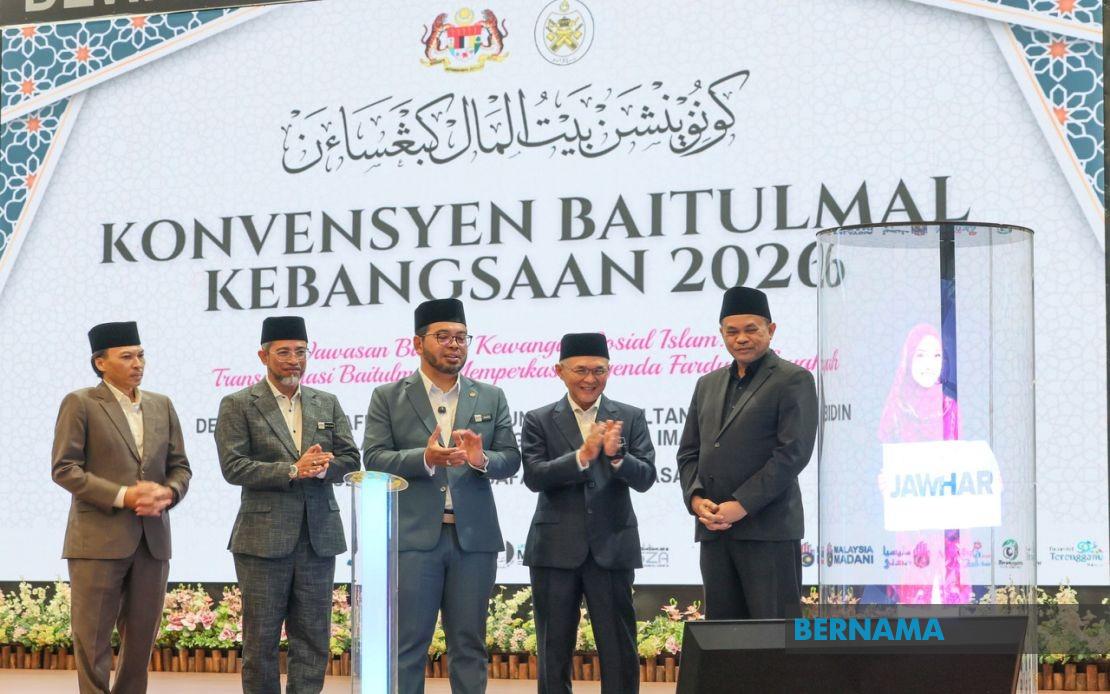
The Department of Waqf, Zakat and Haj has convened Malaysia's premier assembly on Islamic social finance, bringing together more than 400 stakeholders across the nation's religious and financial sectors to reimagine how Baitulmal institutions can better serve Muslim communities in an increasingly digital world. The National Baitulmal Convention 2026, which concluded in Kuala Nerus this week at Universiti Sultan Zainal Abidin, represents the sixth iteration of a biennial gathering that has become a crucial forum for setting strategic direction across Malaysia's Islamic charitable infrastructure.
The scale and composition of this year's convention underscores the sector's growing complexity and ambition. Representatives from State Islamic Religious Councils, zakat and waqf management bodies, government agencies and academic institutions participated in intensive discussions about the future trajectory of Baitulmal operations. The emphasis placed on assembling such a diverse delegation—spanning policymakers, practitioners and scholars—reflects recognition that meaningful transformation in Islamic social finance requires alignment across multiple institutional layers and expertise domains.
Minister in the Prime Minister's Department Zulkifli Hasan articulated a vision that transcends traditional Baitulmal functions. Rather than confining these institutions to merely distributing alms and charitable resources, he positioned them as engines of economic generation capable of catalysing wealth creation and entrepreneurial activity within Muslim communities. This conceptual reframing carries significant implications for how Malaysia structures its Islamic social safety net, moving beyond passive welfare toward active economic participation and capacity building.
Technology forms the cornerstone of this envisioned transformation. The minister explicitly highlighted the integration of artificial intelligence, blockchain systems and digital platforms as essential tools for modernising Baitulmal service delivery. These technologies promise substantial efficiency gains—streamlining fund collection, reducing administrative overhead and enabling real-time tracking of resource allocation. For Malaysian policymakers, such digital infrastructure also addresses long-standing concerns about transparency and accountability within charitable institutions, potentially enhancing public trust.
The convention's thematic focus on "New Vision for Islamic Social Finance" signals a departure from historical approaches that often treated Baitulmal functions as separate from mainstream economic policy. By explicitly linking these institutions to broader development objectives, Malaysian authorities are positioning Islamic social finance as integral to national economic strategies rather than peripheral welfare programming. This integration could yield significant dividends as the country navigates post-pandemic economic recovery and addresses persistent income inequality.
DATUK Mohd Zaidi Ramli, directing JAWHAR's operations, emphasised capacity building as equally important as technological investment. The two-day convention incorporated presentation sessions, forums and knowledge-sharing activities designed to elevate professional standards among institutional managers. This focus on human capital development acknowledges that even sophisticated technological systems remain only as effective as the personnel operating them. Regional best practices and international experiences were shared to help Malaysian Baitulmal operators identify innovations applicable to local contexts.
The convention's discussion of competitive financial instruments reflects growing recognition that traditional charitable models may prove insufficient for addressing contemporary social challenges. Baitulmal institutions are exploring structured microfinance products, cooperative models and investment vehicles that generate returns while serving poorer communities. Such diversification of financial tools allows these organisations to respond more dynamically to economic pressures facing the Muslim population, from rural agricultural challenges to urban unemployment and underemployment.
For Southeast Asian observers, Malaysia's Baitulmal transformation offers instructive parallels. Several nations across the region manage similar Islamic charitable networks, yet face comparable challenges around efficiency, transparency and relevance to contemporary economic realities. The pathways Malaysia identifies through digital integration and innovative financing could provide useful reference points for countries seeking to modernise their own Islamic social welfare systems without abandoning religious principles or institutional heritage.
The broader policy implications extend to Malaysia's positioning within global Islamic finance markets. As the country establishes itself as a leading hub for Islamic banking and capital markets, aligning Baitulmal operations with international standards and best practices strengthens overall sector credibility. Potential investors and international partners view institutional coherence and technological sophistication as indicators of market maturity and governance quality.
State-level coordination emerges as another critical dimension acknowledged through the convention's structure. Baitulmal operations vary significantly across Malaysian states, reflecting different economic conditions, governance capacities and community needs. Creating forums where state-level practitioners share experiences and align approaches reduces institutional fragmentation and enables smaller states to benefit from innovations pioneered elsewhere. This horizontal collaboration mechanism complements existing vertical oversight structures.
The gathering's emphasis on synergy across previously siloed functions—combining waqf management, zakat administration and general resource allocation—suggests movement toward more integrated Islamic social finance ecosystems. Rather than treating these functions as discrete operations, the convention promoted understanding of how they can reinforce one another and address overlapping social needs more comprehensively. Such integration could eliminate duplications and enable more efficient resource deployment.
Looking ahead, the convention's outputs will likely influence regulatory frameworks and institutional guidelines governing Baitulmal operations throughout Malaysia's thirteen states and federal territories. Consensus recommendations emerging from such assemblies typically inform policy documents and operational standards issued by JAWHAR and state religious councils. Thus the deliberations conducted in Kuala Nerus carry weight far beyond the immediate gathering.
Ultimately, Malaysia's National Baitulmal Convention represents an institution taking deliberate steps toward modernisation while remaining anchored in Islamic principles and community service objectives. The integration of digital technologies, exploration of innovative financing instruments, and emphasis on institutional capacity all signal commitment to ensuring Islamic social finance remains relevant and impactful as the nation navigates complex economic transitions.

