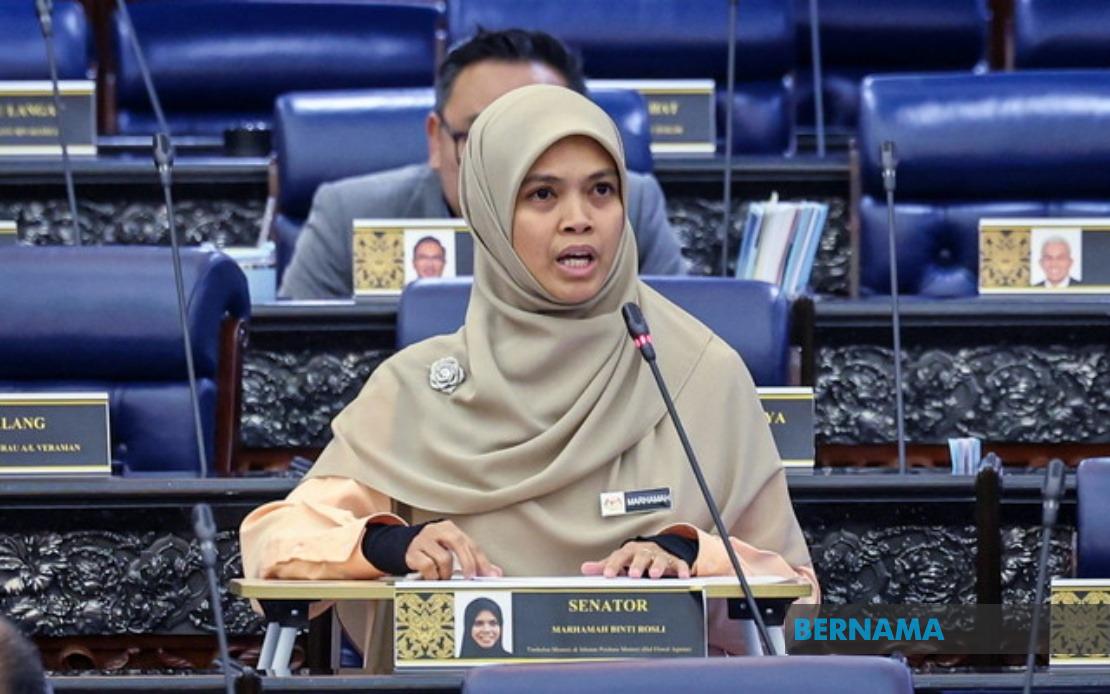
Malaysia's waqf sector is experiencing a significant expansion as the Jabatan Wakaf Zakat dan Haji (JAWHAR) accelerates 19 major development initiatives valued at RM321 million across the country. Deputy Minister in the Prime Minister's Department (Religious Affairs) Senator Marhamah Rosli announced the comprehensive portfolio during parliamentary proceedings on July 29, highlighting the federal government's strategic commitment to unlocking the potential of Islamic endowment assets for broader social benefit.
Waqf—the Islamic concept of donating assets for perpetual charitable use—has emerged as a critical instrument for addressing social development needs in Malaysia. The expanded project slate represents a deliberate effort to modernise how waqf funds are managed and deployed, moving beyond traditional applications toward infrastructure and community-focused initiatives. Each of the 19 projects has been specifically designed to generate measurable socioeconomic impact across multiple states, demonstrating a shift toward professionalised waqf governance and strategic asset utilisation.
Marhamah's response to questions raised by Senator Baharuddin Ahmad underscored JAWHAR's central role in coordinating waqf management and development across the country's diverse religious administrative landscape. The agency functions as the primary liaison between federal authorities and the various State Islamic Religious Councils that oversee waqf assets within their jurisdictions. This intermediary function is essential given Malaysia's federal structure, where Islamic affairs remain largely a state matter but require coordinated national frameworks to achieve systemic efficiency.
A cornerstone development is the forthcoming National Waqf Master Plan spanning 2025 to 2030, which represents the first comprehensive, multi-year strategic blueprint for the sector. Marhamah confirmed that despite not yet being formally launched, the plan has already been circulated to all State Islamic Religious Councils nationwide for consultation. Every council has signalled acceptance and backing for the framework's direction, a significant achievement given the need to align diverse state interests under a unified vision.
The PIWN 2025–2030 is scheduled for formal presentation to two critical decision-making bodies this year: the National Council for Islamic Religious Affairs Malaysia (MKI) and the Cabinet. These approvals will provide the political and administrative backing necessary for implementation across all states. The plan's development reflects recognition that waqf assets, many of which remain underutilised or suboptimally managed, represent untapped potential for addressing housing shortages, healthcare provision, education, and poverty alleviation.
Beyond the comprehensive master plan, operational results from the Yayasan Waqaf Malaysia (YWM)—the foundation established to mobilise waqf resources—demonstrate the tangible benefits already flowing from enhanced management practices. The foundation has distributed RM4.38 million across 92 specific programmes and initiatives, a sum that may appear modest but has reached 53,748 individuals from 8,232 households. This distribution pattern reveals the sector's capacity to address grassroots needs when properly coordinated and resourced.
The social reach of these programmes holds particular significance for Malaysia's lower-income communities. By channelling waqf capital toward vulnerable populations, the initiatives align with Islamic principles of social welfare while addressing contemporary development challenges. The household-level data—nearly 8,300 families benefiting—suggests targeted programming rather than scattered assistance, indicating improved professional management of fund allocation and impact tracking.
For Malaysian policymakers, the expansion of waqf-financed projects addresses a persistent challenge: how to mobilise private charitable assets for public good without increasing government expenditure. Waqf presents a culturally embedded mechanism aligned with Islamic values that donors already understand and trust. The RM321 million commitment by JAWHAR therefore represents not merely government spending but activation of funds that donors have already committed for perpetual social benefit.
Regional implications extend beyond Malaysia's borders. As a Muslim-majority nation with a well-developed Islamic financial infrastructure, Malaysia's approach to waqf modernisation influences practices across Southeast Asia. Countries including Indonesia, Brunei, and Thailand observe Malaysian regulatory innovations and management frameworks. Successful implementation of the National Waqf Master Plan could establish a replicable model for harnessing Islamic endowment assets in diverse economic contexts.
The coordination mechanism embedded within this initiative—with JAWHAR functioning as the nodal agency and state councils retaining operational autonomy—reflects a sophisticated understanding of Malaysia's constitutional federalism. Rather than imposing centralised control, the framework encourages voluntary harmonisation around common strategic objectives. This approach respects state prerogatives while creating systemic coherence, a delicate balance critical for policies affecting religious matters in Malaysia's plural society.
Implementation of these 19 projects and the broader master plan will require sustained attention to transparency, fund governance, and impact measurement. Malaysian civil society and academic institutions have growing capacity to evaluate waqf programme effectiveness, which should complement government accountability mechanisms. The combination of enhanced oversight and improved professionalism in waqf administration could transform the sector from a marginal component of social financing into a mainstream development instrument.

