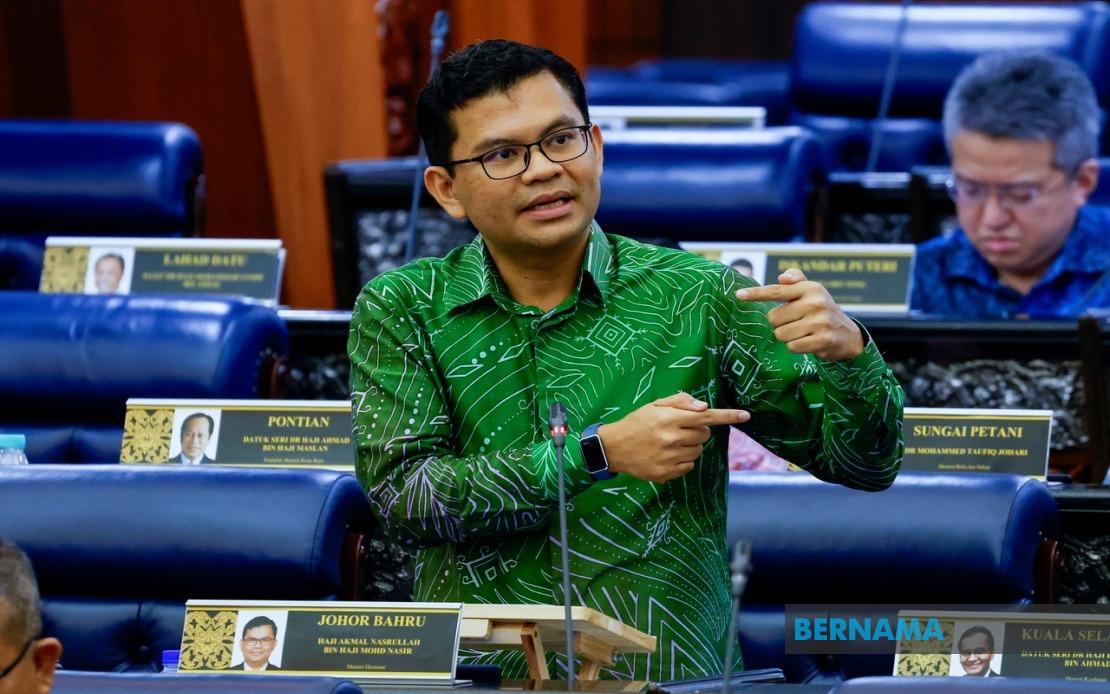
Malaysia's employment landscape has demonstrated surprising resilience through the opening months of 2026, according to Economy Minister Akmal Nasrullah Mohd Nasir, who dismissed concerns about deteriorating job prospects despite global economic headwinds and energy sector volatility. Speaking during parliamentary question time on June 25, Akmal Nasrullah characterised the situation as stable and manageable, contrasting sharply with fears raised by opposition lawmakers who questioned whether the government possessed adequate mitigation strategies under the National Economic Action Council framework to combat rising redundancies and corporate contraction.
The statistics supporting this assessment are striking when examined closely. The number of unemployed individuals stood at merely 6,197 as of June 22, representing just 0.04 per cent of the nation's working population. This figure marks a notable improvement when compared with May 2026, when 7,766 Malaysians had lost employment—a differential that suggests momentum is moving in the government's favour. While the absolute numbers remain small relative to the overall workforce, the month-on-month trajectory carries significance for policymakers seeking evidence that their economic management is producing tangible results rather than merely stabilising decline.
The broader labour force metrics paint a picture of a market gradually expanding rather than contracting. By April 2026, Malaysia's total labour force had climbed to 17.33 million individuals, whilst the count of those in paid employment reached 16.82 million. These expanding figures suggest that economic activity, despite acknowledged international uncertainties, continued generating sufficient demand for additional workers. The labour force participation rate held steady at 70.9 per cent between March and April, a consistency that Akmal Nasrullah highlighted as evidence of underlying economic stability. For Malaysian observers accustomed to volatility following previous regional crises, this flatline reading in participation rates offers reassurance that the workforce itself is not withdrawing from the job market in discouragement.
However, the unemployment rate did edge marginally higher, rising from 2.9 per cent in March to 3.0 per cent in April, affecting approximately 511,800 people. Whilst this movement might appear concerning in isolation, Akmal Nasrullah contextualised it within international standards, noting that the rate remains comfortably beneath the four per cent threshold economists typically associate with genuine full employment conditions. Such positioning—above traditional frictional unemployment but below alarm levels—suggests the economy was still generating enough positions to absorb fresh entrants and displaced workers, albeit with less vigour than during pre-crisis periods.
The most compelling narrative emerging from the minister's parliamentary statement centres on government job placement initiatives, which have demonstrated momentum that extends beyond merely preventing deterioration. The MYFutureJobs portal, a centralised digital platform designed to facilitate matching between unemployed workers and available positions, recorded a striking 55 per cent surge in placements when comparing April figures against June 12. Specifically, placements climbed from 12,119 in April to 18,756 by mid-June, suggesting that active government intervention and targeted redeployment programmes were translating policy into concrete employment outcomes.
These placements aggregate to a total of 62,644 job matches across 2026 to that point in June, incorporating both direct portal placements and beneficiaries channelled through the Employment Insurance System. For Malaysian policymakers and regional observers, this statistic carries implications beyond the headline number. The acceleration in placements indicates that government infrastructure for matching job seekers with employers had matured sufficiently to handle increased throughput, and that both workers and businesses were engaging meaningfully with official channels rather than relying solely on informal networks.
Akmal Nasrullah articulated a nuanced argument about the value of government intervention beyond immediate income support. His remarks suggested that programmes like MYFutureJobs functioned not merely as temporary relief valves but as mechanisms facilitating workers' return to productive employment with minimal transition periods. This distinction matters significantly for assessing economic resilience. A market that temporarily subsidises unemployed workers whilst they remain idle presents a different risk profile than one actively redeploying labour toward emerging opportunities. The 55 per cent acceleration in placements hints that the latter dynamic—faster workforce circulation—was occurring.
The context framing these statistics involved legitimate parliamentary concerns about broader economic vulnerabilities. Opposition member Mohd Syahir Che Sulaiman's question explicitly referenced the energy sector crisis and attendant global economic uncertainty as catalysts for potential job losses and corporate contraction. These concerns reflected genuine structural challenges: Malaysia's energy sector had experienced significant disruption, and international growth forecasts remained subject to considerable revision. Against this backdrop of acknowledged systemic stress, the government's presentation of stable and declining unemployment figures carried implicit claims about effective crisis management.
For Malaysian businesses and workers, these labour market indicators hold practical significance beyond political messaging. Employers evaluating hiring decisions in uncertain times seek evidence that labour markets possess depth and liquidity. The sustained level of job placements and the modest unemployment rate suggest that workers displaced from declining sectors could realistically anticipate finding new positions within reasonable timeframes. This prospect, in turn, influences consumption and investment decisions throughout the economy. Workers confident in their employment prospects maintain spending; investors believing in labour market flexibility feel more comfortable committing capital to new ventures.
Regional comparisons add texture to Malaysia's employment narrative. Across Southeast Asia, several economies experienced considerably higher unemployment following economic disruptions, particularly in tourism-dependent nations and those exposed to energy sector volatility. Malaysia's capacity to maintain unemployment below one per cent of the workforce whilst sustaining labour force growth positioned the country favourably within regional rankings. This relative performance matters for foreign direct investment decisions, as multinational corporations assess regional talent availability and labour market stability when allocating capital across Southeast Asia.
The MYFutureJobs platform itself represents an important structural evolution in Malaysian labour market infrastructure. Digital matching systems have proven effective in developed economies at reducing search times and frictional unemployment. The 55 per cent growth in placements suggests the platform was gaining traction among both employers and job seekers, potentially indicating maturation of digital adoption in Malaysia's employment ecosystem. This technological shift carries long-term implications for economic flexibility and productivity, extending beyond immediate crisis management.
Looking forward, the sustainability of these trends will depend on whether the energy sector stabilises and whether global economic uncertainties resolve or deepen. Should international demand weaken substantially, Malaysia's labour market advantages in sectors like semiconductors, petrochemicals, and financial services could face pressure. Nevertheless, the data presented by Akmal Nasrullah through June 2026 provided empirical ground for cautious optimism. Unemployment trending downward, placements accelerating, and labour force participation remaining steady offered evidence that Malaysia's employment system possessed sufficient flexibility to weather significant economic stress whilst continuing to facilitate productive work-matching between businesses and workers.

