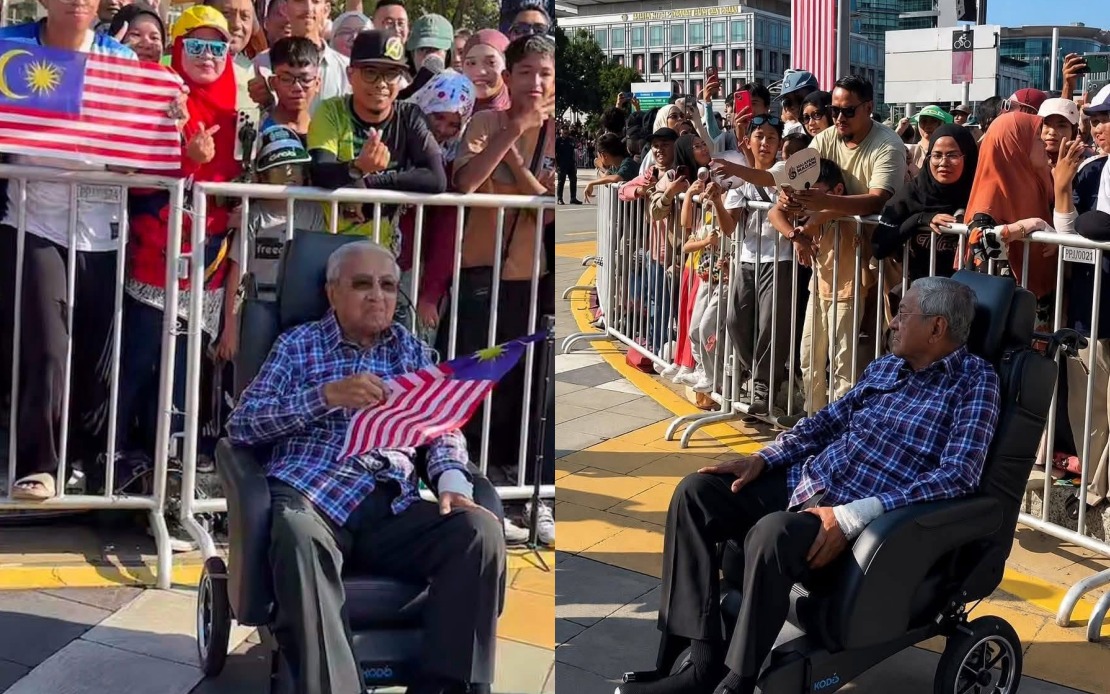
The Malaysian government has moved to clarify the protocol governing invitations extended to former prime ministers for National Day celebrations, confirming that such attendance is no longer granted by default following procedures established in 2018. The National Day Celebration 2026 Secretariat issued the statement after public attention focused on former prime minister Tun Dr Mahathir Mohamad's presence at the morning observance held at Dataran Putrajaya on August 31.
The clarification represents a significant evolution in how Malaysia's government manages ceremonial invitations to its highest-ranking former leaders. Rather than extending blanket invitations to all living former prime ministers as a matter of courtesy and tradition, the government now operates under a more selective framework that treats each case individually. Datuk Abdul Halim Hamzah, chairman of the 2026 National Day and Malaysia Day Celebration Working Committee and secretary-general of the Communications Ministry, explained that the Prime Minister's Department handles all such protocols through its designated Protocol and International Conference Secretariat Division, known locally as BIUPA.
Under the current system, former leaders wishing to attend major federal government celebrations must submit a formal application. This requirement stands in contrast to earlier decades when attendance by former premiers was often considered an automatic entitlement reflecting their historical service. The shift toward discretionary invitations suggests a deliberate recalibration of state ceremonial practices, potentially reflecting broader changes in how Malaysia's government views the role of former office-holders in official functions.
Abdul Halim emphasized that the absence of automatic invitations does not amount to a prohibition on attendance by former leaders. Rather, it establishes a framework where interested parties can apply through established channels, and their requests will be evaluated according to formal procedures governing official invitations. This middle-ground approach maintains respect for former prime ministers' status while asserting government control over the scope and nature of participation in state events.
The specific case of Tun Dr Mahathir's attendance proved relevant to the broader clarification. Prior to the August 31 celebration, the Prime Minister's Office had received an application from the former leader seeking approval for the Overseas Rest Facility. According to the information provided, Dr Mahathir had indicated that he would be traveling abroad during the period from August 28 to 31, 2026. Prime Minister Datuk Seri Anwar Ibrahim approved this application in accordance with provisions governing remuneration and entitlements for former prime ministers contained in the Members of Parliament (Remuneration) Act 1980, commonly cited as Act 237.
This legislative framework underpins the rights and entitlements extended to former prime ministers during their post-tenure years. The Remuneration Act establishes the formal basis for various considerations extended to former office-holders, including provisions related to overseas travel and rest facilities. By referencing this legislation, the government demonstrated that Dr Mahathir's situation fell within established legal parameters governing former premier benefits, distinct from the discretionary invitation process for ceremonial events.
For Malaysian observers and those tracking governance trends in Southeast Asia, the 2018 shift in invitation protocols carries broader implications. The move reflects a modernization of ceremonial practices that balances institutional respect for former leaders with the incumbent government's need to exercise control over official events. This approach mirrors similar recalibrations in other Commonwealth nations that have adjusted how former chief executives participate in state functions.
The timing of the clarification, released as the 2026 National Day celebrations were underway, suggests the government aimed to provide transparent explanation following public discussion of Dr Mahathir's attendance. Rather than allow speculation about invitations or access to proceed unchecked, the secretariat moved proactively to document the formal procedures guiding such decisions. This transparency contributes to public understanding of how ceremonial protocols operate within Malaysia's governmental structure.
The distinction between invitations and overseas travel approvals also highlights how Malaysia separates different administrative processes affecting former prime ministers. While National Day celebration attendance falls under discretionary invitation protocols managed by BIUPA, overseas travel requests constitute a separate entitlement stream governed by remuneration legislation. This compartmentalization ensures clarity regarding which authority handles which decision, reducing ambiguity about the basis for any particular determination.
For future former prime ministers seeking to participate in national celebrations or state functions, the 2018 practice now provides clear guidance. Formal applications submitted through appropriate channels will receive evaluation based on established procedures. The requirement to apply removes assumptions of entitlement while preserving pathways for meaningful participation by former leaders in Malaysia's ceremonial life. This framework appears designed to balance multiple considerations: maintaining institutional continuity, respecting former office-holders' dignity, and ensuring current government control over official functions.
The clarification also underscores how Malaysia's administrative protocols continue evolving to address contemporary governance challenges. As nations worldwide grapple with questions about former leaders' roles in public life, Malaysia's approach of requiring formal applications while maintaining eligibility represents one model for managing these intersecting interests. The 2018 establishment of this practice reflected deliberate policy choices about ceremony, access, and the relationship between current and former governmental leadership.

