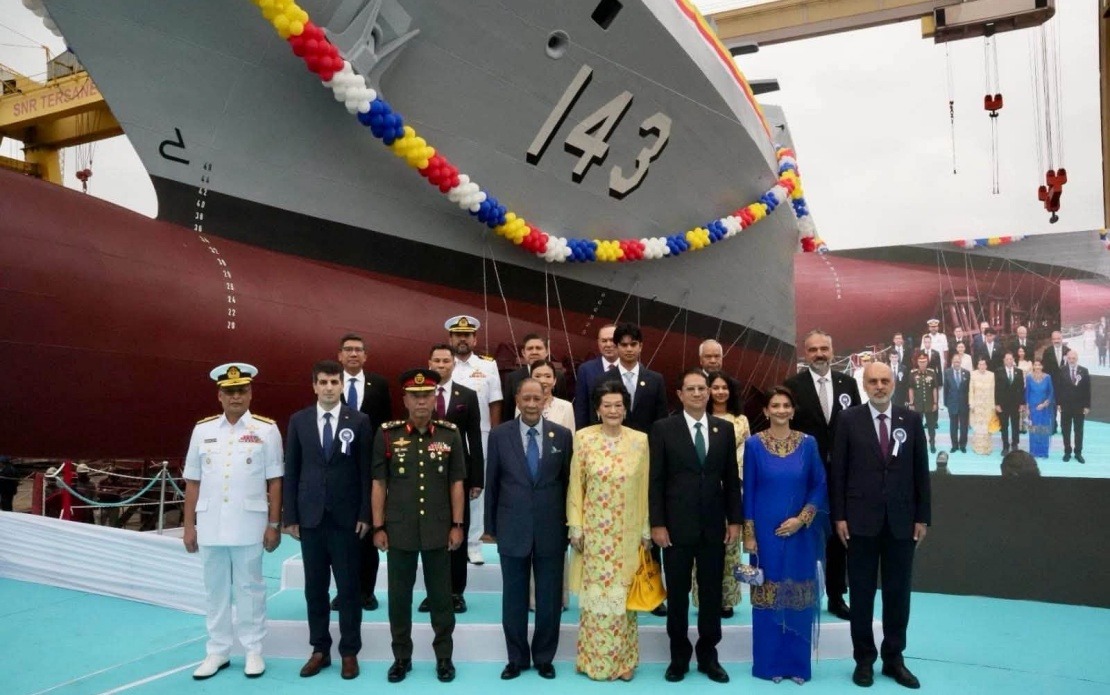
The Royal Malaysian Navy faces mounting pressure to upgrade its operational capabilities as regional maritime security challenges become increasingly complex, according to Defence Minister Datuk Seri Mohamed Khaled Nordin. Speaking at the launch ceremony for the third Littoral Mission Ship Batch 2 vessel, Mohamed Khaled emphasised the government's commitment to equipping the RMN with advanced and capable assets necessary to safeguard Malaysia's sovereignty and protect the nation's extensive maritime interests.
The launched vessel, named Tunku Osman Jewa, honours the legacy of a respected member of the Kedah royal family and former Armed Forces chief, the late General Tan Sri Tunku Osman Tunku Mohammad Jewa. The naming ceremony drew distinguished attendees including the Sultan of Kedah, Al Aminul Karim Sultan Sallehuddin Sultan Badlishah, and the Sultanah of Kedah, Sultanah Maliha Tengku Ariff, underscoring the ceremonial significance of adding this vessel to Malaysia's naval fleet.
The completion of the three-ship Littoral Mission Ship Batch 2 construction programme marks a substantial milestone for Malaysia's defence procurement strategy. These modern vessels represent a critical component of the RMN's transition toward contemporary operational standards, particularly as maritime piracy, territorial disputes, and strategic competition intensify throughout Southeast Asia and the broader Indo-Pacific region. The delivery of these ships is anticipated to extend through to the end of 2027, providing the navy with enhanced capabilities for patrolling Malaysia's vast ocean territories.
What distinguishes this acquisition initiative is its groundbreaking diplomatic dimension. The Littoral Mission Ship Batch 2 programme constitutes the first Government-to-Government collaborative arrangement between Malaysia and Turkiye regarding the procurement of warships for the Royal Malaysian Navy. This bilateral partnership demonstrates Malaysia's pragmatic approach to sourcing defence technology, exploring partnerships beyond traditional Western suppliers whilst maintaining operational compatibility and strategic alignment.
The modernisation effort reflects broader strategic planning within Malaysia's defence establishment. The acquisition of these three Littoral Mission Ships directly supports the RMN's implementation of the 15-to-5 Transformation Plan, an ambitious framework designed to systematically upgrade the navy's fleet composition, technological capabilities, and operational effectiveness. This long-term strategy acknowledges that Malaysia's maritime domain—encompassing critical shipping lanes, exclusive economic zones, and fishing grounds—demands contemporary surveillance, patrol, and interdiction capabilities.
The Littoral Mission Ships represent a vessel class specifically engineered for regional maritime operations, combining shallow-draft capability with advanced sensor systems and defensive armament. These characteristics prove particularly valuable for Southeast Asian naval operations, where vast archipelagic territories and coastal waters demand vessels capable of sustained presence without requiring deep-water infrastructure. The selection of this platform reflects calculated assessment of Malaysia's operational requirements across the South China Sea and the Strait of Malacca.
From a regional perspective, Malaysia's commitment to upgrading the RMN aligns with broader Southeast Asian security trends. Neighbouring nations including Singapore, Indonesia, and Vietnam have similarly invested in modern naval assets over the past decade, driving incremental force modernisation across the Association of Southeast Asian Nations. Malaysia's acquisition programme, whilst measured by international standards, demonstrates determination to maintain credible maritime capabilities and contribute meaningfully to regional stability.
The strategic importance of this modernisation extends beyond purely military considerations. Enhanced naval capabilities support Malaysia's ability to project sovereignty over disputed maritime zones, protect commercial shipping routes crucial to regional trade, and cooperate more effectively with allied nations on maritime security matters. The Littoral Mission Ships will enable improved surveillance operations and faster response times to incidents occurring across Malaysia's territorial waters and exclusive economic zone.
Turkiye's involvement in this procurement partnership introduces a new dimension to Malaysia's defence relationships. Turkish shipbuilding and naval technology have gained increasing credibility within Southeast Asian markets, offering competitive alternatives to established suppliers whilst bringing distinct design philosophies suited to regional operating environments. This collaboration may establish foundation for expanded defence partnerships between Malaysia and Turkiye across additional military domains.
The timing of this modernisation initiative coincides with evolving geopolitical dynamics in Southeast Asia. As great power competition intensifies and maritime security challenges proliferate—from transnational crime to environmental enforcement—regional navies face heightened operational demands. Malaysia's investment in modern vessels signals recognition that comprehensive maritime domain awareness and credible enforcement capabilities require sustained commitment to fleet modernisation.
Looking forward, the successful delivery and integration of these Littoral Mission Ships into RMN operations will significantly enhance Malaysia's maritime security posture. The vessels will provide substantially improved capabilities for sustained operations across Malaysia's expansive maritime territories, supporting the government's broader objective of maintaining a professional, modern, and regionally credible naval force capable of protecting national interests whilst contributing to regional peace and stability.

