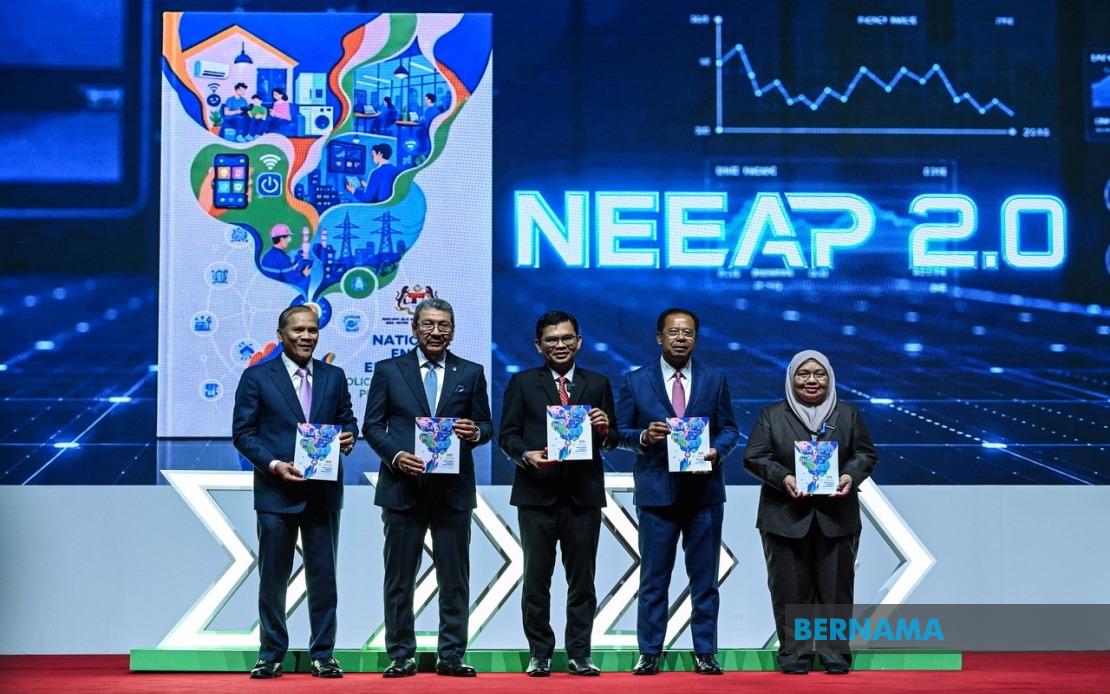
Malaysia has unveiled an ambitious energy efficiency roadmap designed to reshape how the country produces and consumes power over the next decade. The National Energy Efficiency Policy and Action Plan 2026-2035, launched by the Ministry of Energy Transition and Water Transformation (PETRA) in Putrajaya, represents a significant step in the government's broader commitment to environmental sustainability and economic growth. The plan projects RM85 billion in net energy savings and is expected to mobilise RM36 billion in private sector capital, signalling confidence among investors in Malaysia's green transition trajectory.
The economic dimensions of this initiative extend well beyond the headline figures. The creation of approximately 29,000 new jobs underscores how energy efficiency improvements can function as an employment engine across multiple sectors. These opportunities will span manufacturing, construction, installation, and maintenance roles as businesses retrofit existing facilities and upgrade to more efficient systems. For Malaysia, where economic diversification remains a policy priority, the emergence of a skilled workforce in energy efficiency technologies could position the country as a regional hub for green expertise and services.
The environmental case for NEEAP 2.0 rests on impressive carbon reduction targets. Implementation is anticipated to eliminate emissions equivalent to 26 million tonnes of carbon dioxide by 2035, a substantial contribution toward Malaysia's net-zero aspirations by 2050. This milestone matters not merely as an environmental achievement but as a competitive advantage. International investors and trading partners increasingly scrutinise corporate emissions profiles and country-level climate commitments; demonstrating concrete progress positions Malaysia favourably in global markets where sustainability credentials influence business decisions.
At the technical core of the policy lies a challenging performance target: improving electricity and thermal energy efficiency by 11.6 per cent relative to business-as-usual projections. To contextualise this ambition, PETRA estimates the cumulative energy savings at 815,000 terajoules, equivalent to roughly two years' worth of electricity consumption for Peninsular Malaysia. Such gains require systematic intervention across industrial operations, commercial buildings, and residential households. The scale of transformation implied suggests that NEEAP 2.0 is not merely an incremental adjustment but a foundational restructuring of how Malaysia manages its energy assets.
The policy builds deliberately on prior achievements, positioning itself as the successor to an earlier action plan with established track record. This institutional continuity is strategically important because energy efficiency improvements require sustained engagement rather than episodic campaigns. Businesses need confidence that government support will persist, enabling them to justify the upfront capital expenditures required for upgrades. By framing NEEAP 2.0 as a continuation of proven approaches, PETRA aims to maintain momentum and institutional memory within the energy sector.
Cross-sectoral participation stands out as a defining principle of the initiative. Rather than concentrating efforts on a single industry or constituency, the plan explicitly seeks involvement from industrial operations, commercial enterprises, and households. This inclusive approach reflects an understanding that energy efficiency is a systemic challenge; gains in manufacturing mean little if residential consumption patterns remain inefficient. The strategy effectively distributes responsibility across society while recognising that different sectors face distinct technical and economic barriers requiring tailored solutions.
The plan explicitly aligns with Malaysia MADANI, the government's broader development framework emphasising prosperity, fairness, and sustainability. This framing positions energy efficiency not as an environmental constraint on growth but as a prerequisite for high-quality development that protects resources for future generations. By anchoring NEEAP 2.0 within this wider narrative, policymakers signal that efficiency improvements advance multiple national objectives simultaneously: lower costs, improved living standards, competitive industries, and environmental stewardship.
For regional observers, Malaysia's energy efficiency initiative carries implications beyond national borders. Southeast Asia collectively faces mounting electricity demand as economies expand and living standards rise. Demonstrating that substantial efficiency gains are achievable while maintaining economic growth provides a replicable model for neighbouring countries wrestling with similar challenges. Malaysia's success in attracting private investment to fund these improvements could establish blueprints applicable across the region, potentially catalysing broader shifts in how Southeast Asian nations approach energy management.
The private investment component warrants particular attention. The projected RM36 billion in private capital represents not government funding but market-driven deployment of resources by businesses and investors confident in the commercial returns from efficiency improvements. This dynamic reflects the fundamentally sound economics of energy efficiency: investments that reduce operating costs while improving asset quality naturally attract capital. By creating the policy conditions for these investments, PETRA essentially unlocks private financing that government budgets alone could never provide, multiplying the plan's financial reach and sustainability.

