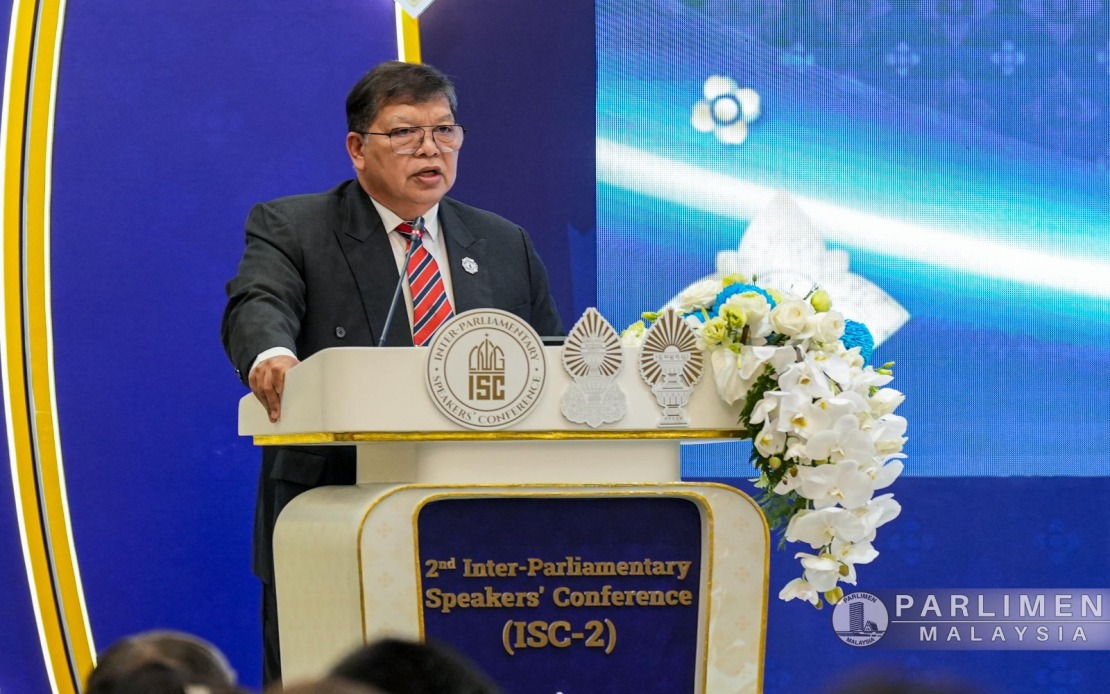
The Dewan Rakyat Speaker Tan Sri Dr Johari Abdul has delivered a stark warning about the mounting human and economic toll of climate change, arguing that the world's leadership is dangerously complacent on an issue that extends far beyond environmental concerns. Speaking during the Second Inter-Parliamentary Speakers' Conference in Phnom Penh last week, Johari underscored how the climate crisis has evolved into a multifaceted threat that simultaneously destabilises economies, jeopardises public health, imperils food supplies, and creates energy shortages across vulnerable nations. His remarks come against a backdrop of escalating disasters that have left Asian communities reeling from the consequences of extreme weather and environmental degradation.
Johari's intervention reflects growing anxiety among policymakers and legislators in Southeast Asia about the political vacuum surrounding climate action. He expressed dismay at the lack of meaningful discourse within governmental circles, noting that many lawmakers remain inadequately informed on climate science and environmental policy. The Speaker highlighted a fundamental disconnect between energy demand and the means by which nations are meeting that demand, pointing to the continued reliance on coal-fired power generation despite abundant alternatives. His criticism implicitly indicts the decision-making structures that continue to prioritise short-term economic gains over long-term environmental sustainability, a pattern that reverberates throughout the region.
Central to Johari's argument is the proposition that addressing climate change requires a comprehensive educational and technological overhaul. He emphasised that governments must embed climate science and sustainability studies into school curricula from early education stages, equipping future generations with the knowledge and critical thinking necessary to devise innovative solutions. Simultaneously, he stressed the urgency of substantially increasing research and development expenditure, particularly in renewable energy technologies such as solar power, wind energy, and emerging marine energy systems derived from ocean waves. This dual approach recognises that neither education nor technology alone can solve the crisis; rather, they must work in concert to create a population capable of innovation and a technology base ready to deploy scalable solutions.
The timing of Johari's appeal carries particular resonance given the sequence of devastating natural disasters that have ravaged South and Southeast Asia in recent weeks. Nepal experienced catastrophic flooding triggered by a glacial collapse in the Himalayan mountain range, which sent torrents of water through river systems straddling the Nepal-China border. As of the conference's conclusion on Friday, 469 people had been confirmed dead with another 2,381 missing, including 644 foreign nationals according to The Himalayan Times. The tragedy has claimed several Malaysian nationals, bringing the crisis into sharp focus for the Malaysian public and policymakers. These losses underscore how climate-related disasters transcend national boundaries, creating humanitarian crises that demand coordinated regional and global responses.
The geographical vulnerability of the Asian region to climate impacts cannot be overstated. From the mountainous terrain of Nepal where glacial systems are melting at accelerating rates, to the low-lying river deltas of Laos and the archipelagic Philippines, the region's diverse topography and climate patterns create multiple pathways through which environmental degradation manifests as human suffering. Rural communities throughout Asia face a relentless cycle of threats: flash floods inundate agricultural lands, typhoons demolish housing and infrastructure, landslides isolate entire villages, and storm surge threatens coastal settlements. The Philippines alone confronts approximately twenty typhoons annually, many of which leave trails of destruction through farming regions where rural populations depend entirely on agricultural income for survival. This recurrent cycle of disaster and recovery strains national resources and perpetuates cycles of poverty in already marginalised regions.
Johari articulated a concern that resonates throughout the developing world: the stark inequality in climate vulnerability and adaptive capacity. He observed that the gap between wealthy nations capable of investing heavily in climate adaptation infrastructure and the impoverished communities most vulnerable to climate impacts continues to widen. This disparity reflects a fundamental injustice within global climate politics—those nations and populations least responsible for historical greenhouse gas emissions bear the greatest burden of climate consequences. Wealthy nations can afford seawalls, early warning systems, and climate-controlled agriculture, whilst developing Asian nations must struggle to protect their citizens with limited resources. Johari's emphasis on political will and leadership suggests that meaningful climate action requires not merely technical solutions but a fundamental restructuring of global economic relationships and priorities.
The Speaker referenced China's approach to green technology as a model worthy of examination, citing the country's sustained investments in eco-friendly technologies, electric vehicle manufacturing, and expansion of green space throughout urban and rural landscapes. China's commitment to renewable energy infrastructure and technological innovation demonstrates that large-scale climate action, whilst economically demanding, remains achievable through strategic policy choices and consistent investment. This reference implicitly challenges other governments to adopt similarly ambitious strategies rather than treating climate action as a peripheral concern. For Malaysia and other Southeast Asian nations, China's example raises questions about whether regional governments are committing sufficient resources to comparable technological transitions that could position their economies advantageously as global energy systems shift away from fossil fuels.
Cambodia's Prime Minister Hun Manet amplified warnings about climate impacts specific to the region, drawing attention to rising water levels in the Mekong River that threaten riverine communities across multiple countries. Hun Manet acknowledged the impossibility of completely preventing natural disasters through human intervention whilst emphasising the necessity of building systemic resilience. This perspective—accepting that climate impacts cannot be eliminated entirely but can be managed through robust institutional responses—reflects a pragmatic acknowledgement of the realities facing developing nations. Building such resilience demands substantial investment in early warning systems, evacuation infrastructure, flood defences, and community preparedness programmes. Southeast Asian nations must simultaneously address the root causes of climate change through emissions reductions whilst preparing their populations for intensifying climate impacts already locked into the coming decades.
The convergence of Johari's warnings with recent natural disasters and statements from regional leaders suggests growing recognition among Asian policymakers that climate change represents an existential threat demanding urgent, comprehensive response. The question confronting Malaysia and its neighbours is whether this rhetoric will translate into substantive policy shifts and budgetary commitments. Educational reforms require sustained investment over years; renewable energy infrastructure demands capital-intensive projects; and technological innovation necessitates supportive regulatory frameworks. The parliament and legislatures across the region possess significant power to mandate such transitions through legislation, budget allocation, and regulatory oversight. Johari's call to action implicitly challenges Malaysian legislators to exercise this power decisively rather than defaulting to incremental measures that have thus far proven insufficient to address the accelerating pace of climate change.

