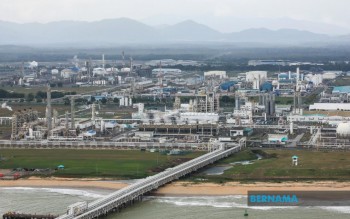
Malaysia's decision to examine establishing a national petroleum reserve reflects a strategic recognition that the country faces persistent rather than temporary energy vulnerabilities. Prime Minister Datuk Seri Anwar Ibrahim recently announced the government would study the necessity and mechanisms for building such reserves to fortify energy security amid mounting geopolitical uncertainties and the risk of global supply shocks. This initiative comes at a moment when regional energy security concerns are intensifying, driven by repeated threats to critical maritime shipping corridors that Malaysia and other Southeast Asian economies depend upon for their energy imports.
The Strait of Hormuz remains the world's most vital energy chokepoint, with approximately 20 million barrels per day of petroleum flowing through its narrow waters—equivalent to roughly one-fifth of all global oil supplies. However, what distinguishes the current security environment is the shift in how analysts perceive these risks. Rather than treating disruptions as isolated incidents that occur unpredictably, the emerging consensus views recurring tensions as a structural feature of global energy markets. Threats have become normalised, insurance costs have climbed, shipping delays have lengthened, and tanker availability has tightened, all of which embed a persistent risk premium into crude prices and energy costs across Southeast Asia.
Stephen Innes, managing partner at SPI Asset Management, characterises this transformation as a fundamental change in the nature of energy-related geopolitical risk. He argues that unless the international community constructs an extensive network of alternative pipelines, export routes, and bypass facilities—a project requiring many years to complete—disruptions will remain an enduring feature of global energy supply chains. The Strait of Hormuz will continue generating volatility that markets cannot simply price out or governments dismiss as a manageable one-time threat. This assessment carries particular weight for Malaysia and its neighbours, who have limited influence over Middle Eastern affairs yet face direct economic consequences from any instability in the region.
The risks have recently broadened geographically beyond the Arabian Gulf. Iran-backed Houthi forces operating from Yemen have reportedly mobilised to target vessels transiting the southern entrance to the Red Sea, with claims of responsibility for attacking Saudi oil tankers following escalating US strikes on Iranian military installations. This expansion of conflict zones that threaten energy shipments introduces the possibility of simultaneous disruptions affecting multiple critical passages. Should supply problems manifest across both the Strait of Hormuz and the Red Sea corridor concurrently, Southeast Asian nations could face extraordinary spikes in oil prices, skyrocketing freight charges, and substantial delays in receiving essential energy supplies. For an import-dependent region, such a scenario would impose severe economic costs across transportation, manufacturing, and utilities sectors.
Malaysia's particular vulnerability warrants closer examination. Despite producing approximately 570,000 barrels of oil daily, the country is a net importer of refined petroleum products and sources nearly 70 per cent of its crude oil purchases from suppliers concentrated in or near the Strait of Hormuz region. This heavy dependency on a geopolitically sensitive corridor means Malaysia cannot achieve energy self-sufficiency through domestic production alone. A prolonged disruption affecting Gulf suppliers would immediately constrain the refined fuels available to Malaysian consumers and industries, regardless of the nation's own production capacity. This structural imbalance explains why policymakers and analysts increasingly view strategic reserves not as optional luxuries but as essential components of energy policy.
The concept of a national petroleum reserve differs meaningfully from the commercial inventories that refineries and distribution companies maintain for routine operational purposes. Commercial stocks are calibrated to ensure the smooth functioning of normal supply chains; they are not designed to withstand extended disruptions stemming from geopolitical crises. An emergency reserve, by contrast, functions as insurance—a buffer that provides authorities with precious time to implement alternative sourcing arrangements, activate diplomatic channels, or manage demand during a crisis. Innes emphasises that reserves cannot resolve every supply challenge, but they can allow decision-makers to respond strategically rather than reactively when normal supply mechanisms fail. Establishing such reserves requires serious commitment regarding storage infrastructure, funding mechanisms, and clear protocols governing when reserves are tapped and subsequently replenished.
Energy resilience extends beyond petroleum reserves alone. A comprehensive resilience framework must incorporate several complementary elements working in concert. Tariro Chiweza, an oil and gas analyst at BMI, stresses that Malaysia should pursue simultaneous progress across multiple domains: continuing to expand domestic natural gas production, accelerating renewable energy deployment supported by battery storage systems, strengthening regional electricity interconnectors to enable power sharing with neighbours, advancing electrification initiatives, and exploring nuclear energy options. Malaysia's forecasted dry gas production of 82.3 billion cubic metres in 2026 will contribute meaningfully to this diversification agenda. Existing schemes such as Solar@PETRA, the Corporate Renewable Energy Supply Scheme enabling businesses to source renewable power, B15 biodiesel blending mandates, and electrified public transport infrastructure all reinforce this broader strategy.
The geopolitical context demands that Southeast Asian governments coordinate more effectively on energy security matters. Innes recommends that ASEAN members undertake urgent reviews of strategic fuel inventory levels, systematically diversify their crude oil and liquefied natural gas suppliers across multiple countries and regions, establish clearer protocols for managing shipping disruptions, and develop coordinated emergency supply arrangements. This regional approach acknowledges that individual national efforts, while necessary, may prove insufficient to insulate Southeast Asia from major supply shocks affecting multiple countries simultaneously. Collective action on standards for reserve maintenance, information sharing regarding supply threats, and mutual assistance mechanisms could strengthen the entire region's resilience.
Government fuel subsidy policies merit reconsideration in this context. Rather than maintaining broad subsidies that apply universally to all fuel consumption, Innes proposes that assistance should target lower-income households and critical industries essential to economic functioning. This reallocation would preserve fiscal resources while ensuring vulnerable populations and vital sectors receive protection from price volatility. Such targeted support becomes more financially sustainable if crude oil prices remain persistently elevated, a scenario that current geopolitical conditions make increasingly plausible. The Philippines, Indonesia, and Vietnam face similar subsidy pressures, suggesting that a region-wide conversation about subsidy restructuring could yield mutual benefits and coordinate policy approaches.
Oil markets reflected the prevailing anxiety during late July, with Brent crude climbing 2.97 per cent to US$96.86 per barrel and West Texas Intermediate gaining 1.93 per cent to US$88.76 per barrel. These price movements suggest investors regard geopolitical risks as substantial and likely to persist. For Malaysia, where energy costs influence inflation, competitiveness, and fiscal budgets significantly, sustained elevated prices create ongoing pressure to accelerate energy transition initiatives and build defensive mechanisms like strategic reserves. The convergence of expert opinion—from SPI Asset Management, BMI, and government pronouncements—indicates substantial consensus that Malaysia's reserve study addresses a genuine and pressing strategic need rather than pursuing a hypothetical safeguard against unlikely scenarios.
The pathway forward requires sustained political commitment and substantial investment. Establishing a meaningful national petroleum reserve requires identifying appropriate storage locations, securing funding, negotiating supply arrangements during normal periods to build reserves gradually, and establishing governance frameworks that ensure reserves remain available for genuine emergencies rather than being diverted for commercial purposes or routine supply gaps. The task is complex but achievable. Other nations including Japan, South Korea, and India have successfully implemented strategic reserves that enhance their resilience without creating economically unsustainable burdens. Malaysia can learn from their experiences while adapting approaches to local conditions. The imperative is becoming clearer: in a world where energy supply disruptions appear structural rather than exceptional, accepting vulnerability is no longer a viable strategic option.

