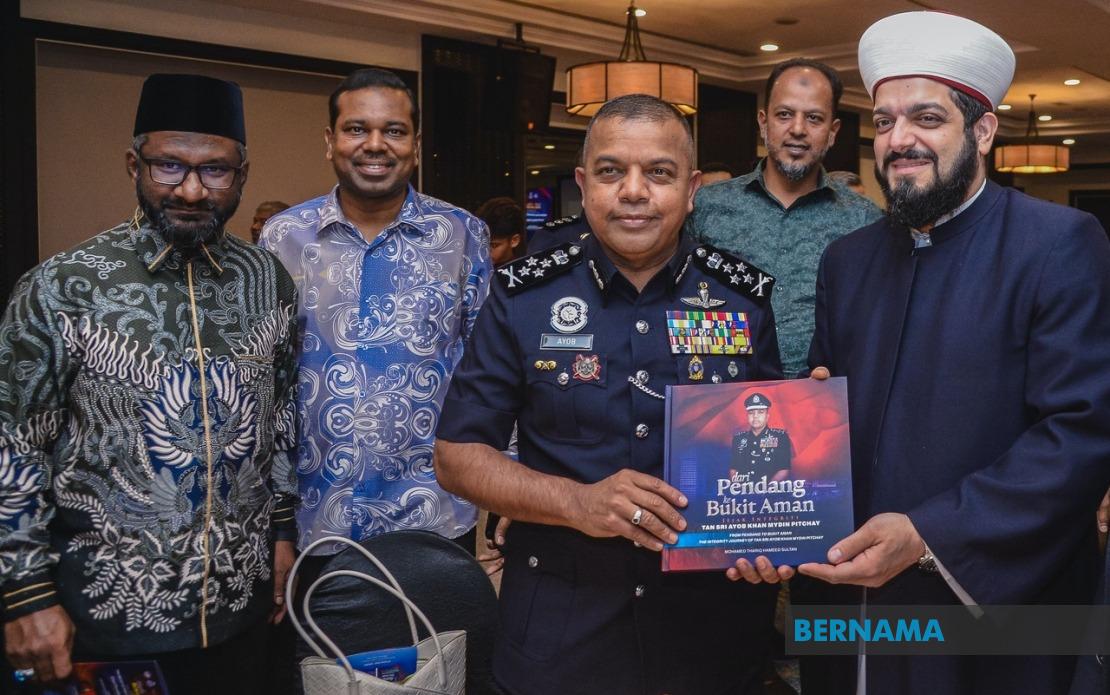
Malaysia's law enforcement leadership has sounded a stark warning about the evolving threat landscape posed by militant and extremist organisations, with Deputy Inspector-General of Police Tan Sri Ayob Khan Mydin Pitchay cautioning that these groups will continue to adapt their strategies through increasingly advanced technological channels. Speaking in Kuala Lumpur on July 23, Ayob Khan outlined how the security establishment faces a fundamentally transformed challenge compared to previous decades, one that demands constant vigilance and rapid operational adjustments from counterterrorism units.
The most alarming shift identified by the senior police official concerns the venues where radicalisation now occurs. What was once the domain of clandestine physical gatherings—particularly informal Islamic study circles known as usrah sessions held in private homes or community spaces—has migrated substantially into the digital realm. This migration represents far more than a simple change of location; it reflects how extremist organisations have recognised the operational advantages of online environments, where anonymity is easier to maintain, screening of potential recruits can occur gradually, and messaging can be precisely calibrated to individual psychological vulnerabilities.
Particularly concerning is the targeting of interactive gaming platforms where millions of young Malaysians gather daily. Roblox, a massively multiplayer online game creation system popular among teenagers globally and extensively used in Southeast Asia, has become an unlikely vector for extremist messaging. The platform's combination of social interaction, community building, and relative difficulty in moderation creates conditions where recruiters can embed themselves within gaming groups, build trust over time, and gradually introduce ideological content to susceptible individuals. This exploitation of entertainment spaces where young people lower their guard represents a qualitative leap in recruitment sophistication.
The underlying motivations driving radicalisation have also undergone substantial transformation, according to Ayob Khan's assessment. Traditional narratives emphasised primarily religious grievances or theological interpretations as the catalyst for extremist involvement. Contemporary cases, however, reveal a far more complex psychological profile in which emotional triggers—including personal anger, social alienation, feelings of marginalisation, and deep-seated resentment—play equally significant roles as ideological conviction. Recent arrests involving teenage suspects have provided law enforcement with empirical evidence that emotional vulnerability and personal crisis frequently precede ideological commitment, suggesting that extremist groups actively recruit by exploiting psychological distress rather than through purely theological persuasion.
This psychological dimension carries serious implications for Malaysian security policy. Individuals motivated primarily by emotional turmoil rather than doctrinal conviction may prove less predictable, more impulsive, and potentially more willing to execute violence without extended operational planning. The intersection of teenage developmental vulnerability, social media exposure, gaming platform access, and extremist recruitment infrastructure creates a convergence of risk factors that traditional counterterrorism approaches, designed primarily to combat organised cells with clear hierarchies, may struggle to address effectively.
Ayob Khan emphasised that Malaysia's police force must fundamentally shift from reactive postures to genuinely proactive intelligence gathering and threat prevention. The characterisation of potential passivity as constituting an "intelligence failure" reflects a hardened institutional position that law enforcement cannot afford to wait for attacks to occur before intervening. Instead, the police must develop sophisticated early-warning mechanisms capable of identifying individuals at risk of radicalisation within online environments, distinguishing between genuine threats and ordinary gaming activity, and deploying intervention strategies before any violent intent crystallises into operational planning.
The institutional response outlined during the biographical launch event signals recognition that counterterrorism responsibility extends beyond the traditionally prominent investigating branches. The presence of leadership from the Criminal Investigation Department, Commercial Crime Investigation Department, and the Internal Security and Public Order Department indicates a recognition that extremist activities increasingly intersect with cybercrime, financial tracking, and public order dimensions. This multi-agency approach acknowledges that contemporary extremism cannot be effectively countered through security measures alone.
Particular emphasis was placed on the Counter-Terrorism Division of the Special Branch, designated as Unit E8, remaining vigilant in its mandate to detect, prevent, and neutralise potential threats before operational execution. The phrasing of "neutralising" threats prior to attacks distinguishes preventive security operations from enforcement actions, suggesting Malaysia's police are oriented toward disruption and intervention rather than prosecution-focused approaches. This preventive framework requires extensive intelligence gathering on online platforms, which raises complex questions regarding surveillance, privacy, and the balance between security imperatives and individual freedoms.
For Malaysian cybersecurity and technology companies, the warning carries direct implications regarding their platforms' vulnerability to radicalisation activities. Gaming companies operating regionally face mounting pressure to implement detection systems and moderation protocols that identify extremist recruitment patterns without compromising the user experience that makes these platforms commercially viable. The identification of specific platforms like Roblox as recruitment vectors may precipitate increased regulatory scrutiny from Malaysian authorities regarding content moderation standards and reporting obligations to law enforcement.
Regionally, Malaysia's security posture reflects challenges confronting broader Southeast Asia, where gaming platforms, messaging applications, and social networks operate across multiple jurisdictions with varying regulatory frameworks. The borderless nature of online recruitment means that extremist networks can target Malaysian citizens from operations based in other countries, complicating law enforcement's jurisdictional authority and requiring enhanced international intelligence cooperation.
The acknowledgment that extremist threats will "continue to evolve" represents an implicit admission that security solutions cannot be considered permanent or comprehensive. Instead, Malaysian law enforcement must institutionalise continuous learning, technological upgrading, and strategic adaptation as permanent operational features. This perpetual arms race between security measures and increasingly sophisticated threat actors places substantial resource demands on police agencies already stretched across multiple security portfolios.
Ultimately, Ayob Khan's warning underscores that radicalisation in contemporary Malaysia operates through channels and methodologies fundamentally different from those encountered even five years ago. The fusion of psychological vulnerability, technological accessibility, and ideological messaging creates conditions where recruitment can occur quietly and extensively before physical manifestations alert authorities. Addressing this challenge requires sustained investment in digital intelligence capabilities, enhanced inter-agency coordination, international cooperation, and technological partnerships that currently remain underdeveloped within Malaysia's security architecture.

