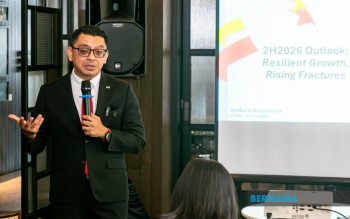
Malaysia's strategic position as a transhipment hub is strengthening amid ongoing geopolitical turbulence and a regional pivot toward environmentally sustainable shipping practices, according to AmBank (M) Bhd chief economist Firdaos Rosli. Speaking at a media briefing on the bank's second-half 2026 outlook, Firdaos highlighted how the nation's port sector is capitalising on trade rerouting patterns triggered by tensions in West Asia, reinforcing Malaysia's value as a reliable and efficient intermediary along one of the world's busiest maritime corridors. This positioning reflects a broader structural shift in global supply chains as companies seek alternatives to traditionally congested or politically uncertain routes.
The stability and geographic advantages that Malaysia's ports offer have become increasingly valuable as multinational corporations and shipping lines reassess their logistics networks. Rather than viewing the current environment as temporary disruption, industry analysts suggest that many supply chain rerouting decisions will prove durable, embedding Malaysia's ports more deeply into alternative global trading patterns. Port Klang, the nation's flagship maritime facility, handled 15.14 million twenty-foot equivalent units (TEUs) of containers during 2025, while the Port of Tanjung Pelepas (PTP) in Johor processed 14.03 million TEUs over the same period. These volumes underscore the scale of activity across Malaysia's dual-hub system and the competitive dynamic between these two major facilities.
More encouragingly for port operators, momentum has carried into 2026. During the first five months of the year, Port Klang expanded its container throughput by five per cent compared to the corresponding period a year earlier, whilst PTP achieved even more robust growth of eight per cent year-on-year. Such trajectory suggests that the initial wave of rerouting is not a fleeting phenomenon but rather reflects sustained demand for Malaysia's transhipment services. This incremental but consistent growth, even as global trade confronts multiple headwinds, indicates resilience in the sector's fundamentals and the enduring appeal of Malaysia's geographic and operational advantages.
However, Firdaos stressed that sustaining this competitive advantage demands more than passive benefit from external disruptions. Port operators and policymakers must commit to strategic capacity expansion and infrastructure modernisation to handle anticipated volume increases whilst maintaining service quality and cost efficiency. The current environment of elevated logistics expenses across the supply chain means that shippers are increasingly cost-conscious and will not tolerate poor service reliability or inefficient turnaround times. Malaysia's ports therefore face a dual imperative: leveraging current geopolitical advantages to capture market share, whilst simultaneously investing heavily to ensure that operational excellence and capacity can keep pace with growth.
Beyond handling volume dynamics, Malaysia is positioning itself as a regional pioneer in the transition toward cleaner maritime fuels—a development that carries significant long-term commercial and environmental implications. The government's Green Bunkering Regulatory Roadmap establishes an ambitious target for low-carbon fuels to comprise 40 per cent of maritime fuel consumption by 2050. This trajectory aligns Malaysia with international decarbonisation commitments and reflects pressure from multinational shipping companies, major global brands, and regulators in developed markets to reduce maritime emissions. Organisations seeking to meet environmental goals are increasingly willing to pay premiums for cleaner fuels, creating commercial opportunities for ports that can supply them reliably and efficiently.
The Port of Tanjung Pelepas has already begun operationalising this opportunity, undertaking liquefied natural gas (LNG) and methanol bunkering operations that position it as a practical hub for shipowners transitioning away from conventional heavy fuel oil. As international maritime standards gradually tighten and environmental regulations become more stringent—particularly through mechanisms such as the International Maritime Organization's carbon intensity requirements—demand for alternative marine fuels will accelerate. Ports that possess the infrastructure, regulatory approvals, and operational expertise to supply these fuels will capture premium margins and attract traffic from environmentally-conscious operators. For Malaysia, this represents a chance to differentiate its offerings from competitors in Singapore and other regional hubs, whilst simultaneously advancing legitimate sustainability objectives.
The freight rate environment adds another layer to the outlook. The Baltic Exchange Index (BDI), a key measure of shipping costs, surged more than 120 per cent year-on-year in both February and May of 2026, and remained substantially elevated at 64.6 per cent growth in June. Ordinarily, such dramatic spikes in shipping costs trigger rapid normalisation as supply responds to higher prices and temporary disruptions resolve. Yet the persistence of elevated freight rates well into mid-2026 suggests that underlying supply-side constraints remain unresolved. Shipping capacity additions have been slower than anticipated, whilst vessel utilisation remains tight, preventing the rapid rate decline that typically follows geopolitical crises. This environment paradoxically benefits established port hubs, as elevated shipping costs incentivise efficiency and make reliable, well-managed transhipment points more valuable to operators seeking to minimise delays and optimise networks.
The distinction between direct geopolitical impact on energy markets versus secondary effects on transportation deserves careful attention. Whilst West Asian tensions have not substantially disrupted crude oil markets or caused dramatic energy price swings in recent months, their effects on maritime logistics remain pronounced. Shipping companies have adjusted routes, rerouted vessels, and incurred additional fuel costs navigating around affected regions. These operational adaptations, combined with genuine capacity constraints in global shipping, have created a structural shift in freight rate dynamics. Transportation costs, once expected to normalise downward as specific crises fade, have instead stabilised at elevated levels, reflecting both ongoing supply-side tightness and the cumulative effect of multiple overlapping disruptions to global trade flows.
For Malaysian policymakers and port operators, this environment presents both immediate opportunities and medium-term challenges. The near-term window for capturing additional transhipment volume and gaining market share from competitors appears genuinely favourable, particularly as shippers continue evaluating alternative routes and seeking reliable partners outside zones of geopolitical concern. Port Klang and PTP should continue recording solid container growth, supporting related supply-chain infrastructure, employment, and government revenues. Simultaneously, however, the sector must capitalise on this period of relative prosperity to invest aggressively in capacity expansion, digital infrastructure, sustainability initiatives, and workforce development. Failure to build capacity and modernise operations during a growth phase could result in bottlenecks and service failures that damage Malaysia's reputation and cause shippers to look elsewhere.
The green bunkering opportunity deserves particular strategic focus. Positioning Malaysia as a leading regional hub for sustainable maritime fuels could provide competitive advantages that persist long after geopolitical tensions ease and supply chains normalise. Unlike transhipment volume, which is partly contingent on disruptions and rerouting, the shift toward cleaner fuels reflects deep structural changes in global environmental standards and consumer preferences. Companies investing in green bunkering infrastructure today are making bets on the long-term direction of maritime transportation. If Malaysia establishes itself as a reliable, competitive supplier of LNG and methanol during this transition period, it can lock in economic benefits and competitive positioning that extend well into the decade ahead, even as other geopolitical factors shift.

