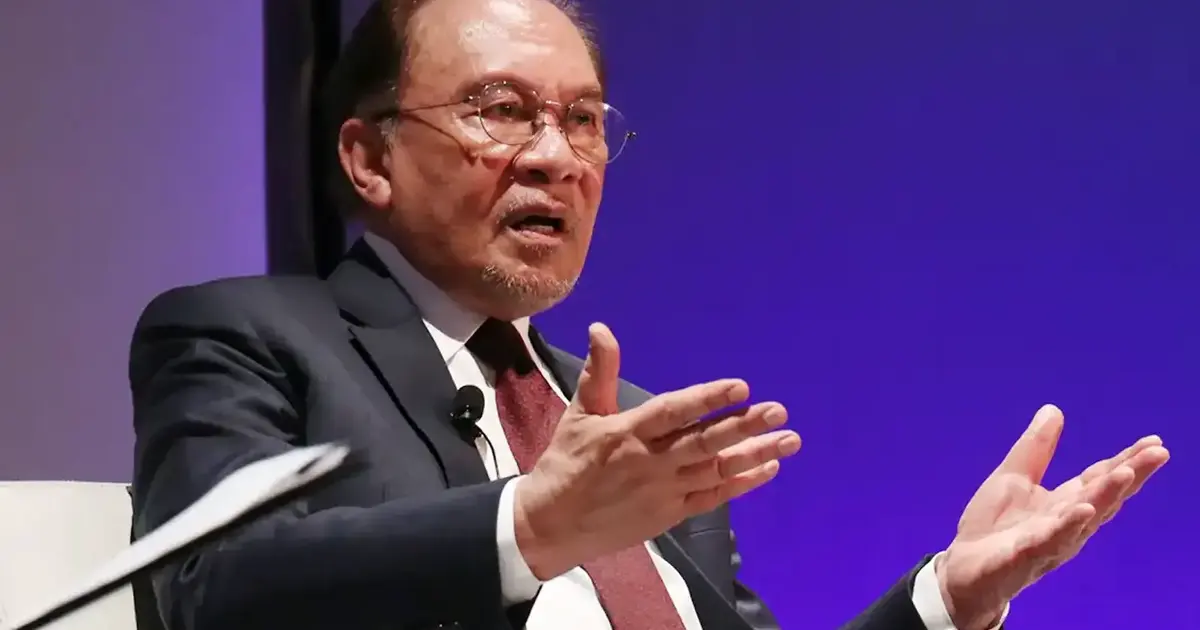
Prime Minister Anwar Ibrahim has seized on Malaysia's second-quarter GDP performance as validation of his administration's economic stewardship, arguing that the result demonstrates the country's capacity to withstand external pressures and maintain steady expansion. The announcement marks a fresh opportunity for the government to underscore its narrative of domestic recovery after weathering multiple headwinds since taking office in late 2022.
Anwar's framing of the quarterly growth figures emphasises the structural improvements his cabinet claims to have implemented over the past three years. By linking the GDP data to broader reform initiatives, the Prime Minister is attempting to crystallise a broader argument about the government's economic competence at a time when public attention remains divided between inflation concerns, employment debates, and the ongoing cost-of-living pressures affecting Malaysian households. The timing of such statements typically aligns with government efforts to rebuild confidence in its economic management ahead of budget announcements or policy initiatives.
The emphasis on "strengthened fundamentals" carries particular weight for Malaysian policymakers, who have long grappled with structural challenges including an aging banking sector, dependence on commodities exports, and the need to diversify away from traditional sources of growth. Anwar's comments suggest the government views its recent work—whether in digital transformation, financial sector reforms, or investment attraction—as having moved beyond mere headline announcements into tangible economic outcomes reflected in the national accounts.
For Southeast Asian observers and international investors, Malaysia's quarterly performance matters considerably within a regional context where growth rates have become increasingly volatile. The second quarter is typically a telling quarter for the region, falling midway through the calendar year and offering clearer visibility into whether first-quarter growth was sustainable or merely a statistical artifact. Malaysia's showing thus serves as a barometer for broader regional economic health, particularly given the country's role as a significant manufacturing and trade hub.
The government's confidence in the growth figures also reflects its strategy of maintaining policy continuity despite political transitions and cabinet reshuffles. Anwar has consistently argued that his administration's three-year tenure has created policy momentum that extends beyond individual ministerial portfolios, embedding reforms across multiple agencies and creating institutional memory around economic priorities. This assertion, if borne out by the data, would suggest that Malaysia has moved beyond the reactive, crisis-management posture that characterised earlier administrations.
However, the Prime Minister's optimistic framing must contend with Malaysian consumers' lived experience. While aggregate GDP growth may appear respectable in statistical terms, ordinary households continue navigating elevated property prices, volatile employment markets, and persistent concerns about wage stagnation relative to inflation. The political challenge for Anwar lies in translating macroeconomic achievements into tangible improvements that register with voters in their daily financial calculations.
The Q2 growth announcement also arrives at a moment when Malaysia's monetary authority and fiscal policymakers face ongoing decisions about interest rates and government spending. Growth figures that validate existing policy frameworks give the central bank and Treasury greater latitude to maintain current trajectories without immediate pressure for course corrections. Should the data have disappointed, by contrast, it would have invited immediate calls for stimulus or rate adjustments. The positive interpretation Anwar has placed on the results thus carries implications for economic policy direction in coming months.
Regionally, Malaysia's performance takes on added significance as other Southeast Asian economies navigate their own post-pandemic trajectories. Indonesia, Thailand, the Philippines, and Vietnam all face distinct challenges—from inflation to currency volatility to shifting trade patterns—but they share with Malaysia the common imperative to demonstrate that growth is both durable and inclusive. Anwar's statements about "resilience" and "strengthened fundamentals" position Malaysia as part of a broader Asian economic narrative of adaptation and recovery.
The government's emphasis on reforms over three years also serves a political messaging function domestically. By tying growth outcomes to specific policy choices rather than external factors like commodity prices or global demand, Anwar attempts to claim ownership of positive results while deflecting blame for any shortcomings onto inherited conditions or external circumstances. This political economy of growth narratives is familiar across Southeast Asia, but it remains essential for governments seeking voter endorsement in electoral cycles.
Looking ahead, the sustainability of Malaysia's growth trajectory will depend on whether the reforms Anwar references—presumed to encompass areas such as financial inclusion, business climate improvements, and infrastructure development—continue yielding measurable benefits. A single quarter of robust growth, while psychologically important, carries limited predictive power for longer-term economic prospects. The real test lies in whether successive quarterly performances accumulate into a credible pattern that justifies public confidence in the government's economic vision.
For Malaysian policymakers and international observers alike, the Q2 GDP data serves as a checkpoint rather than a destination. Anwar's interpretation of the results as evidence of fundamental economic improvement will require validation through sustained performance, job creation, and ultimately, improvements in household incomes and living standards that extend beyond statistical aggregates.

