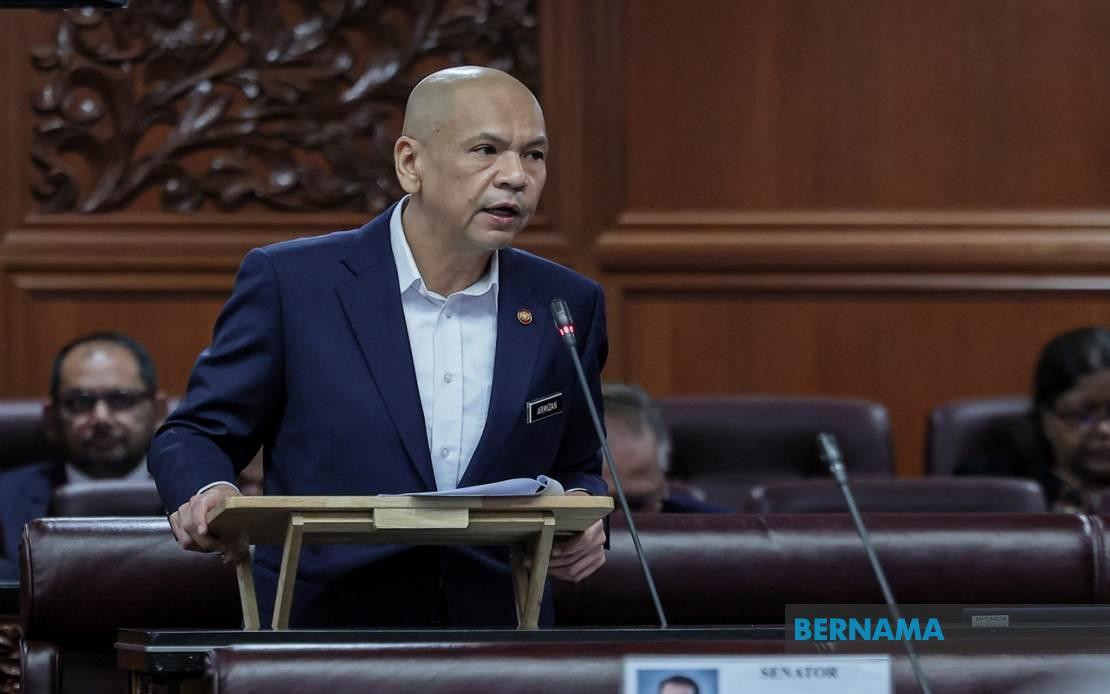
The Ministry of Domestic Trade and Cost of Living has executed an ambitious rollout of its Rahmah MADANI Sales Programme across Malaysia, recording 15,881 events from January through June this year. This represents a decisive scaling-up of an intervention designed to provide households relief from rising prices, with Minister Datuk Armizan Mohd Ali confirming the nationwide reach encompasses all 600 state constituencies and every one of the 40 Federal Territory zones covering Putrajaya, Kuala Lumpur, and Labuan.
The expansion reflects a strategic recalibration of the government's approach to managing cost-of-living pressures that have weighed on Malaysian consumers. During parliamentary proceedings, Armizan disclosed that the trajectory of implementation has grown markedly, advancing from 6,870 sessions in 2023 to 12,419 sessions in 2024, and climbing further to the current pace that positions 2025 for significantly higher overall numbers. This acceleration underscores official recognition that ad-hoc pricing interventions are insufficient to address structural affordability challenges facing citizens from Sabah to Perlis.
Originally targeting 23,040 sessions across 2025, the ministry adjusted its ambition upward to 30,000 events following Prime Minister Datuk Seri Anwar Ibrahim's May announcement. This upward revision acknowledged the persistent economic headwinds created by the energy and supply disruptions stemming from regional conflicts in West Asia, which have reverberated through global commodity markets and Malaysian supply chains. The recalibrated target signals that policymakers view the sales programme not merely as a supplementary measure but as a centrepiece of the government's cost-management toolkit.
The sophistication of the current approach reflects lessons drawn from previous sporadic price-control interventions. Rather than relying on unpredictable government bargain sales, the MADANI administration has institutionalised the programme within the permanent annual budget framework starting in 2024, allocating dedicated funding and activity codes to ensure sustained implementation. This structural embedding provides vendors, retailers, and consumers with confidence that events will occur consistently rather than at the whim of political announcements.
A second pillar of the strategy introduces systematic scheduling, with annual targets and frequency metrics established for every constituency and zone. This geographical standardisation ensures that consumers in less commercially concentrated areas—rural zones and smaller towns where private retailers have thinner margins and lower foot traffic—receive equivalent programme frequency to their urban counterparts. Such deliberate distribution addresses equity concerns inherent in purely market-driven pricing mechanisms.
Crucially, the government has forged substantial private-sector participation, recruiting 2,695 strategic retail partners as of late June. This collaboration bridges the gap between state objectives and commercial incentives, enlisting supermarket chains, hypermarkets, convenience stores, and cooperatives to implement subsidised pricing during designated windows. The breadth of this partnership network—spanning traditional retailers, modern chains, and cooperative movements—demonstrates that the programme enjoys business community buy-in despite margin compression during sales periods.
Delivery mechanisms have been diversified to reach Malaysians regardless of geography or lifestyle. The programme operates through in-store events at anchor retail locations, open-air markets that serve communities without major shopping centres, and mobile sales units penetrating remote and rural districts. Seasonal and temporal tailoring—linking events to festive celebrations, monthly paydays, and school holidays—aligns programme timing with household cash-flow patterns and consumer behaviour, maximising uptake among working families and those on fixed incomes.
Transparency and advance planning capabilities distinguish the current iteration from earlier initiatives. Starting in 2025, the ministry introduced a published PJRM calendar providing residents with details on dates, times, and locations for upcoming events in their local constituencies and zones. This transparency allows households to budget around the programme, plan shopping trips strategically, and anticipate price reductions for essential goods. For Malaysians managing tight household budgets, such predictability represents tangible empowerment.
The expansion carries implications beyond immediate price relief. By institutionalising subsidised sales events, the government signals that cost-of-living support is not temporary crisis management but a normalized feature of its social contract. This shift in framing acknowledges demographic and economic realities: rising asset prices, subdued wage growth in many sectors, and persistent inflation in essential categories including food and utilities have compressed discretionary income for broad swathes of Malaysian society. Regular, predictable pricing interventions thus become a semi-permanent feature of household financial planning.
For retailers and suppliers, the programme presents both opportunity and constraint. Partner businesses gain guaranteed foot traffic and customer volume during events, offsetting margin losses through volume recovery and brand loyalty development. However, repeated price compression also tests business sustainability, particularly for smaller operators with limited ability to absorb margin reductions. The ministry's engagement of 2,695 partners suggests confidence that the numbers justify participation, though monitoring profitability impacts and ensuring vendor sustainability will remain critical.
Regionally, Malaysia's approach offers lessons for neighbouring economies grappling with affordability challenges. While the programme differs from direct cash transfers or means-tested subsidies, its infrastructure-intensive, regularly scheduled model creates administrative precedent and consumer behaviour adaptation. Indonesia, Thailand, and the Philippines—each facing distinct inflation and purchasing-power pressures—may observe whether structured, institutionalised sales events prove more sustainable and equitable than alternatives.
The achievement of comprehensive geographical coverage across all constituencies and zones underscores administrative capacity. Coordinating 15,881 events requires logistical sophistication spanning supply-chain management, retail partner coordination, promotional campaigns, and local government liaison. That this occurred within a six-month window without reported major disruptions indicates operational maturation within the ministry's systems and inter-agency coordination mechanisms.
Looking ahead, sustaining 30,000 events annually while monitoring programme efficacy will test administrative resources and political will. Consumer behaviour data, price-impact metrics, and feedback from both retailers and shoppers will determine whether the current trajectory continues or whether adjustments prove necessary. The commitment to expansion reflects confidence that the programme addresses genuine public need; whether that confidence proves warranted will emerge through implementation experience over coming quarters.

