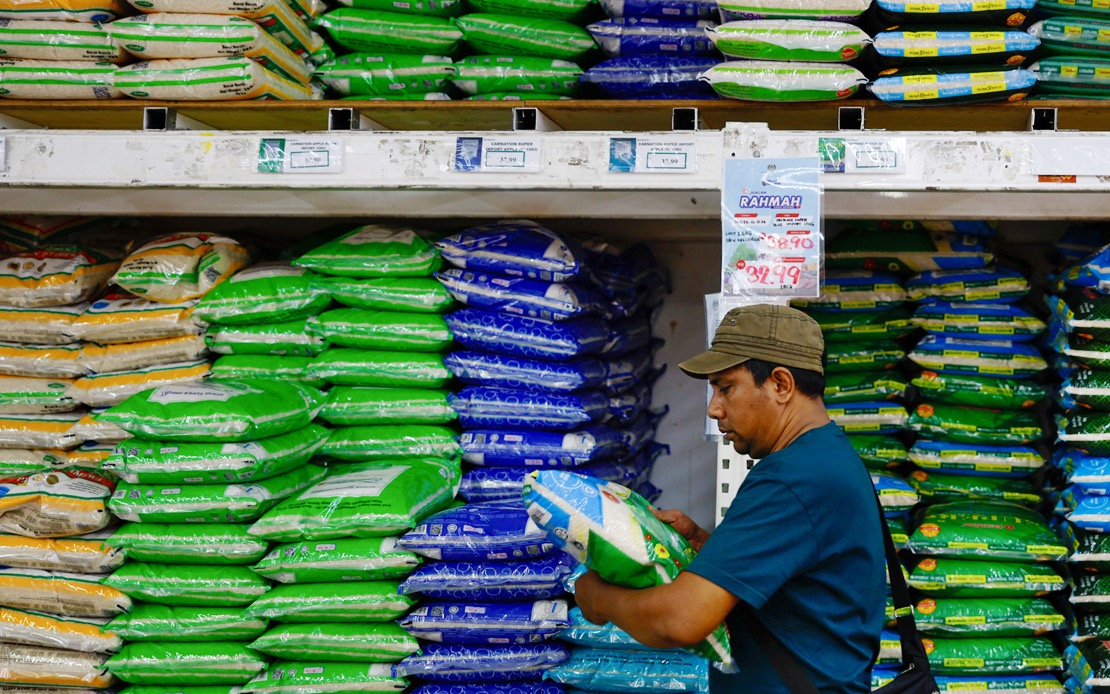
Malaysia's rice stockpile stands at a reassuring level as regional geopolitical tensions threaten global food supply chains. During parliamentary proceedings in Kuala Lumpur on August 4, Deputy Agriculture and Food Security Minister Datuk Chan Foong Hin disclosed that the country maintains 1.237 million tonnes of rice reserves, sufficient to meet domestic consumption for a minimum of six months. This disclosure came in response to concerns raised by Senator Datuk Dr Mohd Hatta Md Ramli about the government's readiness to shield Malaysians from potential supply disruptions triggered by escalating West Asian tensions.
The composition of this strategic reserve reflects a dual-pronged approach to food security. The 1.237 million tonnes comprises 200,000 tonnes held as the national rice buffer stock, administered through state-owned enterprise Padiberas Nasional Berhad (BERNAS), alongside 1.037 million tonnes maintained as commercial inventory by private operators. This arrangement enables the government to exercise direct control over a meaningful portion of supplies while leveraging market mechanisms through commercial holdings, creating a flexible response capability should circumstances necessitate intervention in the broader market.
Beyond raw stockpile figures, the government employs price stabilisation mechanisms to insulate consumers from volatile international markets. Subsidies targeted at locally produced white rice function as a countervailing force when global commodity prices spike, ensuring that Malaysian households do not experience the full shock of overseas cost increases. This buffering effect proves particularly valuable during periods of heightened geopolitical uncertainty, when markets typically experience pronounced volatility. Deputy Minister Chan framed this as a stability advantage relative to other commodities, which lack comparable governmental support structures.
The current strategic posture, however, reflects underlying concerns about long-term sufficiency. Malaysia's self-sufficiency ratio for rice has contracted due to declining domestic production trends, a pattern compounded by emerging climate hazards. The El Niño phenomenon represents a particular threat to padi cultivation across Southeast Asia, given its propensity to trigger prolonged droughts in critical rice-growing regions. These pressures have prompted the government to recalibrate its rice security objectives, establishing an ambitious target of achieving 80 percent self-sufficiency by 2030—a significant jump from current levels.
Addressing this gap requires multifaceted agricultural innovation. The Ministry of Agriculture and Food Security has begun disseminating drought-resistant padi varieties, specifically MR 380, MR 381, and MR 382, designed to maintain yields under water stress conditions. Complementing varietal improvements are sophisticated irrigation management practices such as Alternate Wetting and Drying (AWD) and the System of Rice Intensification (SRI). These techniques optimise water utilisation without sacrificing productivity, permitting farmers to sustain output even as precipitation becomes more erratic.
The government is concentrating implementation efforts in strategically important regions. The Muda Agricultural Development Authority (MADA) area, historically central to Malaysian rice production, will serve as the initial deployment zone for a five-season intensive cultivation initiative spanning two years. This project is coupled with systematic upgrades to irrigation infrastructure, addressing long-standing bottlenecks that have hampered agricultural efficiency and contributed to stagnant yields despite stable cultivated acreage.
Cost pressures facing padi farmers constitute a secondary constraint on productivity growth. Input expenses, particularly for fertilisers, have escalated substantially, eroding farmers' margins and discouraging production expansion. In response, the government is implementing short-term relief measures, including a temporary exemption from the Sales and Service Tax on agricultural fertilisers such as rock phosphate and magnesium sulphate. This exemption, effective from January 1, 2026, through December 31, 2027, directly reduces operational burdens on agricultural enterprises.
Farmer incentive schemes represent another avenue through which the government seeks to stimulate production. The ploughing incentive for the 2026 growing season has been nearly doubled, increasing from RM160 to RM300 per hectare. This enhancement, backed by an additional budgetary allocation of approximately RM40 million, is expected to benefit nearly 200,000 farming households. Such support measures acknowledge that achieving production targets requires not merely technological advancement but also economic viability at the farm level.
For Malaysian policymakers, the convergence of short-term security concerns and long-term self-sufficiency ambitions reflects a recognition that food security cannot be assured through stockpiling alone. Current reserves provide breathing room, but narrowing the self-sufficiency gap is essential for durable resilience. The six-month reserve window offers a timeframe within which sustained production improvements must materialise and demonstrate tangible results.
Regional implications extend beyond Malaysia's borders. Southeast Asia collectively faces similar pressures from climate volatility and geopolitical uncertainty, yet responses vary considerably across the region. Malaysia's integrated approach—combining strategic reserves, price controls, technological adoption, and farmer support—presents a model of comprehensive governance that other nations grappling with rice security might observe. The success or failure of initiatives like the MADA five-season project will likely influence policy discussions throughout the Association of Southeast Asian Nations.
The timeline to 2030 imposes disciplinary constraints on policymakers. Achieving 80 percent self-sufficiency requires sustained commitment to technological transfer, infrastructure investment, and farmer welfare programmes. Conversely, falling short of this target would imply continued dependence on international markets precisely when supply chains face increasing stress from geopolitical and climatic sources. The stakes embedded in seemingly technical agricultural debates thus carry significant implications for Malaysia's strategic autonomy in food provision.

