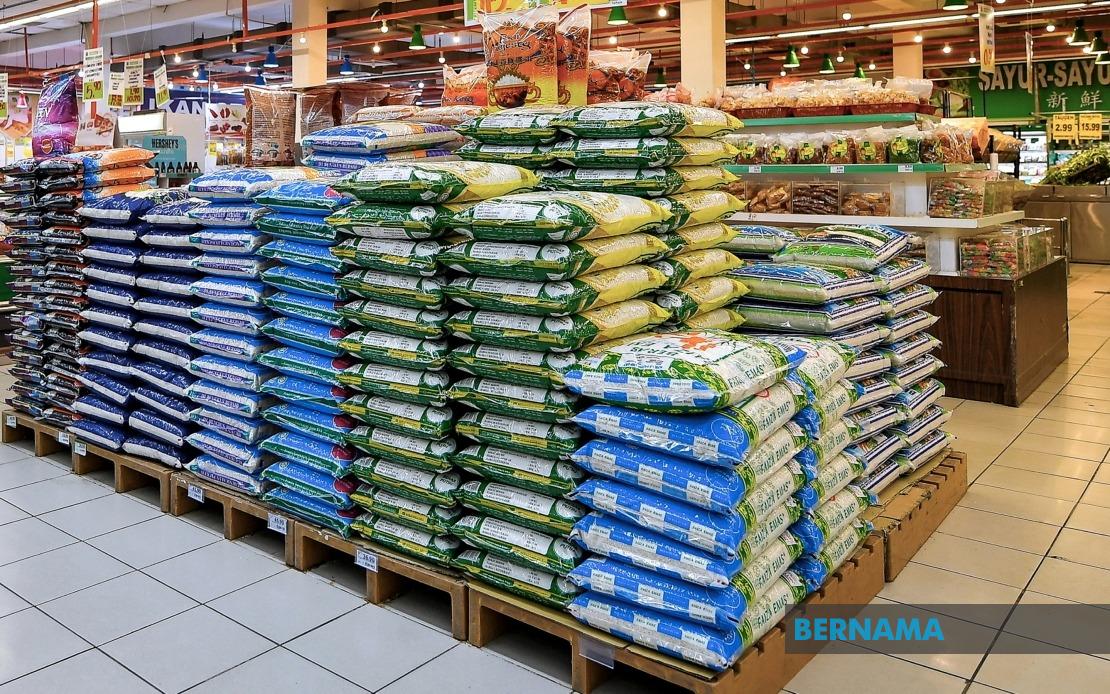
Malaysia's rice security remains robust, with sufficient buffer stocks to sustain the nation's consumption for approximately six months, according to Economy Minister Akmal Nasrullah Mohd Nasir. The assurance comes as global supply chain disruptions continue to threaten food security across multiple nations, prompting governments worldwide to reassess their strategic reserves and pricing mechanisms.
The minister's statement, delivered during a briefing on the evolving international supply crisis, underscores the government's confidence in domestic food availability at a time when regional and global markets face considerable uncertainty. This positioning reflects a deliberate policy focus on protecting Malaysian consumers from the volatile international food market, where prices have experienced significant fluctuations over recent years.
Central to the government's approach is a commitment to maintain Local White Rice pricing without increases, a declaration aimed at providing price certainty for households across the income spectrum. This commitment assumes particular importance given that rice constitutes a foundational dietary staple for Malaysian families, with affordability directly impacting household budgets and overall cost of living pressures that citizens currently navigate.
The stability assurance emerged from discussions during a National Economic Action Council meeting chaired by Prime Minister Datuk Seri Anwar Ibrahim at the Parliament building. The inclusion of food supply stability within high-level economic deliberations signals the government's recognition that food security intersects with broader macroeconomic stability and social cohesion.
Beyond supply guarantees, the government has demonstrated tangible support for agricultural producers through targeted financial assistance. A distribution of RM45.98 million reaching 118,908 paddy farmers across Peninsular Malaysia through the Paddy Farmers Plowing Incentive programme acknowledges the mounting pressures facing the agricultural sector. This intervention recognises that domestic rice production faces headwinds from climatic variability and escalating operational costs that squeeze farmer profitability.
Climate change represents an increasingly significant challenge for Malaysia's agricultural foundation. Unpredictable weather patterns—from erratic monsoon cycles to unexpected flooding—directly threaten rice yields, a concern that extends across Southeast Asia where agricultural production depends heavily on climatic consistency. The government's acknowledgment of climate-related pressures signals awareness that long-term food security requires investment in the farmers who produce it.
Rising production costs compound the climate challenge. Input expenses including seeds, fertilisers, and labour have increased substantially, particularly following global supply chain disruptions and inflation experienced in recent years. Without supportive measures, many smallholder farmers—who constitute the backbone of Malaysian rice production—face declining viability, potentially undermining domestic production capacity that underpins the buffer stock assurance.
The six-month buffer represents a prudent strategic reserve that aligns with international best practices for food security. This level of inventory provides flexibility to navigate supply disruptions from external sources, whether arising from regional agricultural challenges, international trade complications, or geopolitical developments affecting global grain markets. For a nation heavily reliant on imported food commodities across other categories, maintaining this rice reserve constitutes a essential safeguard.
From a regional perspective, Malaysia's explicit focus on domestic rice security reflects lessons from previous episodes of global food crises when exporting nations implemented export restrictions, creating scarcity and price spikes in importing countries. By emphasising local supply sufficiency, Malaysia positions itself less vulnerably within regional and global food supply dynamics, an advantage that extends to macroeconomic stability and social resilience.
The pricing commitment carries particular weight given recent global inflationary pressures that have driven food costs upward across multiple categories. Rice price stability provides anchoring certainty for household food budgets, particularly for lower-income families where rice consumption represents a larger proportion of total food expenditure. This stability, combined with strategic reserves, creates a dual-layered protection against food insecurity.
For farmers, the incentive programme offers more immediate relief from current cost pressures while the government simultaneously works to ensure adequate market demand through domestic consumption supported by price stability. This alignment between supply-side support and demand-side pricing management reflects coordinated economic policy rather than isolated interventions.
Looking forward, this comprehensive approach—combining strategic reserves, farmer support, and price controls—suggests the government recognises food security as integral to political and social stability. The explicit policy messaging aims to reassure consumers during uncertain times, positioning Malaysia as a nation with food availability under control even as global markets experience turbulence. For Malaysian households and businesses, this represents meaningful assurance regarding a fundamental necessity.

