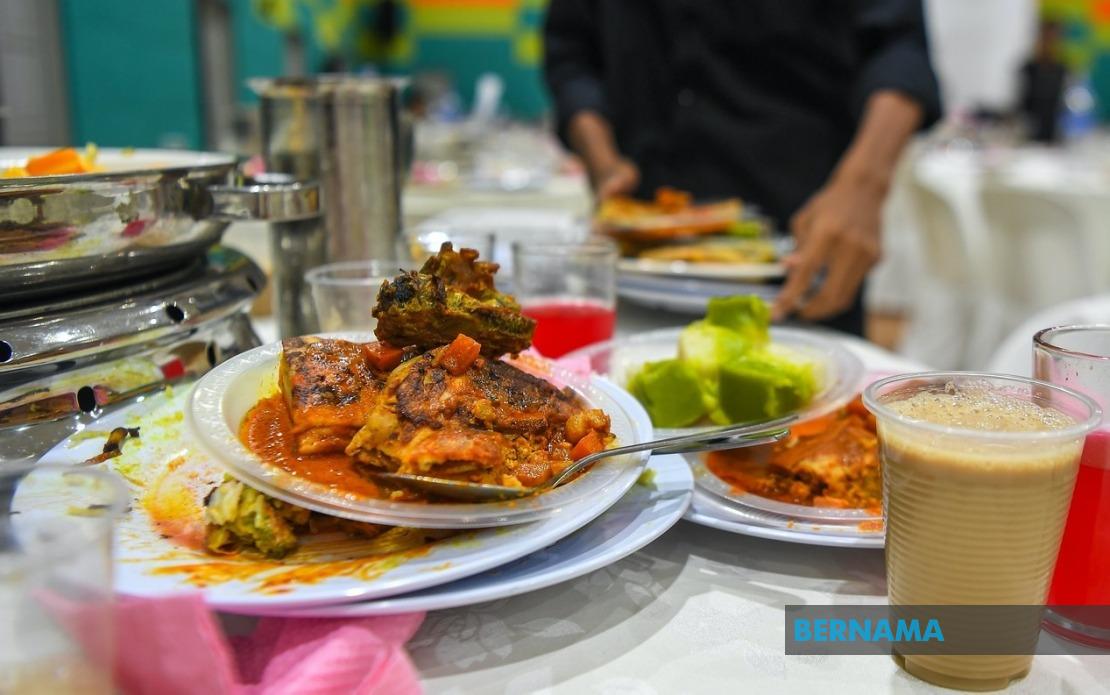
Household food waste across Malaysia has emerged as a symptom of affluence rather than scarcity, with the country's Chief Statistician Datuk Seri Dr Mohd Uzir Mahidin identifying wealth and changing consumption patterns as primary drivers of the wastage epidemic. Speaking ahead of his retirement after nearly nine years steering the Department of Statistics Malaysia, he outlined how the nation's transition beyond subsistence consumption has fundamentally altered purchasing and disposal behaviours, particularly in urban centres and economically vibrant states like Selangor. The pattern reflects a broader Southeast Asian trend where rapid economic development correlates with increased food losses, raising questions about sustainability and resource management in the region.
As Malaysian households have climbed the income ladder, they have simultaneously shed the frugality once necessitated by financial constraints. The Chief Statistician explained that citizens now purchase goods exceeding their actual consumption requirements, a shift that extends beyond food to encompass clothing and other discretionary items. This surplus purchasing stems partly from the psychological effects of affordability—when food is plentiful and often discounted, consumers fail to perceive waste as problematic. The economics are counterintuitive: abundance diminishes value perception, encouraging disposable consumption habits that would have been unthinkable in leaner times. This phenomenon underscores how economic progress, while improving living standards, has inadvertently fostered a culture of casual disregard for food resources.
The National Household Indicators Survey 2025 quantifies the scale of this wastage, estimating annual household food waste between 31.9 kilogrammes and 97.3 kilogrammes per capita. The wide range reflects significant disparities across household income levels and geographic locations, though even the lower figure represents substantial loss. The data reveals a troubling preference for discarding processed and cooked foods, with 94.1 per cent of households reporting such waste compared to 88.7 per cent for raw ingredients. This distinction matters: prepared food represents accumulated labour, cooking fuel, and packaging, making its disposal particularly wasteful from environmental and economic perspectives.
Within raw food categories, vegetables lead wastage at 29.1 per cent, trailed by fruits at 22.4 per cent and seafood at 15 per cent. The prominence of vegetable waste highlights how Malaysians, with increasing access to supermarkets and wet markets, purchase perishables without fully accounting for consumption timelines. Processed food waste follows different patterns, with rice heading the list at 16.7 per cent, likely reflecting cultural food practices where rice features prominently in household meals yet often accumulates in quantities that spoil before consumption. Restaurant and takeaway food comprising 13.8 per cent of processed waste indicates that dining-out culture—increasingly common among middle-class urbanites—generates substantial losses when diners order excessively.
Urban and rural divides in food waste underscore how lifestyle choices, not merely geography, determine wastage rates. Cities display higher per capita food loss due to concentrated social calendars and catering culture, where multiple events occur weekly with overlapping menus. Wedding kenduri and other celebrations in urban areas frequently feature elaborate spreads that guests sample briefly before moving between functions, leaving substantial plate waste. Meanwhile, rural communities traditionally prepared home-cooked meals for gatherings, a practice that inherently encouraged fuller consumption. However, this rural advantage is eroding as commercial catering services expand into smaller towns, imposing urban wastage patterns on previously sustainable communities.
The Chief Statistician highlighted a particularly Malaysian phenomenon: simultaneous purchasing of identical items by family members during promotional periods, resulting in duplication and subsequent spoilage. Parents often buy bulk quantities when sales occur, unaware that adult children have independently made similar purchases. These forgotten items accumulate in refrigerators until expiration, exemplifying how modern grocery shopping—characterized by abundance and promotional incentives—undermines household inventory management. This pattern reflects insufficient communication within families and the absence of traditional household management practices that ensured visibility over stored food.
Income levels correlate directly with food wastage patterns, with higher per capita states experiencing greater losses. Selangor, Malaysia's wealthiest state, exhibits food waste patterns aligned with its elevated purchasing power and intensive social calendar. The proliferation of events in affluent communities creates conditions where catering becomes the default, eliminating incentives to minimize waste through careful meal planning. Wealthier households also possess larger refrigerators and more frequent shopping trips, enabling them to accumulate greater quantities of perishable goods simultaneously. This infrastructure, intended to improve convenience, paradoxically facilitates waste by removing friction from overconsumption.
The survey's findings on waste disposal practices reveal another critical gap: only 20.7 per cent of households separate food waste from general refuse, indicating that food waste reduction remains largely detached from broader circular economy initiatives. Without separation, food waste enters landfills where it decomposes anaerobically, generating methane—a potent greenhouse gas. Malaysia's failure to mainstream food waste segregation means the nation is missing opportunities for composting, animal feed production, and biogas generation. This practice gap reflects both infrastructure inadequacy and weak cultural messaging around waste reduction, suggesting that addressing Malaysia's food waste challenge requires behavioural change beyond convenience improvements.
Datuk Seri Dr Mohd Uzir's analysis points toward a fundamental economics lesson: when price fails to reflect true scarcity value, consumption becomes divorced from need. Heavy discounting and promotional strategies, while benefiting consumers financially, inadvertently encourage wasteful purchasing by disguising the true cost of food production. Agricultural inputs, water, labour, and transportation costs embedded in each item become invisible when prices plummet. This pricing disconnect particularly affects lower-income earners who, initially attracted by deals, may lack storage capacity or consumption patterns to justify bulk purchases, resulting in proportionally higher wastage rates among price-conscious shoppers forced to buy larger quantities to achieve savings.
The implications for Malaysian policy extend across multiple fronts. Food waste reduction strategies must address not merely individual behaviour but systemic incentives that encourage overconsumption. Retail practices promoting excessive purchasing through aggressive discounting require examination, as do catering conventions that normalize plate waste at social functions. Educational campaigns emphasizing food appreciation and gratitude could resonate within Malaysian culture's traditional emphasis on family and community values. Agricultural and food distribution systems require redesign to minimize losses at the farm and retail stages, complementing household-level efforts.
Regionally, Malaysia's experience offers cautionary insights for neighbouring Southeast Asian economies approaching similar income thresholds. Thailand, Vietnam, and Indonesia are witnessing comparable lifestyle transitions that will inevitably increase food waste unless proactive measures precede widespread adoption of surplus-consumption patterns. The window for establishing food-conscious cultural norms before affluence becomes universal remains open, yet narrows annually as urbanization and rising incomes accelerate across the region. Malaysia's data provides empirical grounding for region-wide policy discussions about sustainable prosperity.
Datuk Seri Dr Mohd Uzir's 36-year public service career and nine-year tenure as Chief Statistician culminated in articulating a paradox central to contemporary Malaysia: the nation has achieved sufficient prosperity that meeting basic nutritional needs poses no challenge, yet this success has created new problems of abundance management. His retirement marks not an endpoint but rather a beginning for subsequent policymakers to grapple with transforming data insights into actionable change. Food waste reduction will require acknowledging that affluence alone does not guarantee wisdom in consumption, and that cultural recalibration toward food appreciation represents an essential complement to economic development.

