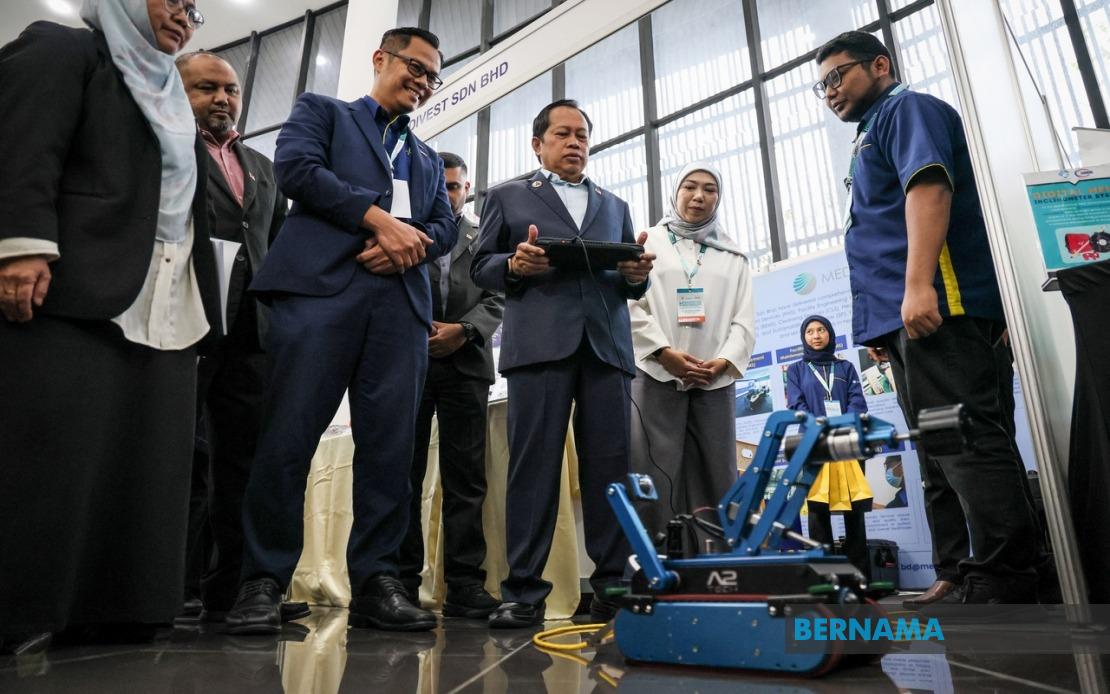
Malaysia's construction and public works sector stands at a crossroads, with government officials now sounding the alarm about a vastly underdeveloped maintenance economy that threatens to waste billions in infrastructure investment. Speaking at the Contractors Convention 2026: NexGen Builders in Butterworth, Deputy Works Minister Datuk Seri Dr Ahmad Maslan outlined a compelling market opportunity that remains largely overlooked by the nation's contracting community. Between 2023 and 2025, the facility management and maintenance sector recorded RM39.59 billion in project value across 1,541 declared initiatives—yet this substantial market remains concentrated among fewer than 500 registered specialists.
The disparity between market size and contractor participation reveals a structural weakness in how Malaysia approaches infrastructure longevity. Construction Industry Development Board records show that only 468 companies hold the requisite F01 and F02 facility management specialisations, a shortfall that raises questions about how effectively public assets are being maintained after initial completion. This contractor shortage has immediate implications for Malaysian taxpayers and infrastructure users, as the maintenance backlog continues to expand across roads, bridges, government buildings, and municipal facilities nationwide. The ministry's identification of this gap suggests that many public assets may be deteriorating faster than necessary due to insufficient specialist attention and fragmented maintenance service delivery.
Dr Ahmad's remarks reflect a strategic shift in Malaysian infrastructure thinking—one that moves beyond the traditional construction-focused model where projects are completed and then largely abandoned to decay. For decades, Malaysian authorities invested heavily in new construction while treating maintenance as an afterthought, a secondary concern handled by underfunded departments or inexperienced contractors. This approach has proven economically irrational, as building deterioration accelerates dramatically when maintenance is delayed or poorly executed. Bridges require regular inspection and repair to prevent structural failure; roads need consistent resurfacing to prevent expensive reconstruction; government buildings demand systematic upkeep to extend their functional lifespan by decades. The ministry's position now emphasises that facility management represents not merely a cost centre but a legitimate business sector with substantial revenue potential.
The underlying economics favour contractors willing to shift their business models toward maintenance services. A construction project worth RM100 million typically generates revenue over one to three years, while facility management contracts for the same asset can generate steady revenues across twenty or thirty years of asset life. For contractors facing cyclical construction downturns and competitive bidding pressures, facility management offers revenue stability and predictable margins. Yet the sector remains underpopulated, suggesting that market information asymmetries, regulatory barriers, or simple industry conservatism have prevented contractors from recognising these opportunities. The ministry's push to increase FM contractor registrations aims to address this disconnect and unlock latent market potential.
The launch of CIS 33:2026—the Facility Management Good Practice Guide—signals the government's commitment to professionalising Malaysia's maintenance sector through standardisation. This framework establishes common protocols and best practices that allow asset owners, facilities managers, and contractors to coordinate their efforts within a systematic structure. Standardisation matters because it reduces information asymmetries, allows smaller contractors to compete effectively against established players, and enables consistent quality across diverse maintenance projects. For Malaysian property owners and government agencies managing extensive asset portfolios, a standardised FM approach promises better value capture from existing infrastructure and reduced lifecycle costs. The guide essentially attempts to convert facility management from an ad-hoc, reactive function into a professional discipline comparable to other engineering specialisations.
From a regional perspective, Malaysia's facility management gap reflects challenges common across Southeast Asia, where rapid infrastructure expansion has outpaced capacity in maintenance services. Thailand, Indonesia, and the Philippines have struggled with similar contractor shortages in FM sectors, often resulting in premature infrastructure degradation. Malaysia's proactive approach—establishing standardised practices and actively recruiting contractors—positions the country ahead of regional competitors in developing mature maintenance markets. As ASEAN countries increasingly prioritise infrastructure efficiency and asset longevity over pure construction volume, those with robust FM sectors will capture disproportionate value and demonstrate superior infrastructure stewardship.
The contractor base expansion that KKR seeks has immediate practical implications for Malaysian construction companies. Small and medium-sized contractors particularly stand to benefit, as facility management projects typically require smaller capital outlays than major construction works and offer more flexible scheduling. Companies currently operating in construction can gradually diversify into maintenance contracts without abandoning existing capabilities. This diversification reduces business risk during construction market downturns and creates more consistent employment for skilled workers. For contractors with established relationships to property managers, facility owners, or government agencies, the entry barriers into FM services remain relatively low—primarily requiring appropriate certification and demonstrated competency rather than massive capital investment.
The ministry's public advocacy for FM sector expansion also signals policy intent to make infrastructure maintenance a budgetary priority. Government agencies typically underinvest in maintenance because visible new construction generates political credit while invisible maintenance work does not. By elevating maintenance to sector status and creating professional pathways through specialised contractors, the ministry encourages budget officials to allocate resources toward upkeep. This budgetary reorientation has implications throughout Malaysian society: roads remain safer and more passable, building deterioration slows, and public asset value preservation improves. Over multi-year periods, increased FM spending prevents the catastrophic failures—bridge collapses, building evacuations, road washouts—that ultimately cost far more to remedy than systematic maintenance.
The RM39.59 billion figure cited by Dr Ahmad represents not merely historical market size but a projection of ongoing demand that will only increase as Malaysia's infrastructure stock ages. Buildings constructed during the rapid development of the 1990s and 2000s now require intensive maintenance; roads laid two decades ago need reconstruction; municipal facilities require substantial renovation. This maintenance wave creates persistent demand for FM services that will sustain contractor revenues for years. Contractors entering the sector now position themselves to capture expanding market share as this wave accelerates throughout the decade. The government's emphasis on standardised practices through CIS 33:2026 further establishes professional frameworks within which this expanded contractor base can operate competently and profitably.
Looking forward, the convergence of market opportunity, policy support, and standardised practice frameworks creates conditions favouring rapid FM sector growth. The 468 registered contractors currently serving RM39.59 billion in annual projects suggests substantial room for expansion—potentially doubling or tripling the specialist contractor base without saturating demand. For Malaysian companies willing to invest in certification, training, and professional capability development in facility management, the next decade offers genuine wealth creation opportunities. The ministry's Contractors Convention messaging essentially extends an open invitation to the construction industry to reimagine itself less as builders of new structures and more as stewards of Malaysia's vast existing infrastructure portfolio. Success in capturing this opportunity will require contractors to shift mentalities, invest in specialised capabilities, and commit to long-term maintenance relationships rather than episodic construction engagements—but the financial rewards for those making this transition appear substantial.

