Malaysia's online scam problem has reached crisis proportions, with authorities documenting more than 66,000 cases that resulted in approximately RM2.97 billion in losses throughout the past year. The scale of this criminal activity reveals a troubling transformation in how fraud is being perpetrated across the nation, moving beyond opportunistic crimes committed by isolated individuals to become a coordinated assault on digital society orchestrated by organised syndicates. At a landmark awareness conference held at HELP University in Kuala Lumpur, crime prevention specialists highlighted the mounting sophistication and scale of these schemes, painting a picture of a financial threat that now pervades every sector of the Malaysian economy.
Datuk Kamarudin Md Ali, who serves on the executive committee of the Malaysia Crime Prevention Foundation and leads the British Graduates Association Malaysia, stressed that scamming has evolved into a challenge affecting not just individual victims but entire families and business enterprises. His remarks at the BGAM Lecture Series: Scam Awareness 2.0-Action & Prevention underscored a critical insight: the responsibility for combating fraud cannot rest solely with law enforcement authorities. Rather, Md Ali argued, each informed member of the public must become an active participant in the defensive infrastructure against scammers, creating a layered protection system that extends far beyond traditional policing.
The deliberations were overseen by Tan Sri Dr Syed Hamid Albar, Asia e University's chancellor and a former Home Minister who previously chaired the Malaysia Crime Prevention Foundation. His participation in the forum reflected the government's recognition that scams represent not merely a financial crime but a fundamental challenge to public confidence in Malaysia's digital infrastructure and the trustworthiness of online transactions. The event brought together a diverse coalition including government officials, law enforcement specialists, cybersecurity experts, business leaders, and academic researchers, signalling a whole-of-society mobilisation against this threat.
The psychological dimension of modern scamming formed a central focus of expert analysis. Prof Datuk Seri Dr Akhbar Satar, director of the HELP University Institute of Criminology and Criminal Justice, articulated a striking observation: scammers fundamentally succeed not through technical computer hacking but by exploiting human psychology and manipulating the decision-making processes of their targets. This insight reshapes how Malaysia must approach prevention. Rather than focusing exclusively on technological defences, authorities and institutions must prioritise building integrity, fostering critical thinking capabilities, and cultivating public awareness. Universities, in Satar's assessment, bear particular responsibility for equipping graduates with the ethical frameworks and analytical skills required to recognise and resist manipulation attempts.
The integration of artificial intelligence into criminal operations has markedly amplified the threat landscape. Syndicates now deploy AI-generated deepfakes and other sophisticated digital tools to craft convincing social engineering attacks that exploit emotional triggers and manufactured urgency. These technological enhancements, combined with traditional psychological manipulation, have created a new class of fraud that older populations and less digitally literate citizens find increasingly difficult to identify and evade. The sophistication of these attacks means that technological literacy alone offers insufficient protection; citizens require understanding of the psychological tactics underlying these schemes.
Syed Hamid's intervention emphasised that enforcement approaches, while necessary, cannot serve as the primary bulwark against scamming. Prevention through education and public awareness forms the foundation of a resilient society. He articulated a compelling logic: an informed population develops strong cognitive defences against scam attempts before they occur, whereas enforcement only addresses crime after victims have already suffered losses. This preventative philosophy suggests that Malaysian policymakers should substantially increase investment in digital literacy programmes, cybersecurity education in schools, and public awareness campaigns targeting vulnerable demographic groups.
The regional context amplifies Malaysia's vulnerability. Datuk Seri Ramli Mohamed Yoosuf, formerly the director of Bukit Aman's Commercial Crime Investigation Department, warned that Southeast Asia has emerged as the world's epicentre for commercial crime operations. Scam losses across the region in 2025 are estimated between USD88 billion and USD114 billion—a staggering figure that dwarfs Malaysia's individual losses and suggests that criminal operations view the Southeast Asian region as an optimal operating environment. Organised scam compounds situated in Myanmar, Cambodia, Laos and the Philippines collectively generate approximately USD40 billion annually, drawing trafficked labour from more than 80 countries and leveraging advanced technologies including AI-powered deepfakes and cryptocurrency laundering systems.
Malaysia has initiated several policy and institutional responses to counter this escalating challenge. The Cybersecurity Act 2024 provides updated legal frameworks addressing digital crime, while enhanced alignment with Financial Action Task Force standards strengthens Malaysia's position within the international financial oversight system. The establishment of the National Scam Response Centre represents an important institutional innovation, creating a centralised mechanism for coordination across multiple government agencies. However, these measures, while significant, remain insufficient given the speed at which scam syndicates adapt their methods and expand their operations. Md Ali emphasised that scammers continuously evolve their techniques, meaning that Malaysian defences must similarly maintain a trajectory of innovation and adaptation.
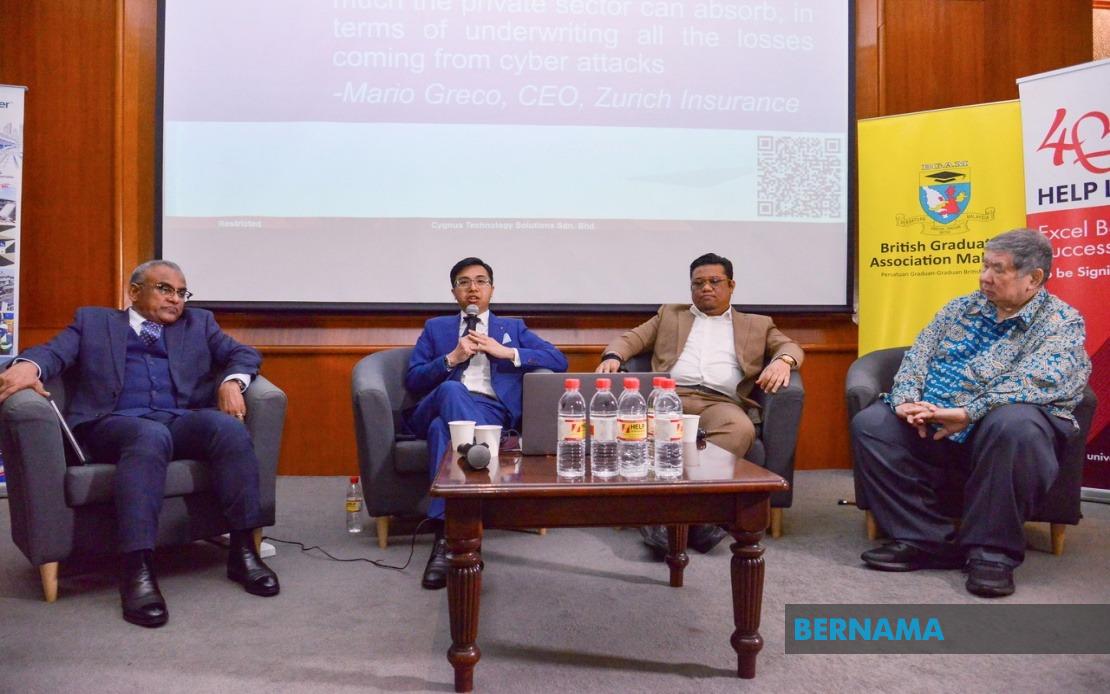
The public discourse component of Malaysia's response also warrants attention. A forum moderated by Malaysian Press Institute president Datuk Yong Soo Heong, featuring panellists including MCPF executive member Eugene Teow and consultant Rahmat Fitri Abdullah from the Malaysia Anti-Scam Community Organisation, examined emerging scam trends, investigation methodologies, cybersecurity safeguards, digital trust mechanisms, and media literacy. These discussions highlighted that effective protection requires both individual vigilance and organisational capability. Citizens must develop practical skills for recognising suspicious communications and transactions, while simultaneously, financial institutions, technology providers, and businesses must implement robust verification systems and fraud detection mechanisms.
The convergence of testimony from senior government officials, law enforcement leaders, and academic experts reveals a consensus perspective: no single institution can effectively combat the scam threat in isolation. Government enforcement, private sector technological innovation, educational institution capability-building, media literacy efforts, and community-based awareness campaigns must operate in concert. This integrated approach acknowledges that scams succeed through the exploitation of information asymmetries, psychological vulnerabilities, and coordination breakdowns between institutions. Building a scam-resilient Malaysia demands simultaneous progress across all these dimensions—a challenge that requires sustained commitment and substantial resource allocation beyond current levels.

