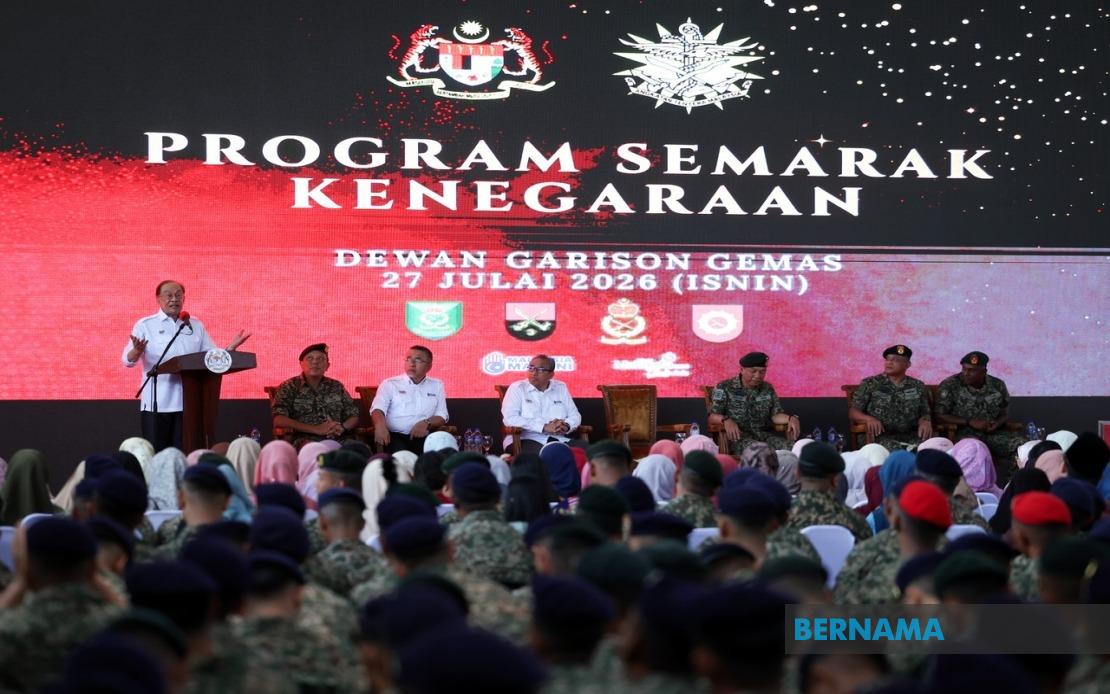
Prime Minister Anwar Ibrahim has credited Malaysia's selection as host for the Formula 1 Grand Prix to a confluence of factors centred on the country's demonstrated stability and the personal rapport between the nation's sovereign and international leaders. Speaking on the landmark decision, Anwar emphasised that the strong relationship between Sultan Ibrahim and King Hamad bin Isa Al Khalifa of Bahrain played a meaningful role in attracting the prestigious motorsport event to Malaysian shores. The connection between the two monarchs reflects the depth of diplomatic ties that underpin not only bilateral relations but also Malaysia's broader engagement within the Arab world.
The Prime Minister stressed that Malaysia's peaceful environment forms the foundation upon which international confidence in hosting world-class events rests. Without the assurance of security and social cohesion, he argued, no organisers of global significance would consider committing their resources and reputation to a venue. This observation carries particular weight given the motor racing industry's need for extensive infrastructure, international participation, and uninterrupted operational stability across multiple race weekends. The absence of civil unrest or political volatility creates the predictable environment that multinational corporations and sporting bodies require when making long-term commitments.
Anwar pointed to Malaysia's proven track record in executing international events of the highest calibre as another decisive factor. The country's experience in organising complex, large-scale gatherings has built institutional credibility over decades. This demonstrated competence extends across logistics, crowd management, technological infrastructure, and coordination between public and private entities. When Formula 1 and its stakeholders evaluate potential venues, they assess not merely the physical facilities but the organisational maturity and reliability of the entire ecosystem surrounding the event. Malaysia's portfolio of successful international gatherings positioned it favourably against competing candidates.
The Arab world's recognition of Malaysia's stewardship as ASEAN Chair during the previous year emerged as an additional contributing factor. Anwar described that chairmanship as among the most effectively managed in the regional bloc's history. This acknowledgment from influential Arab nations signals Malaysia's capacity for diplomatic leadership and institutional management at the highest levels. When developing nations demonstrate competence in guiding complex multilateral organisations, they enhance their standing internationally and attract the attention of global actors seeking reliable partners for significant undertakings. The F1 selection thus represents not merely a sporting achievement but validation of Malaysia's broader governance credentials.
Crucially, Anwar deliberately deflected personal credit for these accomplishments, instead attributing success to Malaysia's national system and the collective effort of diverse stakeholders. He specifically enumerated the contributions of the populace, military personnel, police forces, civil servants, and private sector operators. This framing reflects a recognition that international confidence in hosting major events depends on the reliability and professionalism of entire institutional structures rather than individual leadership. The seamless coordination required—from security forces ensuring public safety to hotel operators delivering world-class hospitality—demands institutional strength that transcends any single political figure.
The hospitality sector receives particular mention in Anwar's assessment, underscoring that Formula 1's appeal encompasses not only the racing spectacle itself but the entire experience surrounding it. Teams, drivers, sponsors, media, and spectators collectively number in the tens of thousands, all requiring accommodation, dining, and services of international standard. Malaysia's proven capacity to deliver such infrastructure at scale, across numerous establishments managed to consistent quality standards, directly influences whether event organisers perceive a venue as viable. The cumulative competence of thousands of service workers across the hotel and restaurant industries thus becomes part of the nation's competitive advantage in bidding for global events.
The selection carries significant implications for Malaysia's economy and international standing. Formula 1 generates substantial tourism revenue, creates employment opportunities, and elevates a host nation's profile on the global stage. Beyond immediate financial returns, the event represents a statement to the world that Malaysia possesses the stability, infrastructure, and governance capability to manage complex international undertakings. This perception enhancement can facilitate inbound investment, attract business headquarters relocations, and strengthen Malaysia's position as a regional hub for commerce and industry.
Anwar's emphasis on Malaysia's peaceful environment as a prerequisite for securing the F1 Grand Prix indirectly acknowledges the contrast with some neighbouring or competing venues where political instability or security concerns might deter such commitments. In Southeast Asia's context, where several nations have experienced civil unrest or governance challenges, Malaysia's relative stability becomes a competitive asset. Maintaining this stability requires sustained commitment to institutional integrity, rule of law, and inclusive governance—elements that undergo constant pressure in any developing democracy.
The role attributed to royal relationships in securing international events reflects the continued significance of monarchies in facilitating diplomatic engagement and international agreements, particularly within the Arab world. The personal connection between Sultan Ibrahim and King Hamad bin Isa Al Khalifa transcends formal diplomatic channels, creating pathways for understanding and cooperation that can influence decisions affecting economic opportunities and prestige projects. This dynamic illustrates how traditional institutions and personal relationships continue to intersect with contemporary international business practices in ways that formal analyses sometimes overlook.
Moving forward, Malaysia faces the challenge of delivering on the implicit promises that secured the F1 selection. The hosting of the Grand Prix will test the very institutional competencies, security arrangements, and service standards that Anwar credited. Success will strengthen Malaysia's candidacy for future international events and reinforce perceptions of institutional reliability. Conversely, any shortcomings could undermine the carefully cultivated image of a stable, professionally managed nation. The stakes thus extend beyond a single sporting event to encompass Malaysia's broader positioning in global competitions for prestige, investment, and influence.

