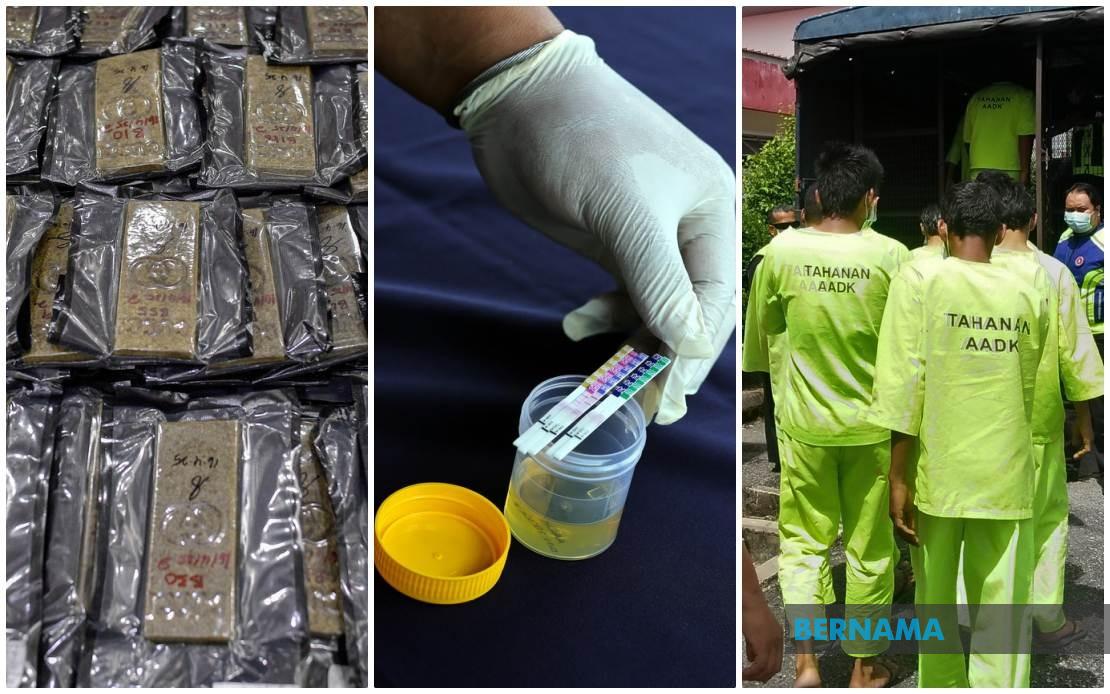
The fight against drug abuse in Malaysia has entered a critical phase, with synthetic substances now dominating the nation's narcotics landscape in unprecedented ways. Home Minister Datuk Seri Saifuddin Nasution Ismail disclosed that 141,817 synthetic drug abuse cases were registered during the previous year, marking a continuation of an alarming upward trajectory that demands immediate and comprehensive government intervention.
The statistics paint a deeply troubling picture of accelerating drug dependency across the country. After 145,526 cases in 2023, the figures spiked to 192,852 in 2024, demonstrating an explosive growth rate that reflects both the increasing availability of these substances and their deepening penetration into Malaysian society. These numbers represent far more than mere statistics—they translate into hundreds of thousands of individuals, families, and communities grappling with addiction, crime, and lost potential. The concentration of cases among those aged 15 to 39, accounting for nearly 75 per cent of recorded incidents, suggests that Malaysia's young and productive demographic faces particular vulnerability to synthetic drug addiction.
What distinguishes the current crisis from previous drug epidemics is the type of substance driving it. Synthetic drugs, particularly Amphetamine-Type Stimulants, now account for approximately 70 per cent of all drug abuse cases nationwide, a dramatic shift from the traditional reliance on heroin, cannabis, and ketum that characterised earlier decades. This transition reflects both changing market dynamics and the technological sophistication of modern trafficking networks that synthesise potent substances in clandestine laboratories.
The east coast corridor has emerged as ground zero for this synthetic drug crisis, representing a geographic concentration that demands targeted policy responses. Districts such as Pendang, Kuala Krai, Bachok, Besut, and Mersing have recorded the highest abuse rates, indicating that certain regions face exponentially greater challenges than others. This geographic concentration suggests that trafficking routes, manufacturing hubs, or local vulnerabilities specific to these areas require urgent investigation and intervention. The east coast's economic profile, port accessibility, and demographic characteristics may all contribute to why synthetic drug networks have established particularly strong footholds in these communities.
Among synthetic substances, methamphetamine, locally known as syabu, has become the dominant force in this crisis. Users across Malaysia, particularly in affected regions, have increasingly shifted away from traditional drugs towards this highly addictive stimulant. The preference for methamphetamine reflects its potency, relatively affordable street pricing, and the intense yet short-duration high that creates rapid psychological dependence. Law enforcement agencies have documented this trend through seizures and arrests, with methamphetamine trafficking networks demonstrating remarkable adaptability and resilience in the face of enforcement efforts.
A more sinister development has recently emerged in Malaysia's drug landscape: fentanyl, a synthetic opioid exponentially more dangerous than morphine, has begun appearing in domestic supplies. Police discovered fentanyl while conducting operations against adulterated vapes, revealing how traffickers exploit increasingly creative distribution channels to introduce novel substances into communities. Although the Home Minister cautioned that fentanyl's prevalence has not yet reached alarming proportions compared to established synthetic drugs, its very presence signals a troubling evolution in trafficking tactics. Fentanyl's extreme potency—dozens of times stronger than morphine—means that even microscopic overdoses can prove fatal, transforming a public health crisis into a public safety emergency.
Government response mechanisms have evolved to address this shifting landscape. The Ministry of Health, National Anti-Drugs Agency, Narcotic Addiction Rehabilitation Centres, and Royal Malaysia Police have coordinated data collection and analysis to map the crisis spatially and demographically. Fentanyl has been formally incorporated into Malaysia's scheduled substances list through amendments to the Drug Dependants Act and the Dangerous Drugs Act 1952, providing legal enforcement tools for authorities. These administrative actions represent necessary first steps, yet they address only the enforcement dimension of a multifaceted problem.
The prison system itself has become a reflection of Malaysia's synthetic drug emergency. Approximately 70 per cent of inmates maintain links to drug-related offences, whether as convicted criminals or remand detainees. In certain facilities such as Machang, drug-related cases account for nearly the entire prisoner population, transforming correctional institutions into de facto addiction treatment centres struggling with overwhelming caseloads. This concentration suggests that incarceration alone cannot resolve the underlying addiction crisis; rehabilitation infrastructure must expand proportionally with caseloads to prevent prisons from becoming drug-using communities unto themselves.
The government's preventive strategy encompasses multiple approaches, including community-based prevention programmes, educational initiatives within schools and universities, family intervention frameworks, and workplace awareness efforts. The National Anti-Drugs Agency coordinates these initiatives while collaborating with the Royal Malaysia Police and Customs Department on enforcement operations. However, the scale of prevention programmes must match the magnitude of the crisis. With 560 cases per 100,000 Malaysians recorded so far this year, existing programmes may reach only a fraction of vulnerable populations and at-risk communities requiring intervention.
A particularly vexing enforcement challenge has emerged through technological advancement. Online platforms have democratised drug purchasing, allowing individuals to acquire synthetic substances through digital marketplaces that operate outside regulatory frameworks and enforcement jurisdictions. The anonymity and borderless nature of e-commerce have created novel distribution channels that traditional law enforcement struggles to monitor or interdict. This technological barrier means that supply-side enforcement alone cannot stem demand or availability; demand reduction through treatment, prevention, and rehabilitation must become equally prioritised.
The question of whether Malaysia functions as a transit hub or distribution centre for international drug trafficking networks remains pertinent given regional trafficking dynamics. The Home Minister's response focused on technological vulnerabilities rather than directly addressing transnational trafficking structures, suggesting either diplomatic sensitivities or genuine uncertainty about Malaysia's role within broader Southeast Asian drug supply chains. Regardless, the presence of fentanyl and the scale of synthetic drug abuse indicate that Malaysia cannot seal itself from international trafficking networks; regional cooperation mechanisms must be strengthened to address supply sources upstream.
Looking forward, Malaysia's response to this deepening crisis requires sustained political commitment and resource allocation across multiple fronts. Treatment capacity must expand dramatically to accommodate the hundreds of thousands requiring addiction services. Law enforcement must evolve beyond traditional interdiction towards disrupting online trafficking platforms and addressing manufacturing infrastructure. Communities most heavily affected require targeted investment in economic development, youth opportunity creation, and social support systems that reduce vulnerability to addiction. Until these comprehensive responses materialise proportionally to the crisis's magnitude, Malaysia's synthetic drug epidemic will likely continue its troubling expansion.