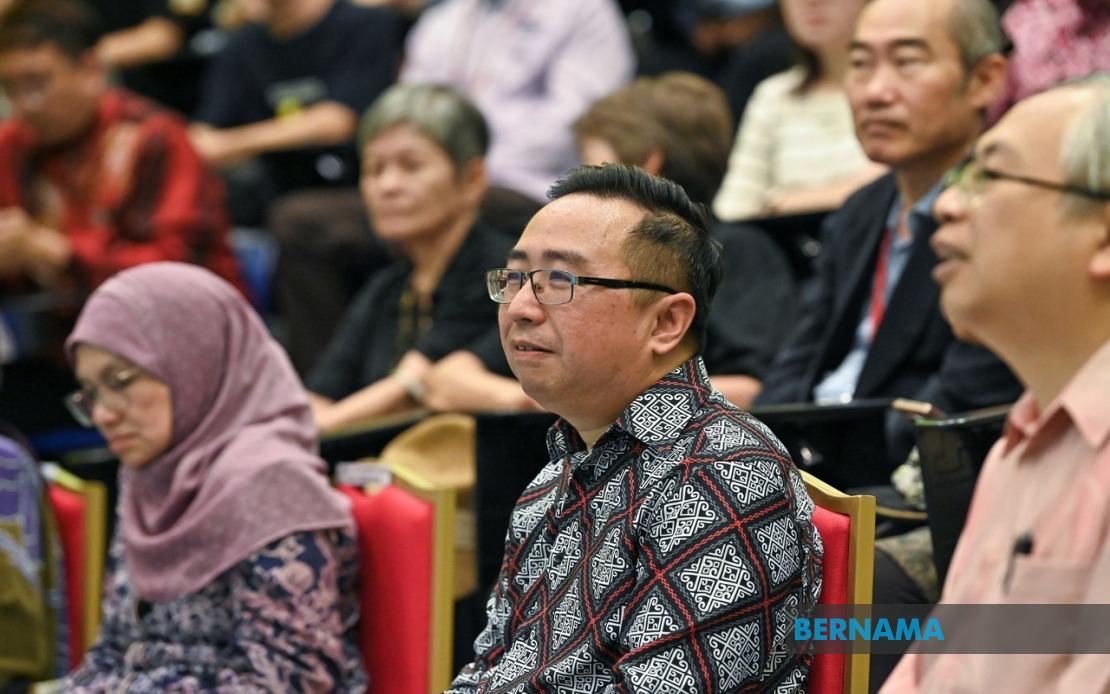
The influx of high-technology investments into Malaysia is generating significant employment prospects for graduates in science and technology fields, according to Science, Technology and Innovation Minister Datuk Chang Lih Kang. Speaking at the 20th Malaysia Festival of the Minds at Universiti Tunku Abdul Rahman in Kampar, Chang highlighted that the nation's growing tech sector is experiencing a shortage of skilled professionals, creating a favourable hiring environment for young talent entering the workforce.
Chang's remarks come at a time when global tech companies and semiconductor manufacturers are increasingly turning to Malaysia as a manufacturing and innovation hub. The minister emphasised that this trend represents a tangible shift in economic opportunity for STEM-educated workers, not merely aspirational talk. He noted that the government's efforts to attract high-value technology investments are translating into concrete job creation across various technology disciplines, from semiconductor design to advanced manufacturing and artificial intelligence.
The 20th Malaysia Festival of the Minds serves a dual purpose in the government's talent cultivation strategy. Beyond celebrating scientific achievement, the event functions as an outreach initiative to directly engage students about career pathways in technology sectors. Chang stressed that addressing misconceptions about technology and automation is equally important, particularly the widespread concern that artificial intelligence will displace human workers. By communicating the Ministry of Science, Technology and Innovation's perspective directly to students, rather than relying on indirect channels, the government aims to build confidence in STEM career choices.
The demand-supply imbalance in the tech workforce reflects Malaysia's strategic positioning within global semiconductor and advanced manufacturing supply chains. As multinational technology firms expand operations in Malaysia to diversify production away from geopolitical risks, they require substantial numbers of engineers, technicians, and specialists with advanced qualifications. This creates a pipeline challenge: universities and vocational institutions must accelerate their output of qualified graduates to meet industry needs. Chang's announcement underscores the government's recognition that talent availability could become a bottleneck limiting Malaysia's ability to capture these investment opportunities.
Coordination between government, educational institutions, and industry players represents a cornerstone of Malaysia's approach to building a competitive STEM talent base. The government is working systematically with universities to reshape curricula and increase enrolment in science and technology programmes. Simultaneously, industry partners are engaged in identifying specific skills gaps and shaping educational priorities accordingly. This collaborative framework aims to ensure that graduates possess skills directly aligned with employer requirements, reducing the transition period from university to productive employment.
Beyond immediate employment concerns, the minister outlined a substantial investment commitment to advancing Malaysia's technological capabilities in a critical semiconductor industry segment. The government has allocated RM92 million from the Malaysia Science Endowment towards strengthening advanced packaging technology capabilities, while five industry partners have contributed RM93 million, totalling RM185 million over the next two years. This public-private partnership model reflects a strategic shift where both government and commercial entities share responsibility for developing foundational technologies that support Malaysia's tech ecosystem.
The advanced packaging technology initiative addresses a crucial element of the semiconductor value chain. Packaging represents the final stage in semiconductor manufacturing, where silicon chips are protected and connected to circuit boards for integration into electronic devices. As global demand for semiconductors intensifies and supply chain resilience becomes increasingly important, advanced packaging capabilities position Malaysia as a more comprehensive semiconductor hub rather than merely a assembly location. This technological upgrade can attract higher-value manufacturing investments and create more specialised, higher-paying positions for skilled workers.
The two-year timeline for achieving advanced packaging technology objectives reflects realistic but ambitious goals within Malaysia's broader semiconductor roadmap extending to 2028. Developing sophisticated manufacturing capabilities requires not only capital investment but also technical expertise, research infrastructure, and workforce training. The minister acknowledged that funding complexity and technical challenges present obstacles, yet expressed confidence in meeting these targets through the combined efforts of government agencies, research institutions, and industrial partners working in coordinated fashion.
For Malaysian students currently evaluating career paths, these developments carry substantial implications. The convergence of government investment in technology capability building, industry expansion of operations in Malaysia, and structured talent development initiatives creates an unusually favourable employment landscape for STEM graduates. Unlike previous periods when tech sector jobs were concentrated in a limited number of specialisations or companies, the current expansion is driving diversified demand across multiple technology domains and geographic locations throughout Malaysia, from semiconductor manufacturing clusters in Penang to growing tech centres in the Klang Valley.
The government's messaging also addresses anxieties about technological displacement that influence student choices in some quarters. Rather than viewing artificial intelligence and automation as threats to employment, the official perspective frames these technologies as creating new categories of specialised work requiring advanced human expertise. Software engineers designing AI systems, technicians maintaining automated manufacturing equipment, and researchers developing next-generation semiconductors all represent roles that will proliferate alongside technological advancement. This framing seeks to encourage rather than discourage entry into fields where Malaysia needs substantial talent infusions.
The Malaysia Science Endowment's role in funding advanced technology development demonstrates how government financial mechanisms can catalyse innovation beyond what government budgets alone could achieve. By committing RM92 million and securing matching industry contributions, the government leveraged its resources to unlock significantly larger private sector investment in strategic technology areas. This approach proves particularly effective for technologies requiring substantial upfront investment before commercial returns emerge, creating a risk-sharing model that encourages industrial participation in capability building.
For regional context, Malaysia's emphasis on semiconductor and advanced technology capabilities positions the nation competitively within Southeast Asia's broader technology landscape. As the region becomes increasingly important to global semiconductor supply chains and technology manufacturing, countries investing aggressively in workforce development and capability building will capture disproportionate benefits. Malaysia's coordinated approach to talent development, infrastructure investment, and public-private collaboration aims to secure a leading position within this regional competition for technology investment and employment growth.
Looking forward, the success of these initiatives depends substantially on whether Malaysia can convert policy commitments and financial allocations into sustained workforce growth in STEM fields. Universities must attract qualified students, maintain rigorous academic standards, and adapt programmes to evolving industry requirements. Industry partners must deliver on implied job creation promises and provide mentoring and internship opportunities that facilitate student transition to employment. Government must maintain policy consistency and funding commitments even as political cycles and budgetary pressures create competing demands. The convergence of these elements will determine whether STEM graduates in coming years experience the abundance of opportunities that Chang described.

