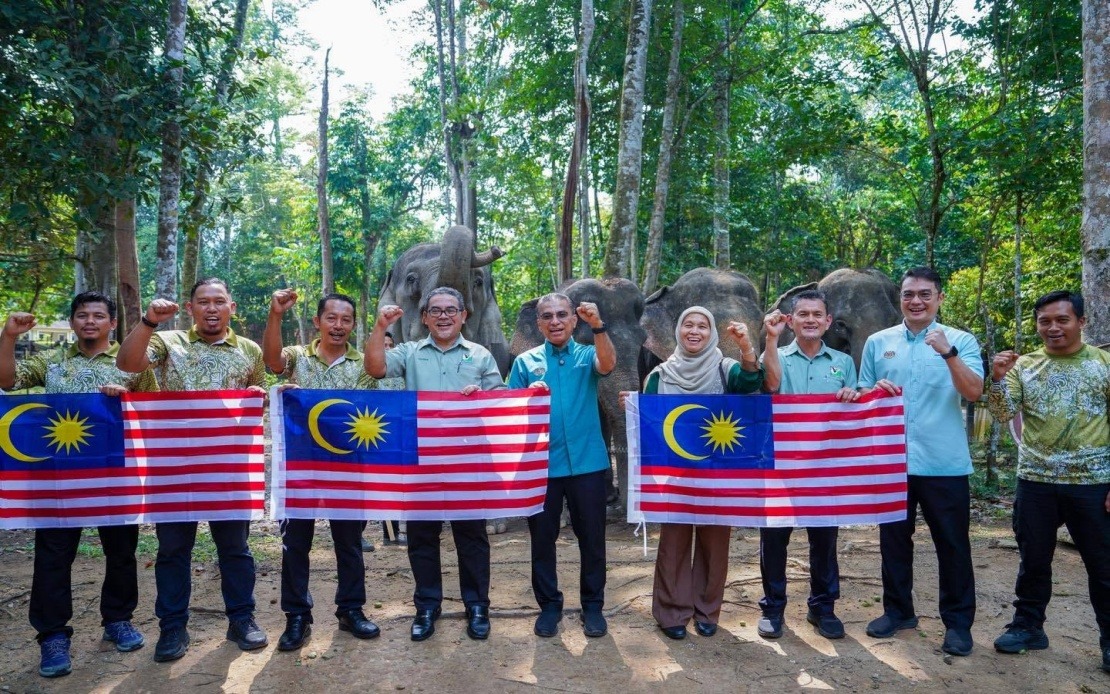
The Ministry of Natural Resources and Environmental Sustainability (NRES) is actively working on developing innovative approaches to address the escalating problem of human-wildlife conflicts across the country. Speaking at an event in Tangkak, Deputy Minister Syed Ibrahim Syed Noh acknowledged that these incidents have become a pressing challenge for Malaysia's Department of Wildlife and National Parks (Perhilitan), particularly concerning the management of wild elephants that increasingly venture into populated areas.
The growing frequency of human-wildlife encounters reflects a fundamental tension facing Malaysia's environmental management strategy. As the nation continues to expand infrastructure, agricultural operations, and residential areas, wildlife habitats shrink correspondingly, forcing animals into closer proximity with human settlements. Elephants, being intelligent and memory-rich creatures with established migration patterns, often attempt to return to traditional habitats that have been converted for development purposes. This collision between modernization and wildlife preservation has become one of the most visible and contentious environmental issues in the country.
Syed Ibrahim emphasized that Perhilitan and other relevant agencies continuously observe and document each conflict incident that occurs. Contrary to perceptions that the ministry is passive in its approach, officials stated that inaction stems not from negligence but from a deliberate conservation philosophy. The ministry aims to maintain wild animals in their natural environments rather than resort to aggressive interventions that could harm the creatures or permanently alter their behaviour. This measured approach reflects an understanding that forced confinement or aggressive management of large mammals like elephants can lead to unpredictable and dangerous outcomes.
The specific case that prompted the Deputy Minister's remarks involved Sulong Chalil, a male elephant that garnered national attention after walking hundreds of kilometres on an injured leg to return to its natural habitat in Gua Musang, Kelantan. The animal had been translocated to a forested area in Gerik, Perak, the previous month, yet it persistently journeyed back to its original territory. This incident sparked significant public discussion and concern about the effectiveness of wildlife relocation policies and raised questions about animal welfare during management operations.
The elephant's remarkable journey highlighted the complexity of managing large mammals in a densely populated country where suitable relocation sites are limited. Syed Ibrahim's comments regarding Sulong Chalil revealed a nuanced approach: while allowing the animal to roam freely, Perhilitan maintained continuous surveillance to ensure its safety and monitor its movements. This strategy acknowledges that elephants possess distinctive behavioural characteristics shaped by decades of habitat familiarity and cannot be easily conditioned to accept new environments. Rather than imposing constraints that might cause distress, the ministry opted for non-invasive monitoring combined with passive management.
The underlying challenge driving these policy considerations is multifaceted. Development pressures in Malaysia have fragmented elephant corridors and reduced available habitat across the peninsula. Simultaneously, rural communities living adjacent to protected forests face genuine risks and agricultural losses when elephants raid crops or destroy property. Finding equilibrium between protecting endangered wildlife populations and safeguarding human livelihoods remains extraordinarily difficult. The ministry's commitment to studying new solutions suggests recognition that current approaches require evolution.
Perhilitan's efforts extend beyond the high-profile Sulong Chalil case. The agency manages numerous conflicts involving various wildlife species across multiple regions, each presenting distinct challenges and requiring tailored responses. Building institutional capacity to develop evidence-based strategies that minimize harm to both humans and animals represents a significant undertaking, particularly given Malaysia's diverse ecosystems and the transnational nature of elephant migration across borders with Thailand.
The Deputy Minister's remarks also contextualized these conservation efforts within broader national development objectives. He noted that programmes emphasizing human capital development, character-building, and environmental stewardship among younger Malaysians are essential for creating a society that values wildlife conservation. This intergenerational approach suggests that sustainable solutions to human-wildlife conflicts require not merely administrative or technical interventions but also shifts in public attitudes and long-term commitment to coexistence.
Syed Ibrahim's comments underscored Perhilitan's dedication to resolving these challenges, acknowledging the agency's extensive fieldwork and commitment despite operating under considerable constraints. The collaborative approach involving multiple stakeholders indicates recognition that addressing human-wildlife conflicts transcends any single ministry's capacity. Coordination between environmental agencies, local authorities, conservation organizations, and affected communities will likely form the foundation of whatever new methodologies emerge from the current study phase.
The broader implications for Southeast Asia are significant. Malaysia's experience with managing human-elephant conflicts offers lessons for neighbouring countries facing similar pressures from rapid development and habitat loss. The region's remaining elephant populations face increasingly fragmented ranges, and cross-border conservation cooperation remains nascent. How Malaysia resolves these dilemmas could influence regional approaches to wildlife management in an era of accelerating environmental change and competing development demands.

