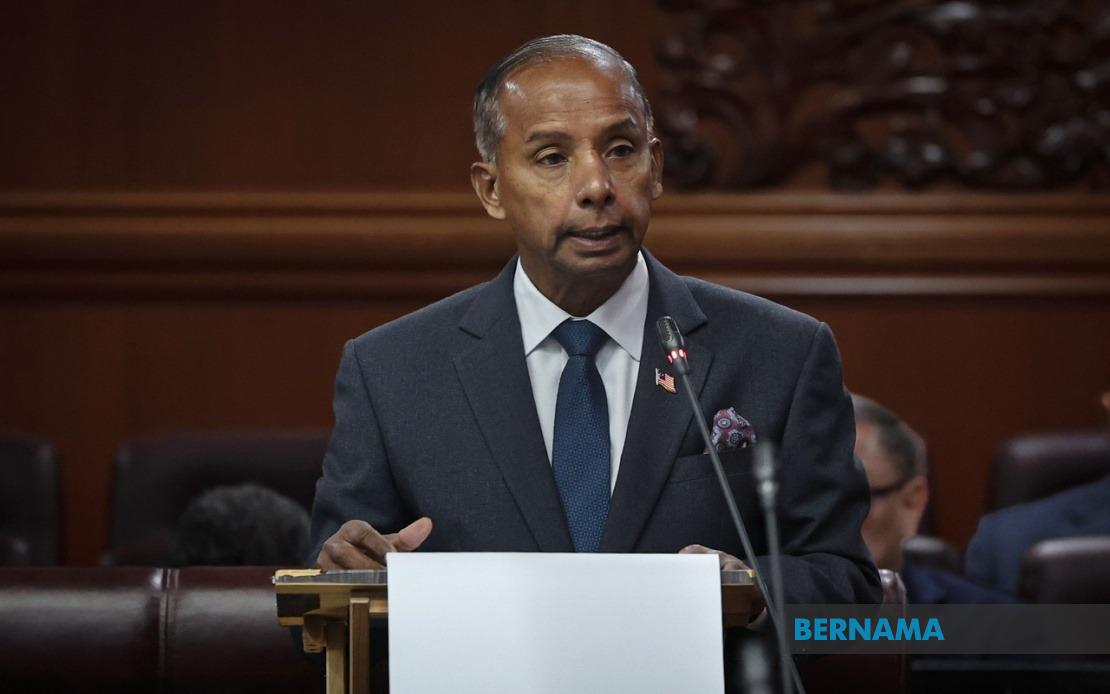
Malaysia is moving to strengthen protections for witnesses who leave its Witness Protection Programme by introducing targeted financial assistance at the critical moment they exit the scheme. The Witness Protection (Amendment) Bill 2026, which sailed through the lower house on July 14, introduces a provision enabling former participants to access one-time support packages designed specifically to cushion the transition back to ordinary civilian life. M. Kulasegaran, Deputy Minister in the Prime Minister's Department overseeing Law and Institutional Reform, outlined the rationale during the Bill's second reading in the Dewan Negara, emphasizing that this departure support addresses a long-standing gap in the existing legislative framework.
Under the proposed amendments, witnesses departing the protection scheme will become eligible for assistance encompassing housing arrangements, transportation and moving expenses from their protected accommodation to new residences, and school transfer arrangements for dependents. Kulasegaran stressed that these measures function as transition support rather than indefinite financial commitment, allowing participants to navigate the practical complexities of rebuilding lives outside the protective environment without prolonged state dependency. The distinction matters significantly for programme administration and fiscal planning, as one-time intervention differs fundamentally from ongoing welfare obligations.
The current Witness Protection Act 2009 represents a legislative framework that prioritizes security during active participation but leaves participants exposed once official protection concludes. The Attorney General's decision to terminate an individual's protective status currently triggers immediate cessation of all structured support, leaving people who have spent months or years in isolation to manage housing searches, relocation logistics, and family arrangements without institutional assistance. This vulnerability creates particular hardship for witnesses whose original communities may perceive them as collaborators with law enforcement, complicating their reintegration prospects.
The amendment bill carries broader significance within Malaysia's criminal justice architecture. Witness protection programmes function as critical infrastructure for prosecuting serious offences including major organised crime, corruption cases, and high-profile criminal matters where testimony proves essential but personal safety becomes jeopardized. By introducing exit assistance provisions, lawmakers acknowledge that programme effectiveness depends not merely on shelter during proceedings but on enabling witnesses to sustain their cooperation without facing destitution upon departure. A witness fearing penury after protection ends may recant testimony or become susceptible to intimidation, ultimately undermining prosecutorial capacity.
Kulasegaran's departmental authority over institutional reform suggests this amendment reflects broader government strategy to modernize protective mechanisms alongside evolving security threats. The Enhancement of witness security directly supports Malaysia's commitments under international criminal cooperation frameworks and reinforces the nation's credibility in pursuing complex cross-border and transnational cases. Foreign law enforcement agencies considering whether to refer witnesses or suspects to Malaysian jurisdiction gain reassurance that the entire protective arc—from initial entry through post-programme reintegration—receives legislative attention.
The six-clause amendment structure targets multiple vulnerabilities identified through operational experience. Empowering the Protection Division director-general to determine necessary and reasonable assistance provides administrative flexibility while maintaining ministerial oversight. This calibrated discretion permits responses tailored to individual circumstances rather than imposing uniform provision levels that might prove either insufficient for genuine hardship or wasteful for those requiring minimal support. School transfer assistance specifically recognises that witnesses often include children whose educational continuity becomes disrupted by protective measures, and post-exit schooling complications could perpetuate family instability.
From a Southeast Asian perspective, Malaysia's legislative revision positions the country within emerging regional practice around witness management. Thailand, Singapore, and Indonesia all operate protection programmes with varying levels of statutory support, and Malaysia's move toward comprehensive legislative scaffolding aligns with international best practices emphasizing witness welfare throughout their entire involvement with justice systems. The amendment demonstrates recognition that criminal justice effectiveness requires addressing not merely investigative and prosecutorial elements but the human security dimensions that enable cooperation.
The financial dimensions of exit assistance warrant consideration. One-time packages likely represent substantially lower aggregate expenditure than maintaining extended protection, yet concentrate resources at the moment of maximum vulnerability. Housing assistance might involve down-payment support or lease guarantees rather than permanent accommodation provision. Relocation funding probably covers transportation and immediate establishment costs rather than extended living expenses. This focused approach balances fiscal responsibility with humanitarian obligation.
For potential witnesses contemplating programme participation, exit assistance provisions provide psychological reassurance that cooperation does not mandate permanent rootlessness. Individuals facing pressure to testify against powerful criminal figures or corrupt officials can now evaluate engagement knowing that the protective relationship includes planned transition support. This expansion of programme attractiveness particularly matters for witnesses from disadvantaged communities who lack financial resources to independently manage relocation and reestablishment.
The parliamentary passage timeline—advancing from initial drafting through lower house approval to upper house consideration within the legislative year—indicates government priority classification for the amendment. Justice sector reform receives emphasis in Malaysia's current governance agenda, with witness protection modernization forming component parts of broader criminal justice enhancement initiatives. The Bill's relatively rapid progress suggests multiparty support, reflecting consensus that witness protection deserves strengthening regardless of partisan considerations.
Implementation details will determine practical impact. Regulatory frameworks governing assistance eligibility, claim procedures, and amount determinations require careful crafting to balance accessibility with probity. The Attorney General's office will require clear guidelines distinguishing circumstances warranting assistance from those where participants possess independent means. Monitoring mechanisms should track outcomes to assess whether exit assistance actually facilitates successful reintegration or whether additional supports beyond current provisions become necessary.
The amendment ultimately reflects recognition that witness protection obligations extend beyond confinement periods to encompass sustainable reintegration into normal social and economic participation. By institutionalizing exit assistance, Malaysia signals commitment to viewing protective participation as temporary intervention within broader life trajectories rather than permanent status. For a nation seeking to strengthen rule-of-law credibility and enhance capacity for prosecuting complex cases, this legislative refinement represents meaningful investment in the human infrastructure upon which effective justice systems depend.

