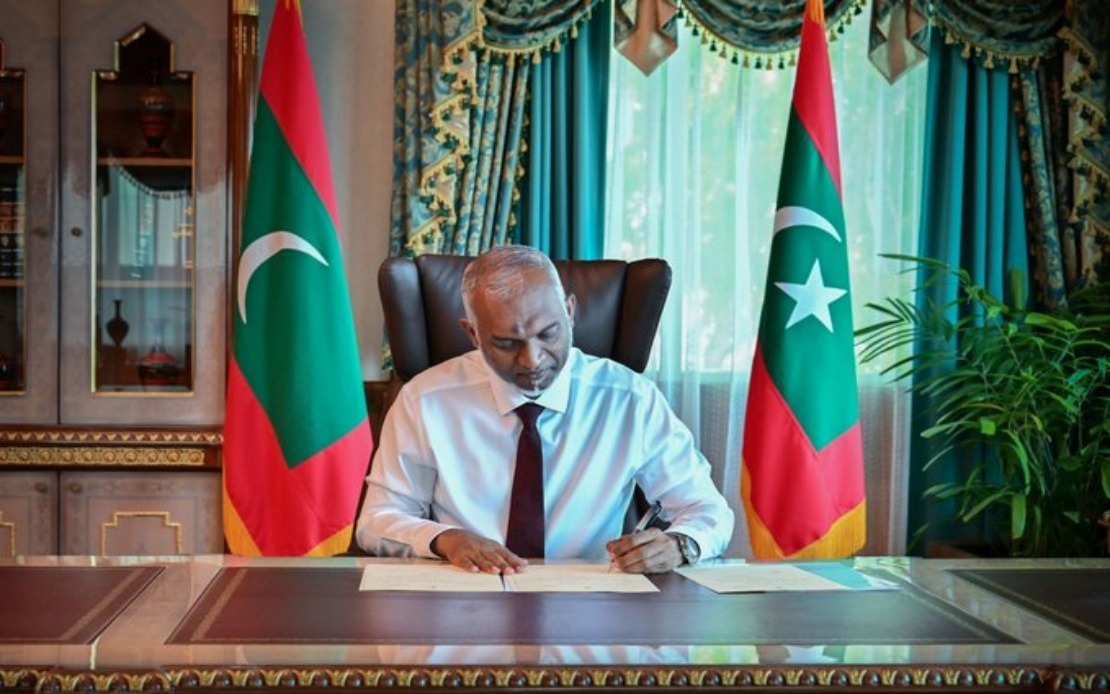
Maldives President Mohamed Muizzu has warmly acknowledged Malaysia's National Day celebrations through formal greetings to His Majesty Sultan Ibrahim, King of Malaysia, and Prime Minister Datuk Seri Anwar Ibrahim, underscoring the two nations' enduring partnership and pledging further strengthening of their diplomatic relationship.
In his correspondence to Sultan Ibrahim, Muizzu highlighted how Malaysia and the Maldives have maintained robust relations spanning half a century. The Maldivian leader characterised the bilateral partnership as one rooted in genuine friendship, reciprocal respect, and meaningful cooperation—foundations that have allowed both island nations to weather regional complexities and evolve their connection. His remarks reflected recognition of the institutional frameworks and formal diplomatic channels that have enabled consistent engagement between Malé and Kuala Lumpur.
Separately addressing Prime Minister Anwar Ibrahim, the Maldives President drew particular attention to the human dimension of the bilateral relationship. Muizzu emphasised how regular high-level political meetings and robust cultural and people-to-people exchanges have contributed substantially to deepening mutual understanding. These interpersonal connections—extending beyond government officials to encompass business communities, students, and civil society—have proven instrumental in translating diplomatic goodwill into tangible cooperation on issues ranging from trade to education.
The presidential statement conveyed Muizzu's confidence that the friendship between the two nations would continue flourishing, creating space for expanded economic collaboration and fresh opportunities benefiting both Malaysian and Maldivian populations. This optimistic framing suggests potential growth in commercial relationships, possibly including tourism cooperation, maritime trade, and investment flows—sectors where both countries maintain mutual interests and complementary capabilities.
The timing of these messages during Malaysia's National Day observances carried symbolic weight, signalling that the Maldives views its relationship with Kuala Lumpur as sufficiently important to merit formal, high-level recognition. For Malaysia, such diplomatic gestures from regional neighbours reinforce the nation's standing as a respected partner within South Asia and the broader Indian Ocean region, validating the relevance of its diplomatic initiatives and regional engagement strategies.
Beyond the Maldives, other major regional powers also extended National Day greetings to Malaysia, reflecting the country's significance within the contemporary geopolitical landscape. Pakistan's Ministry of Foreign Affairs conveyed heartfelt congratulations through social media, expressing wishes for Malaysia's enduring peace and sustained prosperity. The messaging emphasised the brotherly ties between Islamabad and Kuala Lumpur, terminology that invokes both shared Islamic heritage and long-standing diplomatic cooperation spanning decades of bilateral engagement.
India's Minister of External Affairs Subrahmanyam Jaishankar similarly extended warm greetings, directing his message specifically to Malaysia's Foreign Minister Datuk Seri Mohamad Hasan alongside the broader Malaysian government and citizenry. Jaishankar's post on social media platforms carried particular significance, as it explicitly referenced India's desire to advance its Comprehensive Strategic Partnership with Malaysia—terminology indicating New Delhi's intention to deepen engagement across multiple dimensions including defence, commerce, cultural exchange, and strategic coordination.
The convergence of congratulatory messages from the Maldives, Pakistan, and India underscores Malaysia's considerable diplomatic significance within South and South Asian regional architecture. Each nation recognised Malaysia's national celebration as an appropriate occasion to reaffirm bilateral relationships and express commitment to expanded cooperation. For Malaysian policymakers and foreign ministry officials, such recognition validates investment in maintaining robust diplomatic networks and confirms that the country's regional positioning remains robust across multiple spheres of influence.
These gestures arrive during a period when Malaysia continues pursuing its own diplomatic agenda within ASEAN, engaging with major powers across Asia, and positioning itself as a stabilising influence within regional architecture. The warm words from regional neighbours provide diplomatic momentum that can be leveraged to advance Malaysian interests in trade negotiations, security cooperation, and shared regional challenges including maritime security, climate adaptation, and counterterrorism cooperation.
The emphasis in Muizzu's messages on both formal institutional relationships and informal people-to-people exchanges reflects contemporary diplomatic reality, where bilateral relationships derive strength from multiple channels beyond traditional government-to-government diplomacy. Educational exchanges, tourism flows, cultural programmes, and business networks all contribute to building resilient partnerships capable of weathering occasional policy disagreements or international headwinds.
Looking forward, the renewed expressions of commitment from regional partners like the Maldives provide Malaysia with expanded opportunities to deepen economic engagement, particularly in sectors where both nations possess comparative advantages. The Maldives' critical position within Indian Ocean maritime routes and growing economy presents potential collaboration opportunities in tourism infrastructure, maritime trade, and investment partnerships. Similarly, India's explicit mention of advancing its Comprehensive Strategic Partnership signals openness to enhanced security and defence cooperation, technology transfer, and expanded people-to-people exchanges that could benefit Malaysian society across multiple dimensions.

