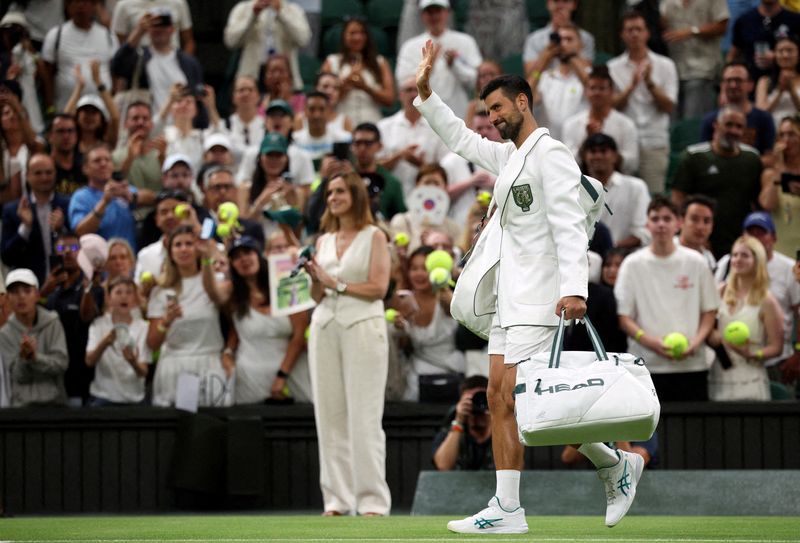
Fashion has become as much a part of Wimbledon's narrative as championship titles, with male players now matching female counterparts in their sartorial ambitions. Novak Djokovic strode onto court in a personalised Lacoste blazer, while Taylor Fritz commanded attention in a Hugo Boss white cotton jacket, long pants and silk scarf—looks that rivalled anything seen during previous championships. The trend signals a seismic shift in how professional tennis athletes view their courtside presentations, transforming walk-ons from functional moments into deliberate creative statements that extend well beyond the confines of play.
The inspiration clearly flows from Naomi Osaka's prominence this season, particularly her striking kimono-inspired look at Wimbledon. However, industry observers note this represents something broader than mere imitation. Joelle Michaeloff, chief creative officer at Wilson sports brand, characterises the moment as male players finally seizing their own creative opportunity. Working closely with athletes including Australian fifth seed Alex de Minaur and Ukrainian 12th seed Marta Kostyuk, she observes that competitors are increasingly conscious of historical precedent, deliberately referencing iconic Wimbledon moments spanning decades. This reflects a maturing understanding that the walk-on represents genuine marketing real estate and an avenue for authentic self-expression beyond the white lines.
Wimbledon's all-white dress code traditionally restricted the kaleidoscopic fashion experiments that flourish at other Grand Slams, yet this constraint has paradoxically intensified the creative challenge. The tournament's fashion heritage runs deep, from Ted Tinling's revolutionary white bodysuit in 1985 through Roger Federer's statement jacket in 2007. Within these boundaries, designers and players collaborate to innovate through silhouettes, textures, layering, and clever design elements. Fritz, seeded sixth, articulated the tension perfectly—expensive tailoring only resonates if the tennis itself delivers results. Fortunately for the American, he progressed through the early rounds without dropping a set, allowing him to confidently shed those custom trousers designed for quick removal before matches without appearing foolish.
Sponsorship dynamics have fundamentally changed how these fashion moments materialise. Rather than spontaneous choices, brands now strategically orchestrate walk-on presentations as components of broader marketing campaigns. Nike and Osaka's team proactively shared video content and imagery across social platforms before her matches, while Hugo Boss similarly leveraged Fritz's ensemble for promotional purposes. Wilson coordinated with Kostyuk on her custom dress iteration ahead of Wimbledon. Michaeloff emphasises that these collaborations represent evolving relationships between athletes and brands, where the narrative extends beyond transactional sponsorship into authentic storytelling about personality and individual style. The courtside moment becomes content, multiplied across digital channels where it reaches audiences far exceeding television viewers.
Djokovic demonstrated the broader promotional power inherent in such moments, generating substantial media attention following his demolition of Stefanos Tsitsipas. The 24-time Grand Slam champion's blazer inspired good-natured exchanges with Rory McIlroy, joking about matching it against the golfer's coveted Masters Green Jacket. Such instances transcend tennis commentary, bleeding into broader sports conversation and amplifying reach exponentially. For players and sponsors, these moments represent gold—visibility and cultural relevance that traditional advertising struggles to achieve with equivalent authenticity.
The design process itself has evolved significantly, with players increasingly demanding meaningful input rather than passively accepting brand selections. Karen Khachanov exemplifies this emerging trend, engaging thoroughly with decisions spanning fabric composition, colourways, necklines, and fit specifications. This represents sophisticated athlete agency, where competitors balance aesthetic aspirations with practical performance requirements. They understand that confidence matters as much as appearance, and uncomfortable or poorly-constructed garments undermine both. Matteo Berrettini's rejected outfit—deemed insufficiently white by Wimbledon officials—illustrates the regulatory realities underlying these creative endeavours, reminding all parties that the All England Club maintains strict standards regardless of designer prestige.
Michaeoff contextualises contemporary trends within longer tennis history, noting parallels to Federer's notable looks while acknowledging deeper roots extending to 1960s and 70s legends like Arthur Ashe. Ashe fundamentally established the principle that deportment and presentation conveyed meaning beyond mere compliance with dress codes. He weaponised style as cultural expression during an era when such assertion carried profound significance. Current male players inherit this legacy, though the contemporary moment permits more casual exploration than Ashe's groundbreaking work required. The momentum has accelerated and reach exponentially expanded through social media, transforming what previously registered as niche interest into mainstream sporting narrative.
Fritz candidly acknowledged that female competitors have previously dominated walk-on fashion theatricality, turning entrances into production moments. Yet he noted that male participation may catalyse future escalation, particularly if peers witness positive reception without career jeopardy. This represents a genuine cultural moment where previously gender-coded domains intersect. Tennis fashion conversations once centred overwhelmingly on female athletes; male participation normalises style discussion across genders and expands creative possibility for everyone involved. The willingness to experiment without judgment, regardless of gender, strengthens the entire sport's cultural footprint.
Osaka's contributions extend beyond this single championship. Throughout 2024, she has systematically elevated fashion narratives across multiple Grand Slams, wearing a black Kevin Germanier skirt at the French Open and a layered yellow-brown and gold Nike dress inspired by the Eiffel Tower at night. Her Australian Open jellyfish-inspired outfit demonstrated consistent commitment to sartorial innovation across different seasons and venues. The 14th seed's approach treats fashion as integral championship expression rather than peripheral accessory, fundamentally reshaping how the sport discusses style. Eleanor Thomas, collections lead at the All England Lawn Tennis Club, positioned Osaka's Wimbledon ensemble as an undeniable iconic moment within this year's championships, cementing its cultural significance within the tournament's historical record.
The broader implications for Malaysian and Southeast Asian tennis resonate meaningfully. As young players across the region aspire toward professional careers, witnessing established competitors prioritise self-expression through fashion legitimises style as part of athletic identity. This proves particularly significant in contexts where sporting achievement sometimes dominates discourse at style's expense. The Wimbledon moment demonstrates that excellence and aesthetics coexist productively, enriching rather than diminishing competitive achievement. Regional players increasingly positioned for global stages can observe how champions harness multiple dimensions of their public presence, building personal brands that extend beyond match statistics into cultural relevance and sponsorship opportunity—practical considerations as professional tennis remains economically demanding.

