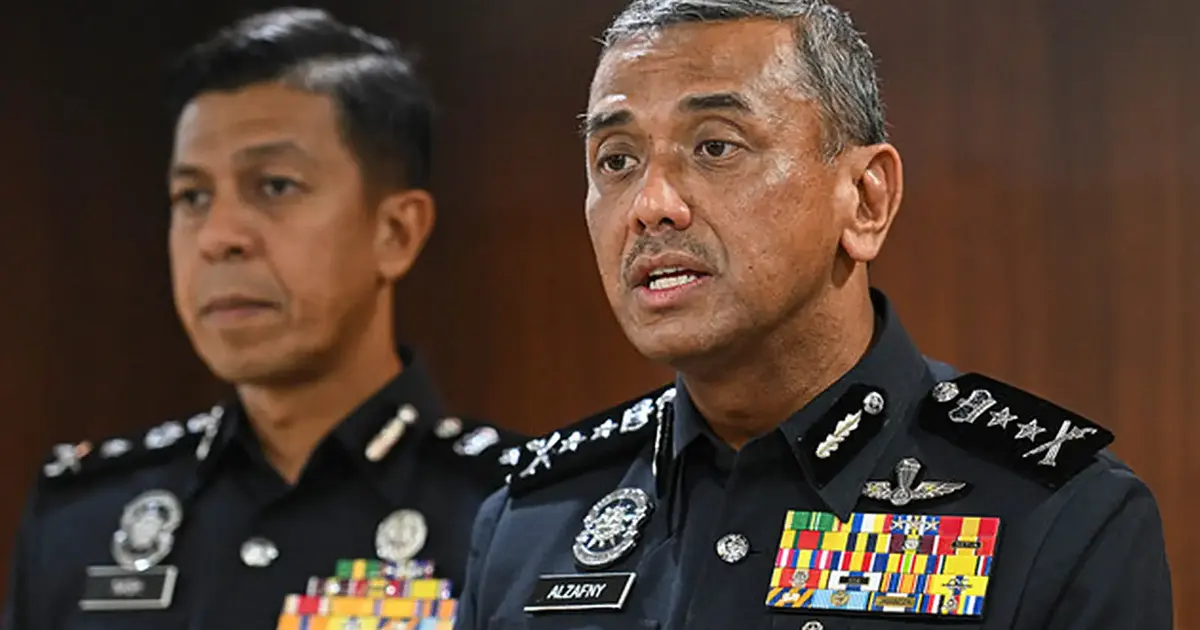
Police in Negeri Sembilan have arrested a man on suspicion of publishing insulting remarks directed at the state's royalty through social media channels, authorities confirmed. The suspect's mobile phone was confiscated by officers as part of the ongoing investigation into the allegations.
Negeri Sembilan police chief Alzafny Ahmad disclosed details of the arrest, underscoring the state constabulary's commitment to protecting the dignity and reputation of the constitutional monarchy. The case reflects persistent concerns among Malaysian law enforcement agencies regarding inflammatory online content that targets the institution of royalty across the country.
The arrest aligns with Malaysia's legal framework governing respect for the monarchy. Section 233 of the Communications and Multimedia Act 1998 criminalises the sending of offensive messages via electronic communications networks, with penalties reaching up to RM50,000 in fines or up to one year imprisonment, or both. This statute forms the legal foundation for prosecutions involving defamatory or insulting online speech, particularly when directed at state or federal royalty.
Insults targeting royalty also fall under the purview of Article 10 of the Federal Constitution, which permits restrictions on freedom of expression when deemed necessary to protect the institution of monarchy. Beyond federal statutes, state governments maintain additional legal instruments to preserve royal dignity. The custodianship of these protections represents a fundamental principle of Malaysia's constitutional order, reinforced through successive administrations and law enforcement operations.
Negeri Sembilan, as a constituent state within Malaysia's constitutional framework, holds particular significance as the historic seat of the Duli Yang Maha Mulia Yang di-Pertuan Besar and the state administration. The state has experienced comparable incidents in preceding years involving online speech that authorities determined crossed legal and social boundaries regarding royal respect. Each such case typically generates public discourse about the balance between digital expression and institutional protection.
The seizure of the suspect's mobile device is a standard investigative procedure in such cases, allowing digital forensics teams to retrieve communications, metadata, and related evidence that may substantiate the allegations. Phone examination frequently yields crucial information regarding post timing, authorship patterns, and potential coordination with other individuals involved in similar activities. These technological investigations have become increasingly central to prosecutions involving online misconduct.
The incident underscores how social media platforms, despite their utility for public communication and democratic engagement, occasionally become vectors for content that breaches Malaysian legal boundaries. The permanence and potential viral spread of online posts, combined with their capacity to reach audiences instantaneously across geographical boundaries, has elevated concerns among enforcement agencies nationwide. What might once have circulated within limited social circles now possesses exponential amplification potential through digital networks.
Regional context demonstrates that other Southeast Asian nations similarly prioritise legal protection for their monarchies against online criticism or insults. Thailand enforces stringent lèse-majesté laws, while other jurisdictions maintain comparable statutory provisions. Malaysia's approach seeks to preserve institutional respect while ostensibly maintaining frameworks for lawful political discourse and public commentary on policy matters distinct from personal attacks on individual royals.
For ordinary Malaysians engaging with social media, this arrest serves as a reminder regarding the legal consequences of online expression, particularly concerning sensitive national institutions. While digital platforms have democratised public speech and enabled civil society participation, they have simultaneously complicated the boundaries between protected commentary and actionable insult. Users must exercise discernment in distinguishing between criticism of governmental policies—which remains constitutionally protected—and personal attacks on royal individuals, which law enforcement treats as serious criminal matters.
The investigation's progression and potential charges will likely depend upon detailed forensic analysis of the contested post, including its wording, context, and discernible intent. Prosecutors must establish not merely that insulting language was employed, but that the content deliberately or recklessly caused or was likely to cause alarm, annoyance, or distress regarding the monarchy. This evidentiary threshold requires careful assessment of the statement's objective meaning and the accused person's culpability.
As the investigation continues, the case exemplifies the ongoing tension within Malaysian society between expanding digital participation and the maintenance of traditional institutional hierarchies. The eventual outcome will provide additional precedent regarding how courts interpret statutory prohibitions on royal insults in the contemporary context of user-generated content and social media expression.
Police investigations into comparable allegations typically require weeks or months to conclude, pending digital analysis, interviews with witnesses or complainants, and legal consultation. The Negeri Sembilan police have not disclosed a timeline for charging decisions or court proceedings, which may extend beyond initial arrest phases as investigative protocols progress through standard phases.

