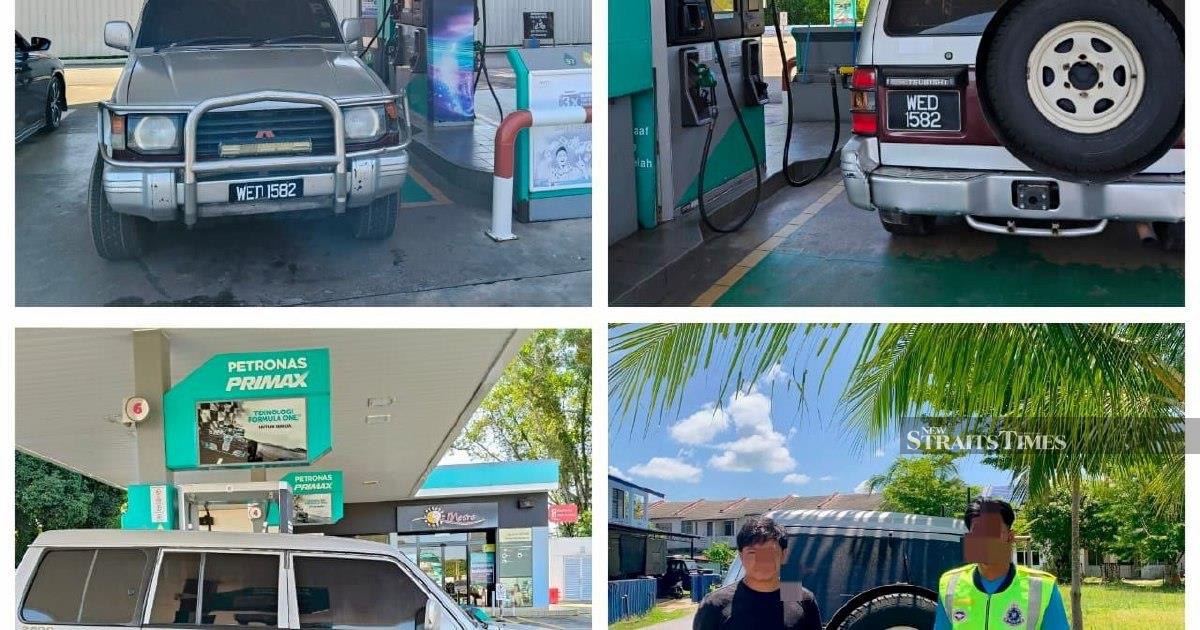
Police arrested a 36-year-old man at a petrol station in Rantau Panjang yesterday morning after establishing a pattern of suspicious fuel purchases linked to a smuggling operation directing contraband petrol into Thailand. The suspect's arrest comes as authorities intensify crackdowns on cross-border smuggling activities that have persisted along the Malaysia-Thailand frontier, where porous borders and price differentials between the two countries create lucrative opportunities for illicit traders.
The detention at the Rantau Panjang facility represents a significant development in regional efforts to combat fuel trafficking, which has cost both governments substantial tax revenue and created supply-chain complications for legitimate petrol distribution. Investigators determined that the man had engaged in multiple transactions over a compressed timeframe, with each purchase appearing designed to circumvent detection thresholds that might otherwise trigger heightened scrutiny from customs personnel or fuel station management.
Rantau Panjang, situated in Kelantan state along the northern border corridor, has historically served as a bottleneck for contraband movement owing to its proximity to Thailand and the volume of cross-border traffic that transits through the checkpoint daily. The location's strategic geography has made it a focal point for smuggling operations targeting various goods, though fuel smuggling represents a particularly persistent problem given Malaysia's historically lower petrol prices compared to neighbouring Thailand.
The methodology employed in this case—repetitive small-scale purchases rather than single large transactions—reflects the sophistication of modern smuggling networks operating in Southeast Asia. Such tactics are designed to evade detection algorithms and manual monitoring systems that flag anomalous purchasing patterns. The deliberate fragmentation of what would constitute a substantial volume suggests coordination with downstream operatives positioned to receive and transport the fuel across territorial lines.
Price arbitrage between Malaysian and Thai fuel markets creates the fundamental economic incentive driving such smuggling. Despite periodic adjustments to Malaysia's fuel subsidy regime, differentials persist that render smuggled petrol competitively attractive in Thai markets. This price gap effectively subsidises cross-border criminal activity and represents a form of leakage from Malaysia's fiscal support mechanisms designed to benefit domestic consumers.
The arrest underscores the resource demands placed upon law enforcement agencies tasked with monitoring thousands of daily transactions across multiple petrol stations in border areas. While technology increasingly assists in identifying suspicious patterns, human intelligence and ground-level vigilance remain essential components of enforcement strategies. The petrol station employee or management who reported suspicious behaviour to authorities presumably played a crucial role in the investigation.
Border security challenges in Southeast Asia extend beyond traditional smuggling concerns involving narcotics or counterfeit goods. Fuel smuggling represents a lower-profile but economically significant problem affecting state revenues and legitimate commercial operations throughout the region. Malaysia's customs apparatus has gradually strengthened coordination with Thai counterparts, though jurisdictional limitations and varying enforcement prioritisation sometimes complicate collaborative efforts.
For Malaysian consumers, fuel smuggling represents an indirect economic cost reflected in tax revenue losses that could otherwise support public services or infrastructure development. The phenomenon also creates competitive distortions affecting legitimate fuel retailers operating near borders, who face pressure from customers seeking cheaper smuggled alternatives. Such dynamics accumulate across multiple commodity categories and border regions, producing measurable macroeconomic consequences.
The investigation may ultimately reveal whether the suspect operated independently or as part of a larger syndicate. Authorities typically pursue secondary investigations following initial arrests to establish the full scope of smuggling networks, identify other participants, and trace connections to distribution points within Thailand. Such networking enquiries help build cases against higher-level organisers whose names rarely surface in public reporting.
Future enforcement responses will likely emphasise preventive measures including enhanced staff training for petrol station employees, implementation of transaction-monitoring software flagging unusual purchase patterns, and increased coordination between fuel retailers and customs authorities. Technology solutions continue evolving to make detection more efficient, though determined smugglers similarly adapt their methodologies in response to strengthened controls.
This arrest reflects broader regional trends as Southeast Asian governments grapple with cross-border crime transcending traditional smuggling categories. Fuel trafficking sits at the intersection of border security, revenue protection, and commercial regulation—a convergence that demands sustained attention from multiple governmental agencies working across international boundaries.

