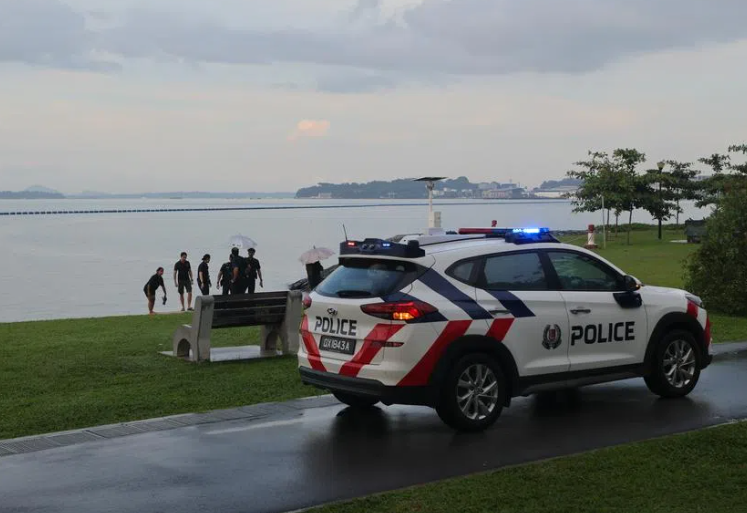
A recreational water sports outing turned tragic when a 24-year-old man died after being struck by lightning in the waters off Pasir Ris Beach in Singapore on Sunday, July 5. The victim was among a group of paddleboarders and kayakers enjoying the area around 4.50pm when an unexpected electrical storm swept across the waterway. Rescued unconscious from his paddleboard by nearby witnesses, he was rushed to hospital but could not be revived. The incident has reignited concerns about outdoor safety during the monsoon season when weather patterns become increasingly unpredictable.
The lightning strike left six other people requiring immediate medical attention. Among the injured were a group spanning ages 13 to 54, all of whom remained conscious when emergency services transported them to medical facilities. Five people, including one in an unconscious state initially, went to Sengkang General Hospital, while two younger members of the group received treatment at KK Women's and Children's Hospital. Police were alerted to the incident at the Pasir Ris Road location at approximately 4.50pm, with the Civil Defence Force's rapid response likely preventing additional casualties among the remaining survivors.
The group had ventured about 100 metres offshore when the lightning struck, according to eyewitness accounts. What made the incident particularly notable is that bystanders described the weather conditions as seemingly favourable immediately before the strike—the sky appeared clear just moments before the electrical discharge hit the water. This underscores a critical danger: lightning can strike with little visible warning, emerging from atmospheric conditions that may not appear obviously threatening to casual observers. The unexpectedness of the strike, combined with the open water environment, left the group with minimal protective options.
Muhammad Fairuz, a 40-year-old delivery rider who was fishing at the beach, witnessed the dramatic rescue efforts unfold. He described seeing the man lying unconscious on his paddleboard and hearing urgent shouting from the group. Fairuz, understanding the gravity of the situation, immediately launched his kayak with assistance from another bystander to retrieve the stricken paddleboarder. His quick thinking and decisive action proved critical, as getting the victim back to shore swiftly would have been essential for any chance at resuscitation. Remarkably, Fairuz felt the electrical current travel through his own fishing rod, emphasizing the power of the electrical discharge that had rippled through the water.
The rescue operation drew substantial emergency response resources to the beach. Personnel from the Singapore Civil Defence Force arrived with specialist equipment, including a Light Fire Attack Vehicle—colloquially known as the Red Rhino—and ambulances. Video footage taken around 5.10pm showed SCDF officers performing chest compressions on the victim in a desperate attempt to revive him on the grassy area adjacent to the beach. Despite these intensive resuscitation efforts at the scene and continued care at the hospital, the man's injuries proved fatal. Police indicated they found no evidence of foul play and that investigations remained ongoing into the precise circumstances.
Singapore's geographic location and tropical climate make lightning strikes a recurring hazard during certain periods of the year. According to data from the Meteorological Service Singapore, the island nation experiences an average of 176 lightning days annually, based on measurements from the Changi climate station. A lightning day is officially defined as any calendar day during which at least one lightning occurrence is detected at the monitoring station. This frequency demonstrates that electrical storm activity is not an anomalous event in the region but rather a predictable seasonal pattern that residents and visitors must respect.
The incident represents the latest in a series of lightning-related fatalities and near-misses in Singapore's recent history. Just two months earlier, in May, a worker at a fish farm lost his life following a direct lightning strike. Additionally, in December 2023, three workers required hospital treatment after lightning struck dangerously close to their worksite on December 28. These successive incidents paint a picture of lightning as an persistent occupational and recreational hazard that demands greater awareness and preventative measures across multiple sectors.
For the broader Southeast Asian region, this tragedy carries implications for beach and water sports safety protocols. Malaysia shares similar tropical weather patterns with Singapore, meaning paddleboarders, kayakers, and other water enthusiasts across the peninsula and Sabah and Sarawak face comparable risks during monsoon transitions and afternoon storm seasons. The incident highlights the need for better public education about lightning safety in open water environments, clearer weather warning systems for recreational beach users, and consideration of activity suspension protocols when atmospheric conditions become unstable. Many beach management authorities in the region lack standardized procedures for rapidly clearing water areas when lightning danger increases.
The tragedy also raises questions about personal preparedness among recreational water sports participants. Groups venturing into open water during season periods when thunderstorms commonly develop should monitor weather forecasts meticulously, understand the limitations of visual weather assessment, and establish clear protocols for rapidly returning to shore when conditions deteriorate. The experience of Fairuz and his companion demonstrates that bystander intervention can be lifesaving, yet also highlights how quickly situations can escalate beyond what untrained individuals can manage. Without immediate access to professional medical facilities and advanced life support, even the most dedicated rescue efforts may prove insufficient against the severe physiological trauma caused by direct lightning contact.
The Singapore Police Force's preliminary determination that no foul play occurred provided some clarity to the family and community, though the fundamental tragedy remains unchanged. The incident serves as a sobering reminder that natural hazards do not discriminate based on skill level, age, or precautions taken. It underscores the importance of respecting weather patterns and understanding that even brief recreational outings in tropical maritime environments carry inherent risks that should never be underestimated. For paddleboarders and kayakers throughout Malaysia and the broader region, the lesson is clear: monitoring weather forecasts vigilantly and maintaining conservative decision-making about when conditions remain safe for water activities could prevent similar tragedies.

