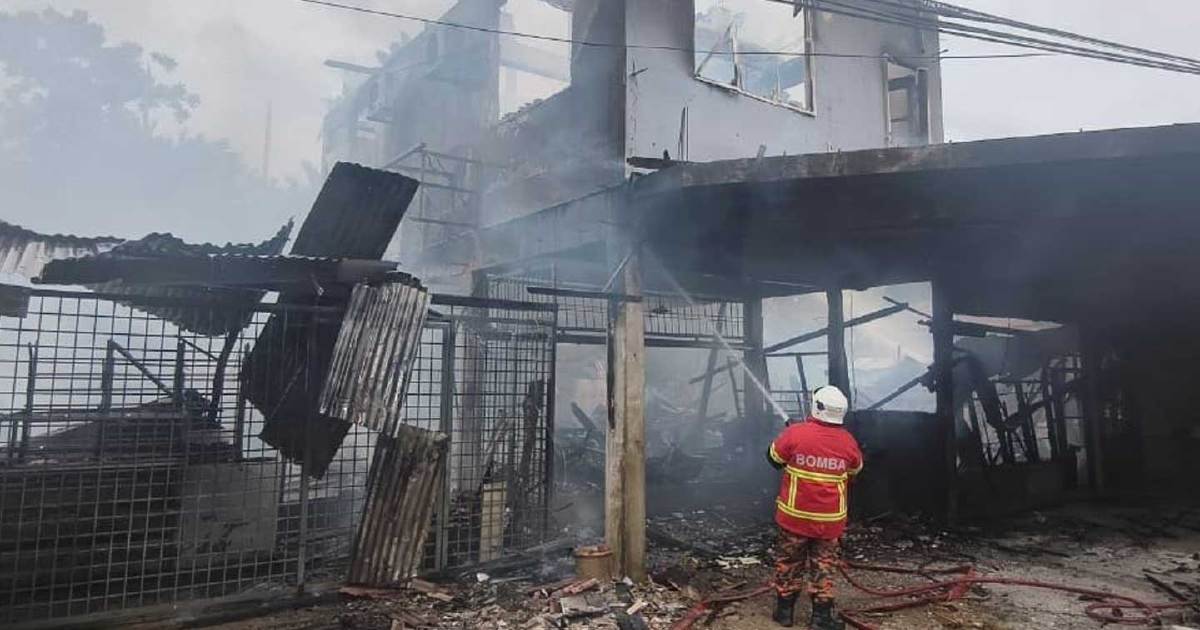
Police in the northern Kedah district of Jitra have secured a five-day remand order for a 36-year-old suspect accused of deliberately torching his mother's house in Kampung Sungai Baru. The detention order, a standard procedural step in Malaysian investigations involving serious criminal allegations, allows investigators time to gather evidence and question the accused concerning the circumstances surrounding the alleged arson incident.
The arrest marks another case in what appears to be an ongoing pattern of domestic property crimes that have affected households across Peninsular Malaysia in recent months. Family-related property disputes frequently escalate into dangerous confrontations, with fire being employed as a destructive tool when personal relationships deteriorate. Investigators will likely examine whether financial disputes, inheritance matters, or interpersonal tensions between the suspect and his mother preceded the alleged fire-setting incident.
During the five-day remand period, police will conduct forensic examinations of the burnt property to establish the fire's point of origin and gather physical evidence supporting intentional arson charges rather than accidental ignition. This investigative phase typically involves interviewing the suspect repeatedly, cross-referencing witness statements, and establishing a coherent timeline of events leading to the alleged incident. Detectives will also explore the suspect's movements immediately before and after the fire, alongside examining any communications or confrontations that may have triggered the alleged act.
The severity of arson charges in Malaysia—particularly when involving residential properties and family members—carries substantial prison sentences and substantial fines under the Penal Code. Convictions for deliberately setting fire to property can result in imprisonment exceeding a decade, depending on aggravating circumstances such as whether occupants were endangered or injuries sustained. The fact that the property belonged to the suspect's mother adds another dimension to how prosecutors may frame charges, potentially elevating them from straightforward arson to include charges reflecting betrayed familial trust.
Kampung Sungai Baru residents may view this incident with concern, as fire-related crimes disproportionately impact neighbourhood safety and broader community perceptions of security. While such incidents typically stem from personal disputes rather than random criminality, they remind neighbours of the unpredictable nature of domestic tensions spilling into dangerous physical actions. The tight-knit character of rural and semi-rural Kedah communities means that such family disputes become common knowledge, potentially affecting the broader social fabric.
Malaysian law enforcement agencies have increasingly emphasised early intervention in family disputes before they escalate into criminal behaviour. The police's Family Violence Investigation Specialist Division has expanded awareness campaigns regarding domestic mediation and conflict resolution services. However, the challenge remains substantial: individuals in acute psychological crisis or those harbouring deep-seated resentment may bypass conventional counselling avenues. The remand process effectively removes the suspect from the community temporarily, providing a protective pause in which escalation becomes impossible.
For the alleged victim—the suspect's mother—this incident represents profound trauma extending beyond mere property loss. Residential fires destroy irreplaceable personal possessions, family documents, and photographs while displacing families from their homes. When the alleged perpetrator is a family member, psychological impacts multiply significantly. Support services for fire victims in Malaysia, while available through social welfare departments and non-governmental organisations, often struggle to meet demand across rural districts including those in Kedah.
The five-day remand period represents a critical juncture in the investigation's progression. If investigators gather sufficient evidence establishing probable cause for arson charges, prosecutors will apply for charges at the magistrate's court level. Conversely, if evidence proves insufficient, the suspect may be released. Malaysian courts have demonstrated increasing willingness to grant remand extensions when complex investigations warrant additional investigation time, meaning the suspect could potentially remain in custody beyond the initial five days if investigators request court approval for extended detention.
This incident underscores persistent challenges with property crimes and family violence intersecting within Malaysian society. Community leaders and religious authorities frequently serve as informal arbiters in neighbourhood disputes before they require police intervention. Strengthening these preventative networks alongside enhancing police investigation capabilities represents the dual approach authorities pursue. For readers across Southeast Asia witnessing similar family conflicts, the case illustrates how rapidly personal disputes can transform into serious criminal matters with severe legal consequences.
The investigation's outcome will likely generate public interest given arson's inherent danger and the family relationship involved. Malaysian courts and media have demonstrated heightened attention toward cases involving family-perpetrated crimes, reflecting societal concern about internal household security. As the remand order proceeds, police will work methodically to establish facts determining whether charges proceed, seeking justice for the alleged victim while respecting the suspect's legal rights throughout Malaysia's criminal justice process.

