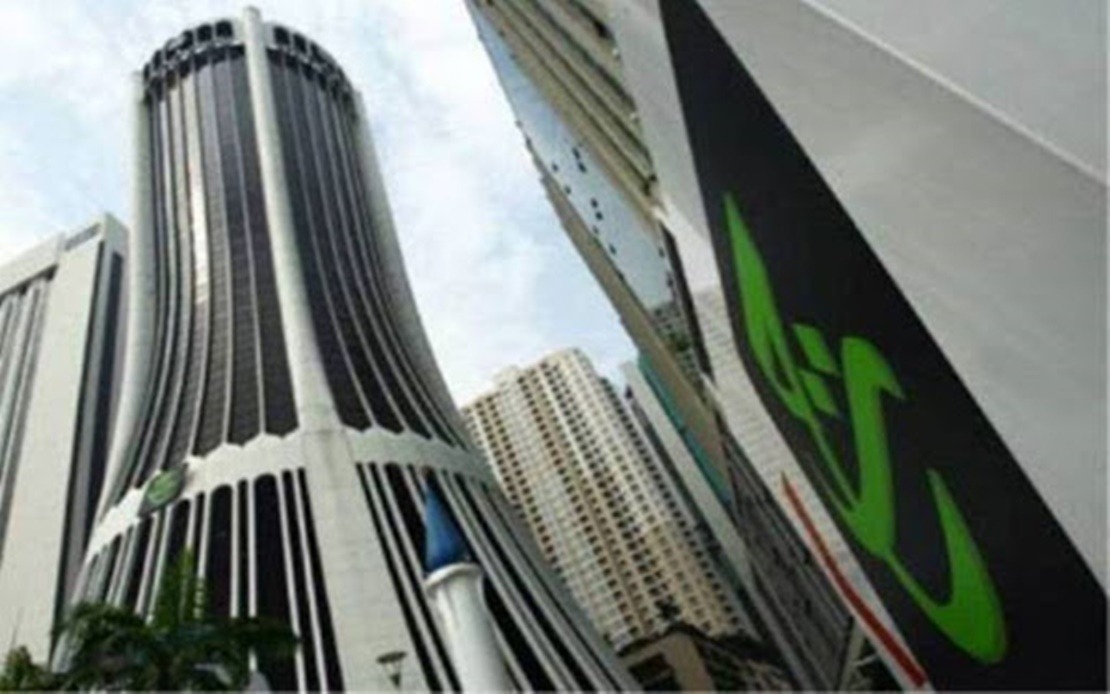
The Royal Commission of Inquiry's examination of Lembaga Tabung Haji has exposed troubling gaps in the institution's financial valuation practices, with economists warning that heavy reliance on internal management estimates rather than independent professional assessments creates substantial risks to the pilgrimage fund's financial integrity. According to the RCI report released in late July, only RM556 million of the RM4.6 billion total property asset valuation for 2017 was underpinned by professional valuers' reports, leaving RM4.044 billion—nearly 88 percent of the total—dependent on management judgement alone.
The implications of this valuation methodology extend well beyond accounting technicalities. Prof Emeritus Dr Barjoyai Bardai of Malaysia University of Science and Technology articulated a fundamental concern: when asset values rest primarily on estimates provided by management personnel who have direct institutional interest in presenting a favourable financial position, the risk of "overly optimistic" valuations becomes acute. While such practices do not necessarily indicate deliberate manipulation has occurred, the absence of independent professional verification significantly undermines the reliability and credibility of the figures used for critical financial decisions.
The consequences of inflated asset valuations manifest directly in dividend distributions to depositors. When Realisable Asset Value calculations systematically overstate the true market worth of properties and investments, TH's financial position appears stronger than reality warrants. This distortion can create pressure to authorise hibah distributions at levels that prudence would otherwise constrain. Prof Barjoyai emphasised that if assets cannot actually be realised at their stated valuations, the entire foundation for distribution decisions becomes compromised, potentially exposing the institution to future financial stress.
To address these systemic weaknesses, Prof Barjoyai recommended that high-value properties undergo independent professional valuation using standardised methodologies supported by transparent market evidence. He further advocated for establishing a governance framework where Realisable Asset Value calculations are governed by explicit standards, subject to independent audit verification, and reviewed by a specialised committee comprising investment professionals and qualified accountants. Such measures would embed the foundational principles of sound financial governance—conservatism, verifiability, and independence from conflicted parties—directly into TH's operations.
Prof Dr Ahmed Razman Abdul Latiff of Putra Business School highlighted the governance accountability gap that the current practices represent. The board of directors and audit committee bear fiduciary responsibility to critically examine management assumptions and demand sufficient corroborating evidence before such figures inform major institutional decisions. Material estimates with far-reaching implications for both financial reporting and dividend policy warrant rigorous multi-layered review protocols rather than acceptance at face value.
The significance of these governance failures becomes clearer when considering their direct impact on depositors. Because Realisable Asset Value calculations determine compliance with Section 22 of the Tabung Haji Act 1995—the statutory framework governing the institution's operations—the quality and reliability of these valuations directly affect the economic interests of millions of Malaysian pilgrims who entrust their savings to TH. Weak valuation oversight thus represents not merely an internal accounting problem but a breach of the institution's fundamental duty to protect depositor interests.
The RCI investigation uncovered additional complexity in TH's valuation approach. Management elected not to use the asset and liability values reported in the institution's published financial statements when calculating profit distributions. Instead, it constructed an alternative Realisable Asset Value using substantially higher property valuations while simultaneously declining to adjust downward investments whose market prices had collapsed to minimal levels. This selective treatment systematically inflated the asset base available for distribution purposes, creating an asymmetry that favour distributions over prudent capital preservation.
A particularly troubling component involved RM2.294 billion attributed to TH Plantations Berhad, which was incorporated into the broader property asset valuation despite its substantial portion of the total RM4.6 billion figure. The PricewaterhouseCoopers audit report cited by the RCI noted that these calculations rested entirely on management estimates rather than listing prices for traded shares or independent professional property assessments. TH management's subsequent defence—that Section 22 of the Tabung Haji Act 1995 lacked clear asset definition parameters, thereby granting them discretion in valuation methodology—essentially argued that legislative ambiguity justified abandoning professional valuation standards.
This interpretative position raises fundamental questions about corporate governance culture at TH during the period under inquiry. Rather than treating legislative silence as opportunity to apply best practices, management appears to have exploited the gap to implement favourable valuation methodologies. The RCI's observations about insufficient auditor scrutiny in preceding years further suggest systemic failures in the checks and balances intended to prevent such practices from developing unchallenged.
For Malaysian depositors and the broader Islamic financial sector, these findings carry important implications. Lembaga Tabung Haji represents one of Southeast Asia's largest Islamic financial institutions with direct responsibility for managing sacred funds entrusted for pilgrimage purposes. The weaknesses revealed—inadequate independent valuation, loose governance standards, selective application of accounting principles, and insufficient audit vigilance—highlight vulnerabilities that could affect other institutions lacking robust regulatory oversight. The RCI's disclosure thus serves as a broader cautionary signal about the importance of embedding professional standards and independent verification into the operational frameworks of fiduciary institutions.
Moving forward, TH's governance remediation must extend beyond isolated procedural corrections to establish cultural expectations that independent professional standards represent the minimum acceptable baseline rather than optional enhancements. The institution's restored credibility depends on demonstrating sustained commitment to conservative, transparent, and professionally verified asset valuation methodologies that centre depositor protection over operational convenience.

