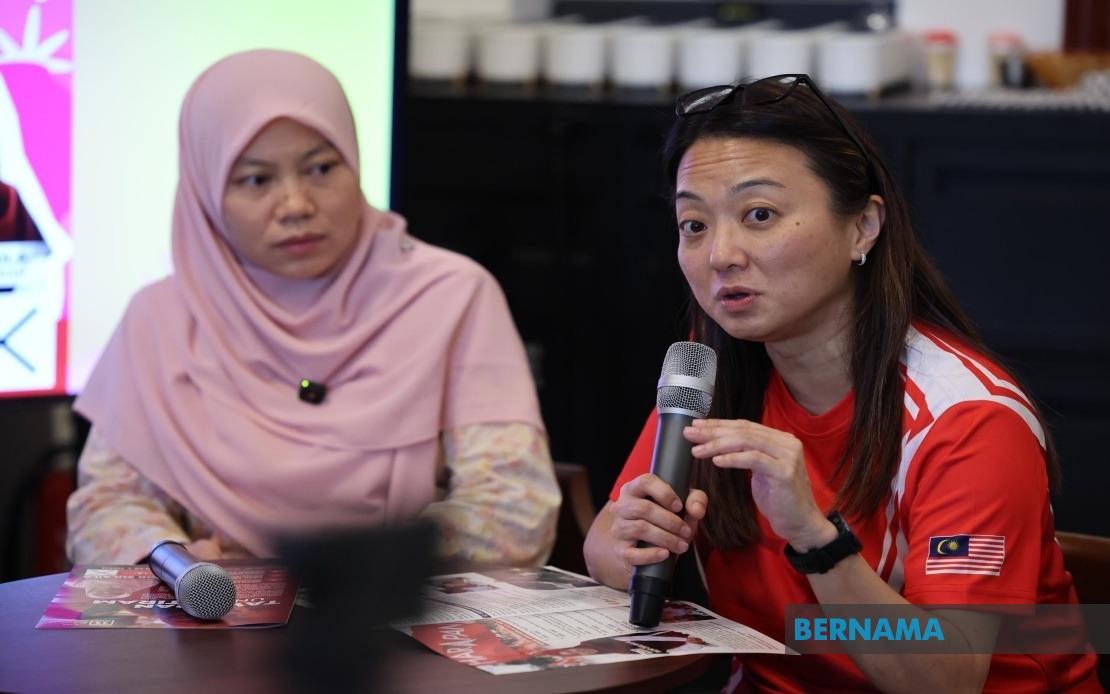
Hannah Yeoh, DAP's deputy secretary-general and Minister in the Prime Minister's Department for Federal Territories, has pushed back against suggestions that Pakatan Harapan's state election manifesto in Johor represents little more than recycled promises from rival parties. Speaking in Johor Bahru on July 4, Yeoh contended that the appearance of similar commitments across competing manifestos should not trigger accusations of mere duplication, but rather demonstrates that political parties are genuinely engaging with the concerns that matter most to voters.
The comments came as the DAP leader addressed reporters following attendance at a "Chit Chat Wanita" community programme and the launch of an "Offer for Tiram" local initiative. Yeoh's remarks were a direct response to claims circulating among certain quarters that Pakatan Harapan's platform for the 16th Johor state election bore excessive resemblance to proposals outlined by Barisan Nasional. Rather than dismissing the comparison outright, Yeoh reframed the conversation to highlight what she views as a positive development: widespread consensus among contesting parties on fundamental public needs.
Welfare provision emerged as a clear example in Yeoh's explanation. She noted that candidates from virtually every political stripe have incorporated welfare commitments into their campaigns, reflecting its prominence as a voter priority. Housing affordability and accessibility similarly feature prominently across multiple party platforms. Rather than constituting evidence of intellectual laziness or lack of policy imagination, Yeoh suggested these recurring themes indicate that political parties are properly attuned to the genuine challenges facing Johor residents. When multiple organisations converge on similar solutions, she argued, it validates rather than undermines the importance of those commitments.
This interpretation carries particular significance for Malaysian electoral politics, where voter cynicism about campaign promises remains a persistent challenge. By legitimising policy convergence as evidence of authentic voter responsiveness, Yeoh attempts to reposition a potential vulnerability into a strength. The strategy reflects Pakatan Harapan's broader confidence heading into the July 11 polling date, when voters will determine the composition of the state legislature across all 56 contested seats. Early voting is scheduled for July 7, accelerating the campaign timeline and intensifying the competition across constituencies.
Yeoh's emphasis on women's representation within the DAP's candidate slate offers another dimension to the party's strategic messaging in Johor. The DAP has fielded eight female candidates among its total complement of 17 nominees, a proportion that reflects the party's stated commitment to gender equality in politics. Yeoh articulated confidence that these women possess the capacity to transcend traditional political roles and assume positions of genuine authority and policymaking responsibility. She referenced the theoretical possibility of women ascending to the position of Menteri Besar should electoral circumstances align favourably with their candidacies.
The Tiram constituency contest provided Yeoh with a concrete illustration of the quality and diversity represented in the DAP's female candidate roster. Nor Zulaila Abd Ghani, the party's nominee in that four-cornered race involving Barisan Nasional, Parti Bersama Malaysia and Perikatan Nasional representatives, brings substantial administrative credentials spanning local authority, state and federal government levels across a twelve-year career arc. Rather than presenting these credentials in narrow professional terms, Yeoh highlighted how Nor Zulaila's family background—Malaysian Chinese father and Malaysian Malay mother—embodied a form of diversity that transcended conventional demographic categories and could contribute to depoliticising historically fraught racial discourse within Malaysia's electoral environment.
The characterisation of Nor Zulaila as someone capable of challenging stereotypes points to broader questions about representation and political legitimacy in contemporary Malaysian politics. By emphasising mixed heritage and cross-community credibility, Yeoh implicitly argues that the DAP's approach to candidate selection serves not merely demographic representation but substantive political utility. In a state with Johor's specific demographic composition and historical significance within Malaysian politics, such signalling can carry measurable electoral consequences. The strategy acknowledges that many voters prioritise evidence of candidates' capacity to transcend narrow communal interests and operate as advocates for broader public benefit.
Packatan Harapan's decision to contest all 56 Johor state seats represents a significant statement of organisational confidence and competitive intent. Rather than strategically withdrawing from constituencies where coalition partners might field stronger candidates, the decision to pursue comprehensive coverage signals conviction that the coalition possesses sufficient resources, candidate quality and voter appeal to compete across the entire electoral landscape. This approach contrasts with historical patterns of accommodation and seat-sharing that characterised earlier coalition arrangements and reflects both the coalition's strengthened organisational position and its assessment of electoral momentum in the state.
The broader context of Johor's political significance within Malaysia cannot be underestimated when assessing the implications of this state election campaign. As the second-largest Malaysian state by population and an economic powerhouse with strategic geographic importance, electoral outcomes here reverberate beyond state boundaries. The campaign's focus on foundational issues—welfare, housing, administrative competence—reflects the fundamentals that typically determine electoral outcomes in established democracies. Yeoh's defence of manifest policy convergence thus addresses a sophisticated audience capable of distinguishing between genuine voter responsiveness and opportunistic imitation, a distinction that will likely influence their electoral decisions on July 11.

