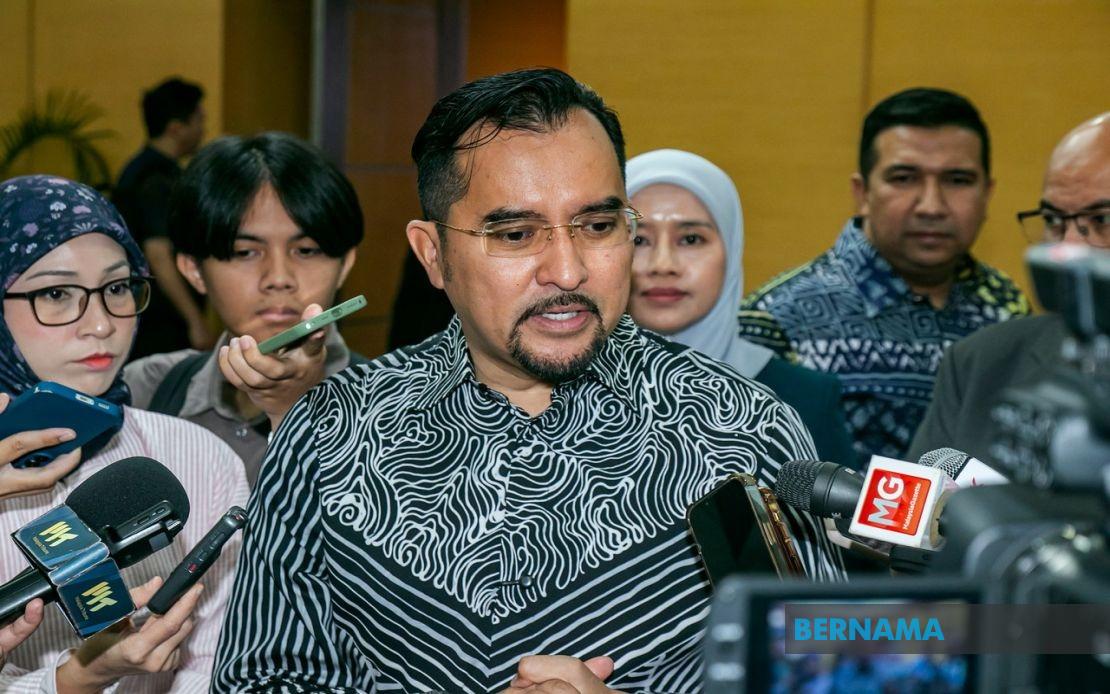
The long-awaited overhaul of the Majlis Amanah Rakyat's governing legislation is approaching a critical juncture, with the proposed MARA Bill 2026 now poised for parliamentary consideration following years of deliberation within government circles. Having already secured Cabinet endorsement, the Bill represents a comprehensive attempt to realign the nearly six-decade-old institution with contemporary corporate governance standards and international best practices, addressing a cascade of governance failures that have periodically undermined public confidence in the agency responsible for Bumiputera advancement.
In articulating the legislative objectives, MARA chairman Datuk Asyraf Wajdi Dusuki emphasised that the reform package prioritises institutional integrity over individual authority. The Bill's framework dedicates approximately four-fifths of its substantive provisions to strengthening governance mechanisms, drawn from established international models of corporate oversight and accountability. This philosophical shift reflects a deliberate recalibration of the agency's power structures, moving away from the concentration of executive authority that characterised MARA's operational model since its establishment.
Central to the Bill's redesign is a deliberate diminution of the chairman's operational mandate. Under the proposed legislation, the chairman's role would be confined to presiding over the Board of Directors, articulating policy direction, and providing institutional checks and balances—substantially narrower than the expansive powers vested under the original MARA Act 1966. The current legislation, formulated during Malaysia's early independent era, granted the chairman broad discretionary authority across administrative functions and institutional management, a concentration that contemporary governance standards consider untenable.
Datuk Asyraf Wajdi framed this power limitation not as a personal diminishment but as an institutional necessity. His public positioning of the governance reforms as a legacy-building exercise signals that the reforms transcend individual tenure, addressing systemic vulnerabilities that successive administrations have identified. The chairman's repeated emphasis that these changes are "about the institution" rather than about any individual officeholder underscores an implicit acknowledgment that previous governance lapses stemmed from structural design flaws rather than isolated misconduct.
The Bill's provisions directly address recurring institutional pathologies that have periodically surfaced in parliamentary scrutiny and media investigations. By narrowing the chairman's administrative involvement, the legislation aims to create institutional compartmentalisation that would prevent concentration of decision-making authority over procurement, fund allocation, and personnel management—the typical vectors through which governance breaches have historically occurred. This structural disaggregation reflects lessons absorbed from corporate governance failures across both public and private sectors regionally and globally.
The necessity for legislative modernisation stems from the fundamental incongruity between the institutional framework operative since 1966 and the governance requirements of contemporary Malaysia. The MARA Act 1966 was conceived during an era of nation-building when institutional structures emphasised unified executive authority and rapid decision-making. Six decades of institutional evolution, regulatory development, and accumulated experience have rendered that framework architecturally obsolete relative to current international standards and domestic expectations of transparent, accountable public administration.
Datuk Asyraf Wajdi's acknowledgment that legislative frameworks require continuous updating reflects a pragmatic understanding that governance requirements are not static. The observation that practices appropriate to the 1960s diverged significantly from those of the 1970s, and differ further from contemporary standards, with additional evolution inevitable, establishes a principle of adaptive institutional design. This framing suggests that the 2026 Bill should itself be understood as evolutionary rather than definitive, establishing mechanisms for periodic review and refinement.
For Malaysian stakeholders, particularly within the Bumiputera community that MARA serves, the governance reforms carry substantial implications. Strengthened institutional accountability mechanisms directly correlate with improved programme efficacy and reduced resource wastage. When institutional leadership faces meaningful constraints on unilateral decision-making and operates within robust oversight frameworks, beneficiary communities experience more equitable programme delivery and reduced diversion of resources intended for community advancement.
The November parliamentary tabling timeline positions the Bill for potential passage within the current parliamentary cycle, though the legislative process may extend into early 2025 depending on the deliberation duration and amendment processes. Parliamentary debate around MARA's governance structure will likely attract scrutiny from members representing constituencies with significant Bumiputera populations, given the institution's centrality to affirmative action implementation. The legislative process will provide opportunity for refinement of the proposed governance architecture through parliamentary committee deliberations and stakeholder consultations.
Regionally, MARA's legislative modernisation reflects broader governance trends across Southeast Asian development institutions. Comparable agencies throughout the region have undergone similar structural reforms, transitioning from personalised executive authority models to institutionalised governance frameworks emphasising transparency and distributed accountability. This convergence on governance standards reflects both international development institution influence and demonstrated effectiveness of such frameworks in sustaining institutional legitimacy across political transitions.
The Bill's passage would represent substantive institutional restructuring for an agency with deep historical significance within Malaysia's development narrative. Established in 1966 as the primary vehicle for implementing Bumiputera advancement policies, MARA has administered billions of ringgit in educational scholarships, business financing, and skills development programmes. Modernising its governance architecture ensures the institution can continue fulfilling its developmental mandate while operating within contemporary standards of institutional accountability and transparency that Malaysian society increasingly demands from public institutions.

