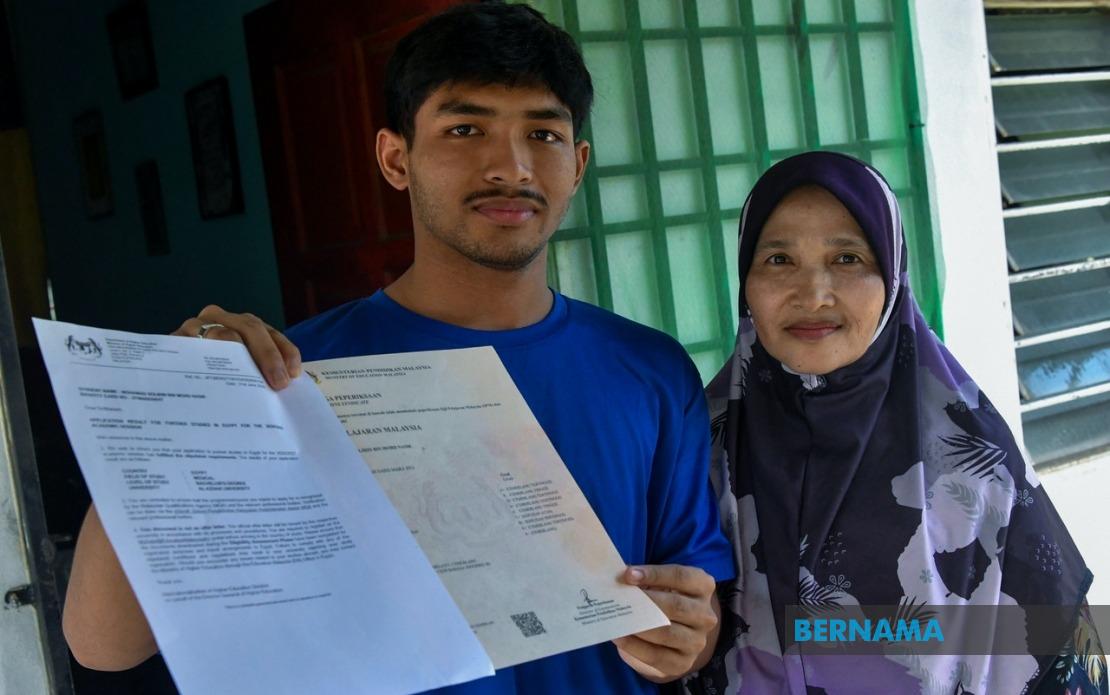
A gifted teenager from Kota Bharu who stood on the brink of abandoning his medical school acceptance has been handed a lifeline by Malaysia's premier scholarship agency. Mohamad Solihin Mohd Nasir, 19, was preparing to reject his Al-Azhar University offer after calculating that his family could never find the RM100,000 needed to cover five years of tuition and living expenses. His decision to reach out for help, however, prompted the Majlis Amanah Rakyat (MARA) to intervene and explore pathways that could transform his academic prospects.
The turning point came when MARA chairman Datuk Dr Asyraf Wajdi Dusuki engaged directly with Mohamad Solihin through a video call to his family home, signalling the agency's commitment to removing financial barriers for merit-based students facing genuine hardship. Rather than offering a single solution, MARA presented two distinct options that acknowledge both Mohamad Solihin's preference for Egypt and practical alternatives within Malaysia. The first involves providing comprehensive support, including funding for a preparatory Arabic language course that would satisfy Al-Azhar's entry requirements before his medical studies commence. The second pathway offers sponsorship to pursue medicine at the Universiti Sains Malaysia Health Campus (USMKK), eliminating the need to relocate internationally.
Mohamad Solihin's circumstances exemplify the demographic MARA explicitly targets through its assistance programmes. Beyond his academic excellence—he maintained a 3.96 cumulative grade point average at Kelantan Matriculation College—he carries the additional vulnerability of being an orphan from an economically disadvantaged household. His father, Mohd Nasir Abdul Rahman, died of a heart attack in 2014 when Mohamad Solihin was still in primary school, leaving his mother to manage the family's finances. At 60 years old, Faridah Mohamad battles thyroid disease and depends heavily on support from her other children, creating a situation where funding a medical education abroad appears entirely impossible without external intervention.
The tragedy of Mohamad Solihin's father's premature death has profoundly shaped not only his family circumstances but also his career aspirations. Rather than being merely deterred by loss, he has channelled his grief into purpose, aspiring to become a cardiothoracic surgeon motivated by his father's death from heart disease. This combination of ambition rooted in personal tragedy and demonstrated academic capability makes him precisely the type of student institutional support systems should prioritise. His determination is reflected in his willingness to persist despite setbacks; even when the Al-Azhar offer arrived on June 15, his initial instinct was resignation rather than celebration.
The financial barrier Mohamad Solihin faces is not unusual in Malaysia, where talented students from lower-income families frequently encounter obstacles that wealthier peers never confront. The estimated RM100,000 five-year cost represents an insurmountable sum for a household without stable income sources. His mother's comments underscore the emotional weight of such situations—while proud that her youngest child achieved acceptance to a prestigious international institution, she could only express hope that others would shoulder the burden she could not bear. Without intervention, Malaysia would have lost a potentially exceptional physician, a waste that extends beyond individual tragedy to represent a broader societal loss of talent.
Mohamad Solihin's journey has already garnered community support that demonstrates how local networks can mobilise when individual cases attract attention. Staff members at his former school, MARA Junior Science College (MRSM) Jeli, initiated fundraising efforts on his behalf. Simultaneously, his family pursued applications with multiple Kelantan-based organisations, including the Kelantan Islamic Religious and Malay Customs Council, Kelantan Islamic Foundation, and Kelantan Darulnaim Foundation. This multi-pronged approach reflects a strategy increasingly adopted by students and families facing educational financing challenges, though success depends heavily on the responsiveness of approached institutions.
The decision to study in Egypt rather than Malaysia carries both advantages and complications worth considering. Al-Azhar University, as one of the world's oldest and most respected Islamic institutions, provides distinctive educational prestige and international recognition that could enhance Mohamad Solihin's career prospects globally. However, pursuing studies abroad requires not merely tuition funding but also management of currency fluctuations, accommodation in a foreign environment, and the intangible costs of extended separation from family support systems. MARA's offer to fund an Arabic preparatory course acknowledges these realities, though it extends the timeline before he begins formal medical training.
Conversely, the USMKK option represents a pragmatic alternative that has produced many accomplished Malaysian physicians and specialists. Studying domestically would maintain family connections, reduce logistical complications, and allow Mohamad Solihin to serve the Malaysian healthcare system directly once graduated. For a student whose motivation partly stems from personal family loss and whose mother's health concerns add another layer of family medical complexity, remaining in Malaysia could provide psychological benefits. The choice between these pathways ultimately rests with Mohamad Solihin himself, though MARA's willingness to support either option demonstrates institutional flexibility increasingly necessary in modern scholarship administration.
Mohamad Solihin's prospective departure date—between August 21 and 29, contingent on finalised funding—suggests urgent action is required from MARA and supporting organisations to complete necessary paperwork and financial arrangements. This compressed timeline underscores why his initial hesitation to pursue the offer made institutional intervention so critical. Without swift engagement from MARA, the bureaucratic machinery of scholarship administration would likely have consumed valuable weeks, potentially causing him to miss enrollment deadlines at Al-Azhar and forcing reconsideration of alternative arrangements midstream.
Beyond the immediate resolution of Mohamad Solihin's situation, his case illuminates broader patterns in Malaysian educational access that merit structural attention. The fact that a student with a 3.96 GPA from a premier MARA-affiliated college nearly forfeited medical school acceptance due to family poverty suggests that Malaysia's scholarship ecosystem, despite institutions like MARA, still contains gaps that prevent talented youth from disadvantaged backgrounds from pursuing their aspirations. While MARA's intervention here represents the system functioning as intended, the reactive nature of such assistance—requiring students to nearly reject offers before receiving support—suggests room for more proactive identification and early support mechanisms.
For Malaysian readers, Mohamad Solihin's narrative carries resonance extending beyond one family's struggles. In a region where brain drain remains a persistent challenge, retaining talented youth depends partly on making education financially accessible regardless of family circumstances. Whether he ultimately chooses Egypt or Malaysia, MARA's involvement ensures that financial hardship will not prevent a potentially exceptional physician from serving populations that desperately need medical expertise. His story also demonstrates that institutional support mechanisms, when properly mobilised, can redirect trajectories fundamentally and swiftly.

