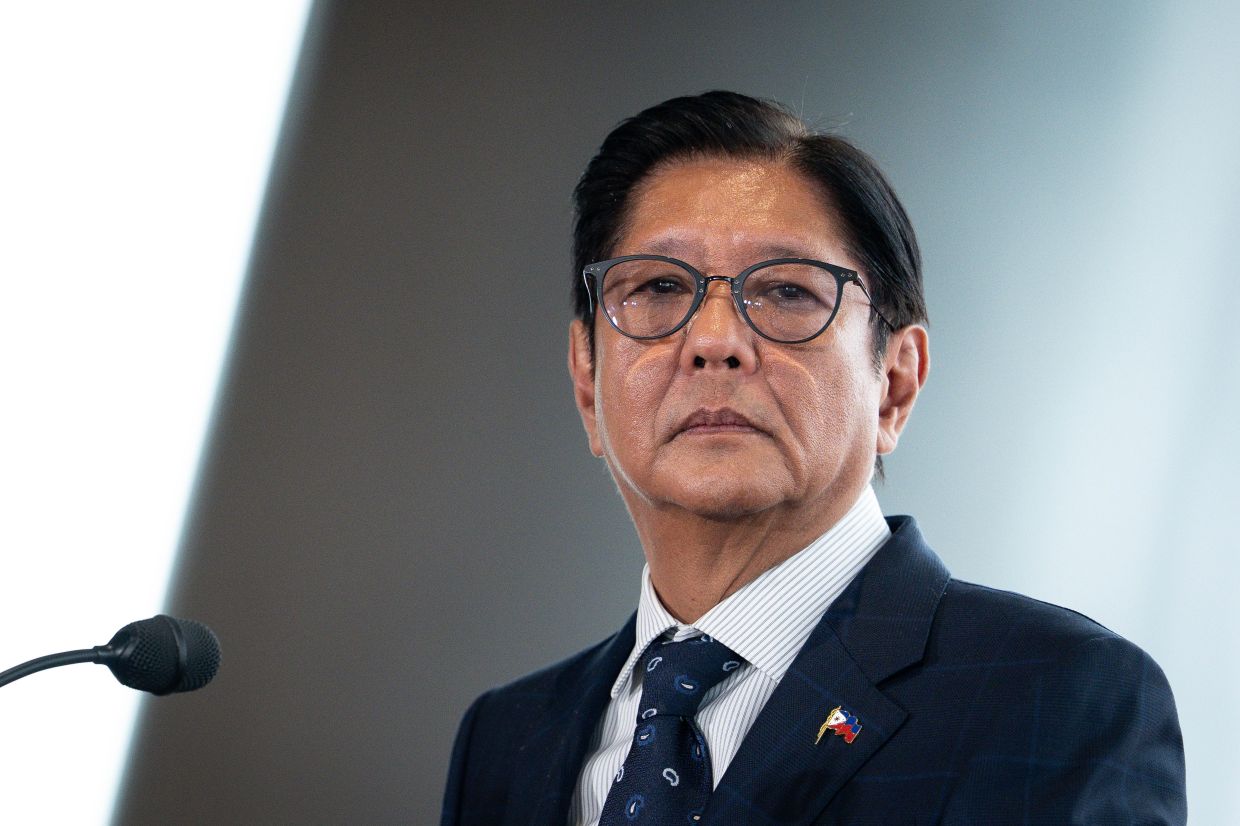
Philippine President Ferdinand Marcos Jr stands at a critical juncture as he prepares to address Congress this week, tasked with reassuring a nation reeling from economic stagnation and trust eroded by scandal. Twelve months ago, his annual speech to the legislature stunned the country with revelations that billions of dollars had been siphoned away through corruption in flood-control infrastructure projects. The fallout has been severe, triggering a sharp economic deceleration as delayed development work and reduced spending by households and enterprises rippled through the economy. With just two years remaining in his presidency, the 68-year-old leader must convince both the public and investors that his administration possesses the competence and will to chart a path toward renewed growth.
The governance crisis compounds existing political fractures within the presidential establishment itself. Vice President Sara Duterte currently faces a Senate impeachment trial on corruption allegations and charges of threatening to assassinate Marcos, accusations she contests. Simultaneously, Marcos finds his ruling coalition fracturing, with even his own sister, Senator Imee Marcos, regularly distancing herself from administration policies. Political analyst Rodel Taton from San Sebastian College-Recoletos notes that these internal divisions have severely undermined the coherence of government, making coordinated economic recovery efforts difficult to implement. The administration thus appears outwardly fractious at precisely the moment when unified, decisive leadership is most needed.
Public faith in presidential governance has reached historic lows despite administration claims of policy success. The irony is stark: Marcos campaigned partly on an anti-corruption platform, contrasting himself with his late father's notorious kleptocratic regime. Yet observers argue he has failed to demonstrate adequate follow-through in addressing the scandal his own speech exposed. Hansley Juliano, a political science instructor at Ateneo de Manila University, highlights that citizens perceive a troubling disconnect between revelation and accountability. The president has provided neither the explicit, decisive action nor the visible enforcement that would convince ordinary Filipinos that consequences are real. Without tangible prosecutions and project completion timelines, the speech risks sounding hollow.
The economic numbers tell a story of deteriorating momentum. Growth contracted sharply to 2.8 percent in the first quarter of 2026, substantially below Malaysia's and Singapore's performances and far short of pre-crisis expectations. Forecasts for 2026 have been slashed to a range of 3.5 to 4.5 percent, down from projections exceeding 6 percent before Middle Eastern geopolitical instability disrupted regional energy markets. The Philippine stock index has tumbled 1.5 percent since last year's State of the Nation Address, while the peso has weakened nearly 8 percent against the dollar, raising import costs and complicating refinancing of dollar-denominated obligations. These financial indicators suggest that investor confidence has genuinely eroded, not merely temporarily wavered.
Inflationary pressures have squeezed ordinary Filipinos' purchasing power, creating visible discontent in communities bearing the greatest burden. In Calumpit, a village 50 kilometres from Manila, residents experience daily reminders of failed governance: a broken dike continues to stand unrepaired whilst a sheet pile defence against flooding has barely progressed. Local official Sergio Miranda's bitter observation that bodies will become immune to floodwaters before projects finish captures the frustration of populations most vulnerable to typhoons and most harmed by corruption in public works. These communities expected that corruption exposure would accelerate remedial action, yet they experience only delays and broken promises.
Energy costs represent an underappreciated vulnerability for Philippines economic recovery. The nation sources more than 90 percent of crude oil requirements from the Middle East, making it acutely exposed to regional price volatility. Rising fuel costs propagate through manufacturing, transport, and electricity generation, exacerbating inflation that central bank tightening struggles to contain. This external constraint limits the administration's ability to stimulate growth through fiscal measures, since petrol-driven price pressures would quickly offset any demand-side benefits. Investors and business leaders pointedly await clarity on how the government intends to manage these costs or diversify energy sourcing.
The Philippine investment position within Southeast Asia reveals a deeper competitive challenge. The nation captured less than 5 percent of foreign direct investment flows to the region last year, according to economist Radhika Rao of DBS Bank Singapore. Rivals including Vietnam, Thailand, and Indonesia have attracted substantially greater capital inflows by offering clearer governance frameworks, faster project execution, and more reliable infrastructure. Rao emphasises that addressing domestic governance and improving project implementation would meaningfully improve the investment climate. However, without visible progress on anti-corruption measures and infrastructure completion, multinational corporations and portfolio managers will likely continue allocating capital to jurisdictions perceived as more stable and efficient.
Corporate sentiment increasingly reflects anxiety over policy consistency and fiscal management. The Management Association of the Philippines released a statement capturing prevailing anxiety: the country is fatigued by political turbulence whilst citizens endure elevated living costs and enterprises confront persistent uncertainty. The association explicitly cautioned against allowing anti-corruption campaigns to impede economic growth momentum, suggesting that the current pursuit of accountability may be perceived as creating policy paralysis. Cristina Ulang, head of research at First Metro Investment Corp, notes that markets remain exquisitely sensitive to how the administration will deploy fiscal stimulus tools. Investors require persuasion that government possesses both the capability and commitment to generate growth through concrete structural reforms rather than rhetorical declarations.
Equity strategists and economists have articulated specific demands for the speech. April Lynn Tan, chief equity strategist at COL Financial Group, explicitly seeks clarity on how the administration plans to manage oil price impacts, permanently reduce inflation trajectories, and attract greater foreign investment flows. These questions reflect broader investor concerns that the government lacks coherent medium-term frameworks addressing supply-chain integration, industrial diversification, and fiscal sustainability. Without answers demonstrating sophisticated economic understanding, the speech risks further diminishing confidence amongst the business community whose investment and hiring decisions ultimately determine employment and growth.
The timing of this high-stakes address introduces additional complications. The speech coincides with commemorations of Iglesia ni Cristo's founding, and the religious organization recently orchestrated massive anti-Marcos protests that disrupted Manila. Hundreds of thousands of church members are anticipated to gather near Congress, with the denomination's headquarters located merely kilometres from the legislative chamber. The government has deployed over 21,000 police personnel to manage security, signalling concern about potential disruption. Beyond the church's presence, organised opposition groups including Sanlakas, representing marginalised communities, plan demonstrations outside parliament. Secretary-general Aaron Pedrosa argues that despite government claims of effective stewardship, workers, farmers, and vulnerable populations face deepening impoverishment and disenfranchisement, contending that current policies systematically burden the poor.
Marcos has previewed that his speech will emphasise effective policy implementation amid challenging external circumstances. He declared to reporters that he would ensure citizens understand the administration's accomplishments whilst navigating difficult global conditions, notably external geopolitical disruptions. Yet this framing risks appearing tone-deaf to communities suffering tangible consequences from graft, delayed infrastructure, and inflation. The credibility challenge extends beyond oratory: the president must demonstrate that between now and 2028, his government will prosecute alleged perpetrators, complete infrastructure projects visibly, and restore growth trajectories approaching pre-crisis levels. Failure risks leaving Duterte, despite her own legal troubles, positioned as the 2028 frontrunner, since voters may ultimately view her antipodal relationship with Marcos as preferable to continued governance failure.
For Malaysia and regional observers, the Philippines' experience carries instructive lessons. Economic credibility depends fundamentally on governance quality and demonstrated follow-through on commitments. Investor capital flows toward jurisdictions perceived as capable and trustworthy, not merely those articulating ambitious plans. The corruption scandal itself might have been manageable through decisive accountability and acceleration of corrective projects. Instead, perceived inaction has compounded the original damage, creating the current crisis of confidence. Other Southeast Asian governments should recognise that institutional credibility, once damaged, requires sustained effort and visible progress to rebuild. The Philippines' struggle illuminates how quickly economic momentum evaporates when populations lose faith in governmental competence and integrity.

