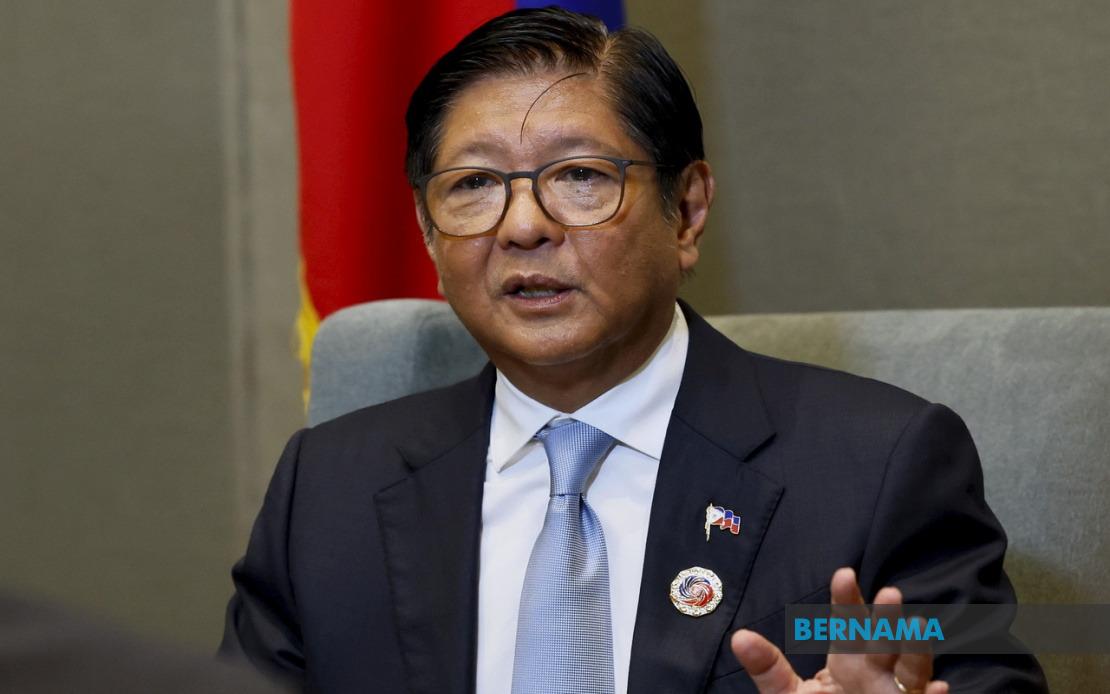
President Ferdinand R. Marcos Jr. has cast the Association of Southeast Asian Nations as the Philippines' foundational partnership for navigating an increasingly unstable world, underscoring the bloc's centrality to regional prosperity and security. Speaking during his fifth State of the Nation Address on Monday, Marcos described ASEAN as a dependable refuge—a "safe harbour"—for Manila as it confronts mounting geopolitical pressures and economic volatility. This characterisation reflects Manila's strategic calculation that regional multilateralism offers more tangible benefits than larger extra-regional alignments, particularly given Southeast Asia's exposure to great power competition and global supply chain disruptions.
The President's emphasis on ASEAN solidarity carries particular resonance for Malaysia and other Southeast Asian nations wrestling with similar vulnerabilities. The Philippines, as chair of the ASEAN Summit this year, has actively promoted deeper cooperation among member states on shared challenges—a responsibility that underscores Manila's commitment to collective problem-solving rather than unilateral posturing. Marcos noted that member states worked in concert to mitigate fallout from the Middle East conflict, demonstrating how regional cohesion can cushion individual economies against external shocks. This approach resonates strongly with Malaysia's own interest in maintaining a stable, cooperative regional architecture capable of buffering member states from distant upheavals.
A cornerstone achievement under Philippine stewardship has been operationalising the ASEAN Plus Three Emergency Rice Reserve, a mechanism designed to guarantee food security during domestic production shortfalls. For Southeast Asia—home to critical rice exporters and importers alike—this initiative addresses a fundamental vulnerability. The reserve system acknowledges that agricultural output fluctuates unpredictably, whether due to climate variability, pests, or conflict disruptions elsewhere. Malaysia, heavily reliant on rice imports, stands to benefit substantially from this collective insurance arrangement, which stabilises supply and buffers price volatility. The mechanism reflects how ASEAN can translate shared interests into tangible institutional responses that strengthen member-state resilience.
Equally significant is the ASEAN Digital Economy Framework, which the Philippines championed and which aims to harmonise digital regulations across Southeast Asia. By standardising rules governing cross-border digital commerce, fintech services, and digital banking, the framework reduces friction for businesses operating regionally and expands financial access for smaller enterprises previously excluded from formal banking systems. For Malaysia—a regional fintech hub with growing digital ambitions—such harmonisation facilitates deeper economic integration and creates opportunities for Malaysian tech firms to scale operations across the region. The framework exemplifies how ASEAN cooperation generates concrete economic benefits beyond traditional trade agreements.
The ratification of the Framework Agreement on Petroleum Security represents another strategic win for the bloc. The accord commits member states to jointly stockpile petroleum reserves, thereby enhancing collective energy security. Given Southeast Asia's dependence on energy imports and vulnerability to supply disruptions—whether from geopolitical conflict or shipping route instability—this coordination mechanism provides a buffer against sudden shocks. Malaysia, both an energy producer and consumer, has particular incentive to ensure stable regional supply chains and predictable pricing. The framework signals that ASEAN recognises energy independence as foundational to sustained economic development.
Marcos also highlighted the Philippines' contribution to realising the ASEAN Power Grid, a long-standing vision to interconnect electricity systems across the region. With the Philippines' three major island grids now fully integrated internally, Manila is positioned to connect with neighbours and facilitate cross-border power flows. This initiative promises to optimise energy resources across Southeast Asia—enabling nations with surplus generation capacity to support regions facing supply shortfalls and reducing overall system costs. Malaysia, with its own grid infrastructure and renewable energy ambitions, stands to gain from such integration. The power grid exemplifies how technical cooperation can deliver tangible developmental benefits and support the region's energy transition goals.
Marcos' invocation of "bayanihan"—the Filipino concept of communal cooperation—to describe ASEAN solidarity carries symbolic weight beyond Manila's borders. The term captures an ethos of mutual obligation and collective problem-solving that resonates across Southeast Asia, where historical experiences of colonial intervention and regional rivalry have fostered deep appreciation for autonomous decision-making and non-interference. By framing ASEAN cooperation in culturally rooted language rather than bureaucratic jargon, Marcos appeals to deeper values shared across member states. This rhetorical move reinforces ASEAN's appeal as a distinctly Southeast Asian institution, independent from external powers and grounded in indigenous understandings of community.
The President's renewed call for peace amid global armed conflicts carries particular weight given the region's geographic proximity to multiple conflict zones and strategic waterways. The Middle East tensions, Ukraine's ongoing war, and North Korea's provocations all threaten to disrupt Southeast Asian trade routes and draw the region into broader power competitions. By emphasising that "violent conflict only destroys" while "true diplomacy builds," Marcos articulates a vision of ASEAN as a force for restraint and reason in a destabilising world. This positioning appeals to Malaysia and other members seeking to maintain strategic autonomy and avoid being forced to choose between contending powers.
Marcos' characterisation of ASEAN as the Philippines' safe harbour reflects a fundamental shift in how Manila conceptualises its regional role. Rather than viewing ASEAN primarily as a constraint on national autonomy or a forum for managing disputes, the President reframes it as the cornerstone of national security and prosperity. This reorientation has profound implications for Southeast Asia's geopolitical trajectory. It suggests that Philippines leadership—and by extension, the broader region—is committed to deepening institutionalised cooperation even as external powers compete for influence. For Malaysia and other ASEAN members, this commitment provides reassurance that the bloc remains viable and relevant despite centrifugal pressures.
The concrete mechanisms Marcos described—rice reserves, digital frameworks, petroleum stockpiles, interconnected grids—are not merely technical arrangements but embodiments of a strategic vision. Each represents a domain where ASEAN members recognised mutual vulnerability and chose coordinated response over isolated self-reliance. This pattern of behaviour suggests the bloc is maturing beyond ceremonial summit declarations toward substantive cooperation addressing material welfare. Malaysian policymakers and citizens should view these developments as evidence that ASEAN remains a credible vehicle for advancing regional interests, even amid great power competition.
Looking forward, Marcos' emphasis on ASEAN solidarity faces practical tests. Implementation of the frameworks will require sustained political will and bureaucratic capacity across diverse member states with varying development levels and institutional capabilities. The rice reserve mechanism must function smoothly during actual crises; the digital framework must not inadvertently advantage larger economies over smaller ones; the power grid must overcome technical and commercial hurdles. Yet the fact that ASEAN has moved from aspiration to operationalisation in multiple domains suggests the bloc possesses sufficient institutional muscle to execute its agenda. For Malaysia and the region, this bodes well for long-term prosperity and stability.

