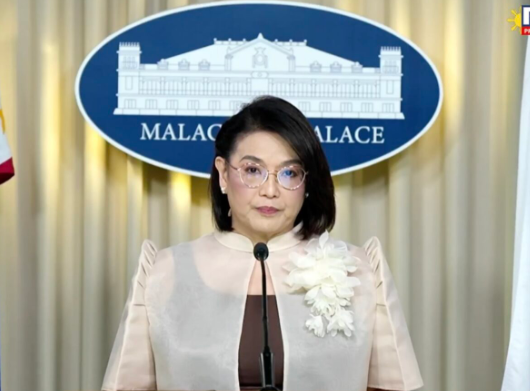
Philippine President Ferdinand Marcos Jr has signalled his continued confidence in the Armed Forces of the Philippines, even as the National Bureau of Investigation identifies active uniformed personnel as persons of interest in connection with an alleged assassination plot targeting the chief executive. The revelation emerged during witness testimony at the ongoing impeachment trial of Vice President Sara Duterte, where NBI Director Melvin Matibag disclosed that members of the security establishment have come under scrutiny as part of a broader investigation into the alleged conspiracy.
Matibag's disclosure on Wednesday, July 22, represents one of the most serious allegations of internal security threats to emerge from the Vice President's impeachment proceedings. Beyond identifying active military and police officers as persons of interest, the NBI director also noted that someone within the Vice President's own security detail has attracted investigative attention. These revelations have thrust the delicate question of institutional loyalty and internal discipline within the security forces into sharp focus during a period of intense political tension between the President and Vice President.
Palace Press Officer Claire Castro sought to reassure the public and international observers of the President's steadfast faith in the armed forces as an institution, despite the troubling allegations. Her remarks emphasized that any individuals found to be acting outside their lawful mandate would be appropriately identified and dealt with, maintaining a careful distinction between institutional integrity and isolated individual misconduct. Castro's statement reflects the administration's balancing act: projecting confidence in the military hierarchy while acknowledging that vetting and accountability mechanisms exist to address bad actors.
The Palace spokesperson further emphasized that the administration distinguishes between genuine security concerns and the motivations of those who might attempt to weaponize institutions for factional or personal gain. Castro indicated that the investigation should focus on identifying anyone planning to violate the law in service of advancing one person's interests rather than the nation's. This framing suggests the administration views the alleged plot not as a systemic military problem, but as a potential case of individuals misusing their positions for narrow political objectives.
Castro's comments contained an implicit acknowledgement that loyalty and trustworthiness within the security apparatus cannot be assumed universally, even if the President maintains confidence in the institution's leadership. She clarified that no blanket loyalty screening is currently underway across the armed forces, positioning any investigations as matters properly belonging to the security sector itself and to military command structures. This delegation of responsibility reflects a preference to avoid the appearance of political interference in security matters, even as the administration grapples with serious allegations.
The remarks come against a backdrop of escalating tensions between the President and Vice President, whose impeachment trial has become a focal point for deeper institutional and political divisions. Vice President Duterte has made explosive statements during her testimony, including an unusual and cryptic remark in which she claimed to have previously instructed someone that if she were killed, the President, Liza Araneta, and Martin Romualdez should also be eliminated. These comments, made in Filipino and apparently intended as dark humour or deterrent rhetoric, have added an unsettling dimension to the proceedings and underscored the severity of alleged security threats.
Duterte's peculiar testimony raises questions about the nature and credibility of the allegations swirling around the alleged assassination plot. Her statement—whether intended seriously or as a stark warning—highlights the highly charged atmosphere within which security investigations are now unfolding. The comment suggests awareness of security threats on multiple sides and reflects the climate of mutual suspicion that has come to characterise relations between the President and Vice President in recent months.
The NBI subsequently attempted to compel Duterte's fuller cooperation by issuing a subpoena, but the Vice President did not comply with the summons. Her non-compliance adds another layer to the contentious dynamics and raises questions about the extent to which investigations into these serious allegations can proceed when key witnesses decline to participate fully. The standoff underscores the political constraints under which security investigations operate when they touch upon high office and institutional rivalries.
For Malaysian and Southeast Asian observers, the unfolding crisis in the Philippines illustrates the vulnerabilities that emerge when political divisions penetrate security institutions. The alleged involvement of active military and police officers in a plot against the President demonstrates how institutional loyalty can fracture when political polarization reaches sufficient intensity. In a regional context where military and security institutions have historically played pivotal political roles, the Philippine case serves as a cautionary example of how serious institutional dysfunction can emerge.
The President's public maintenance of confidence in the armed forces, despite allegations targeting some of its members, reflects a strategic calculation that undermining institutional credibility further would be counterproductive. Yet the very existence of such allegations raises profound questions about the reliability of security mechanisms and the extent to which political differences have compromised professional military standards. The investigation's progress and any eventual findings will likely shape perceptions of institutional integrity across the Philippine security establishment for years to come.
The incident also illustrates how security crises can become entangled with broader political conflicts in ways that complicate both genuine security responses and democratic accountability. As the NBI investigation proceeds and the impeachment trial continues, the challenge for Philippine democratic institutions will be demonstrating that security threats can be investigated thoroughly and impartially, regardless of the political standing of those accused or those bringing the allegations.

