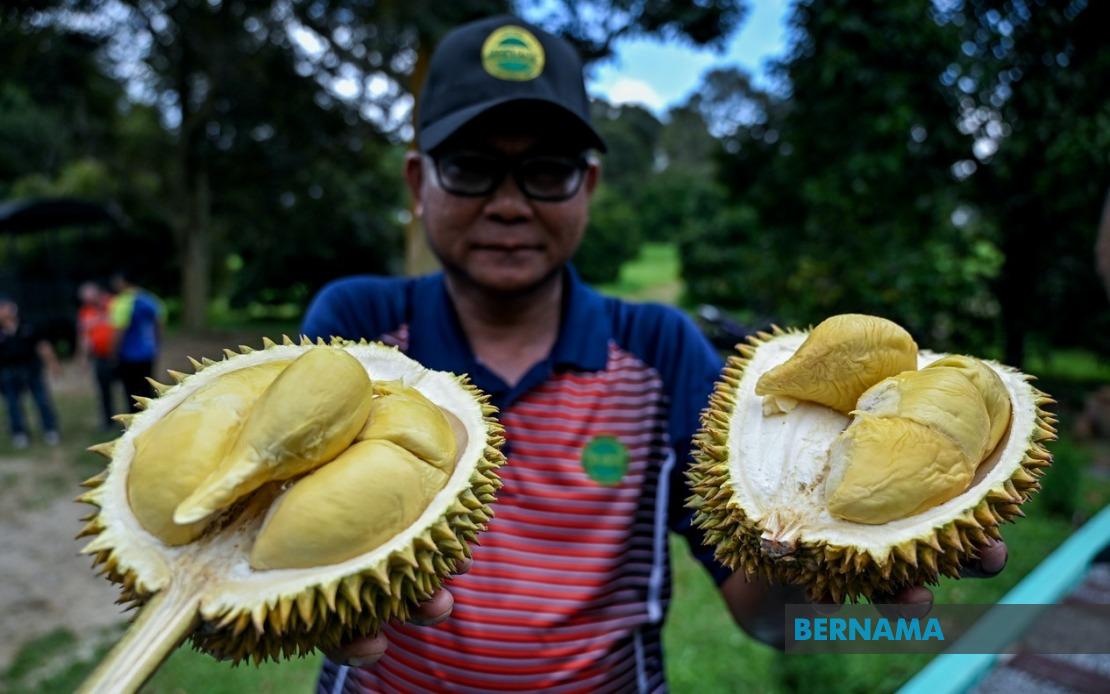
Malaysia's push to strengthen its durian sector through agricultural innovation has reached a significant milestone, with the Malaysian Agricultural Research and Development Institute announcing the successful planting of approximately 25,000 MS88 hybrid durian trees across the country. The extensive cultivation effort spans roughly 242 hectares of land, with the majority of plantings concentrated in Selangor and along the east coast region, reflecting a strategic geographic distribution aimed at maximising growing conditions and market accessibility.
Director-general Datuk Dr Mohamad Zabawi Abdul Ghani revealed this progress during a media engagement event at the MARDI Agrotechnology Park in Kuala Kangsar. The MS88 represents one of three proprietary hybrid varieties developed by the institute since the early 2000s, alongside the MDUR78 and MDUR79 cultivars, which continue to enjoy strong favour among domestic durian consumers and international enthusiasts seeking premium fruit quality.
The strategic expansion of MS88 plantings underscores Malaysia's commitment to modernising its durian production capabilities at a time when global demand for the fruit continues to surge. The hybrid approach allows MARDI to address critical agricultural challenges such as disease resistance, yield consistency, and production efficiency—factors that increasingly influence farmer profitability and export competitiveness in regional markets where Thailand and Indonesia present formidable competition.
Beyond the current MS88 deployment, MARDI is actively engaged in selecting and refining three additional hybrid durian varieties intended to eventually join the market as premium offerings. These emerging cultivars are undergoing rigorous evaluation protocols that scrutinise multiple dimensions of agricultural viability: fruit quality characteristics including flavour profile and appearance, consumer acceptance through taste-testing and preference surveys, and practical suitability for cultivation by working farmers who must adopt these varieties at commercial scale.
The development pipeline reflects a nuanced understanding of the durian market's complexity. Successful introduction of new varieties requires balancing botanical performance with consumer expectations and farmer capabilities. Many established growers possess limited experience with novel cultivars and may hesitate to transition land away from proven producers, creating a transition challenge that MARDI's evaluation phase directly addresses.
Dr Mohamad Zabawi explained that the institute has already identified several promising hybrid candidates for future commercial release, though they remain in the selection phase pending final validation. The deliberate withholding of varietal names stems from a carefully orchestrated marketing strategy designed to coincide with the upcoming durian season. This timing enables public tasting events and visual assessment, generating anticipation and consumer education that can accelerate market adoption once the varieties officially launch.
The staggered introduction approach also allows MARDI to manage supply chain coordination with nursery operators and farmer networks, ensuring adequate propagation capacity and knowledge transfer infrastructure exist before widespread planting commences. Such preparatory work proves essential when introducing new horticultural varieties into competitive agricultural sectors where successful adoption depends on reliable access to quality seedstock and technical guidance.
For Malaysian policymakers, the durian breeding programme represents a strategic investment in agricultural value addition and export diversification. As global consumers increasingly demand premium fruit with consistent quality attributes, local producers equipped with proprietary varieties enjoy competitive advantages in international markets. The MS88 and its successors position Malaysia to capture higher-value segments of the global durian trade, potentially generating greater returns for smallholder farmers and commercial plantations alike.
The concentration of current plantings in Selangor and east coast states reflects both existing climatic suitability and established horticultural infrastructure in these regions. Selangor's proximity to Kuala Lumpur ensures convenient access to research facilities and market channels, while east coast states possess ideal rainfall patterns and soil conditions for durian cultivation. Future expansion could explore additional zones as production technologies mature and farmer familiarity with MS88 cultivation practices increases through demonstration plots and peer-to-peer knowledge sharing.
International context adds urgency to Malaysia's durian development efforts. Thailand has invested heavily in durian research and now leads regional exports, while Indonesia continues expanding acreage under modern management systems. Malaysian competitiveness increasingly depends on producing distinctive varieties with recognised quality credentials. MARDI's breeding programme directly addresses this imperative by developing genetic assets that cannot be easily replicated by competitors, creating defensible market positions for Malaysian exporters.
The institutional commitment to selecting and eventually releasing new varieties every few years signals confidence that Malaysia's durian sector can sustain innovation momentum. Consumer preferences shift toward larger fruits, extended shelf life, and consistent sweetness profiles. Maintaining a pipeline of newly developed varieties allows the industry to respond to these evolving demands while managing genetic diversity across commercial plantings—a safeguard against concentrated vulnerability to emerging pests or diseases.
As MARDI continues advancing its durian breeding agenda, success ultimately depends on farmer adoption rates. This reality explains the extensive evaluation protocols now underway. New varieties must deliver tangible benefits in terms of yield, disease resistance, or market premium that justify the risks associated with transitioning established plantings. The institute's phased release strategy, combined with careful consumer engagement during coming durian seasons, reflects sophisticated understanding of how innovation translates into sustained competitive advantage within Malaysia's dynamic horticultural landscape.

