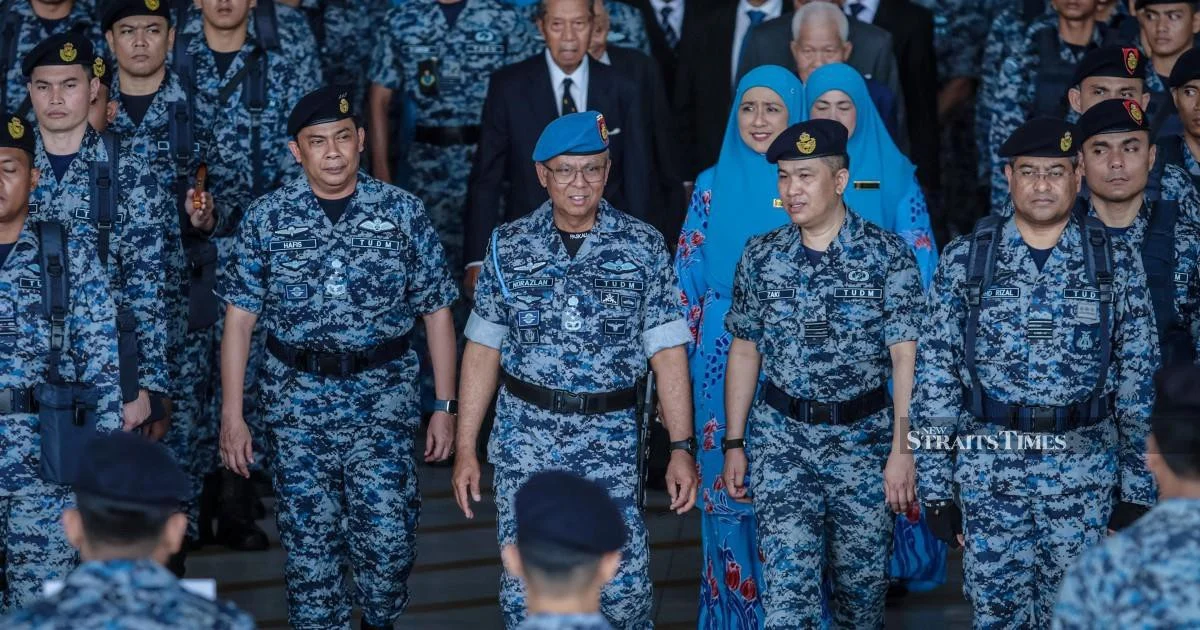
The Royal Malaysian Air Force has flagged air defence as fundamental to safeguarding Malaysia's maritime interests, as regional security challenges intensify. General Tan Sri Muhamad Norazlan Aris, the service's commanding officer, underscored this requirement during recent remarks, highlighting the direct connection between airborne capabilities and the protection of sea lanes upon which Malaysian commerce and security depend. His comments reflect growing concerns within military circles about the vulnerability of crucial shipping corridors that run through Southeast Asian waters.
Malaysia's geographic position makes maritime security a cornerstone of national strategy. The nation straddles some of the world's busiest waterways, including the Strait of Malacca, through which trillions of dollars in international trade transits annually. These routes carry not only Malaysian commerce but also goods destined for regional partners and global markets. Disruption to these channels would have cascading economic consequences, affecting supply chains and damaging the competitiveness of Malaysian firms integrated into regional and international networks.
The shifting geopolitical landscape in Southeast Asia has introduced new complications for maritime safety. Traditional concerns about piracy and maritime accidents persist, but they are now accompanied by state-level tensions, territorial disputes, and the increasing militarisation of adjacent waters. General Muhamad Norazlan's emphasis on air capabilities suggests that the RMAF views aerial surveillance, interception, and rapid response as essential tools for managing these multifaceted threats. Aircraft can cover vast ocean expanses more efficiently than surface vessels alone, providing early warning and swift reactions to incidents.
The evolution of regional competition has made air power particularly salient. Several neighbouring powers have invested heavily in modernising their air forces and naval aviation assets. Without corresponding enhancements to Malaysian capabilities, the country risks falling behind in the ability to monitor and respond to developments in adjacent waters. This asymmetry could constrain Malaysia's strategic autonomy and its capacity to enforce sovereignty in its maritime zones.
Economically, the security of sea lanes is not merely a military matter but a livelihood issue. Malaysian ports, shipping companies, and trading enterprises depend on unimpeded access to international waters. Insurance costs, shipping delays, and supply chain disruptions all carry financial penalties. By ensuring robust air surveillance and rapid-response capacity, Malaysia can maintain the conditions under which commerce flourishes and investment confidence remains high. Industries ranging from palm oil exports to petrochemical shipping rely on this foundation.
The RMAF chief's comments also carry implications for force modernisation planning. Current fleet capabilities, while respectable, face ageing fleets and limited resources. Fighter aircraft, maritime patrol planes, and helicopters designed to operate over water are capital-intensive assets requiring sustained investment. Budgetary pressures, while a reality for all military services, must be weighed against the strategic imperative of maintaining maritime awareness and response capacity.
Regional cooperation emerges as a complementary strategy. Malaysia participates in various maritime security forums and bilateral arrangements with neighbouring states. Enhanced information-sharing, joint patrols, and coordinated responses can amplify the effect of limited national resources. However, cooperation cannot substitute entirely for national capability; each country must maintain minimum credible levels of force to contribute meaningfully to collective efforts and to manage situations where national interest diverges from consensus.
The technological dimension of air power has expanded considerably. Surveillance systems, unmanned aerial vehicles, and advanced radar networks allow smaller air forces to achieve disproportionate awareness and reach. Malaysia's capacity to adopt such technologies will determine whether it can meet security requirements without proportionate increases in aircraft numbers. The integration of modern command-and-control systems with aviation assets offers efficiency gains that older, labour-intensive approaches cannot match.
International partnerships also shape the calculus. Malaysia's relationships with friendly powers, including defence partners and suppliers, influence the quality and timeliness of capability development. Engagement with international defence markets, technology transfer arrangements, and collaborative procurement can accelerate modernisation. However, dependency on single suppliers introduces vulnerabilities; diversification of sources reduces strategic exposure.
The RMAF chief's statement reflects broader strategic thinking within Malaysia's defence establishment about how to balance limited budgets against expanding security demands. The emphasis on air power suggests recognition that naval and ground forces alone cannot adequately project protection across the vast maritime domain. Aerial platforms offer flexibility, speed, and the capacity to operate across borders in pursuit of threats, capabilities that slower surface vessels cannot always match.
Looking ahead, maritime security will remain contested. Climate change may open new routes and create new areas of competition. Economic integration across Southeast Asia increases the importance of stable sea lanes but may also create new flashpoints as interests collide. The RMAF's positioning of air power as central to maritime security reflects a realistic assessment of these trends and the tools available to address them.
%22%2F%3E%3C%2Fpattern%3E%3C%2Fdefs%3E%3Crect%20width%3D%22100%25%22%20height%3D%22100%25%22%20fill%3D%22url(%23ph3o9rig)%22%2F%3E%3Crect%20width%3D%22100%25%22%20height%3D%22100%25%22%20fill%3D%22url(%23ph3o9rip)%22%2F%3E%3Ctext%20x%3D%2250%25%22%20y%3D%2250%25%22%20text-anchor%3D%22middle%22%20dominant-baseline%3D%22central%22%20fill%3D%22rgba(255%2C255%2C255%2C0.95)%22%20font-family%3D%22Georgia%2C%20'Times%20New%20Roman'%2C%20serif%22%20font-weight%3D%22700%22%20font-size%3D%22320%22%20letter-spacing%3D%22-0.02em%22%3EPAS%3C%2Ftext%3E%3C%2Fsvg%3E)

%22%2F%3E%3C%2Fpattern%3E%3C%2Fdefs%3E%3Crect%20width%3D%22100%25%22%20height%3D%22100%25%22%20fill%3D%22url(%23ph1nzvog)%22%2F%3E%3Crect%20width%3D%22100%25%22%20height%3D%22100%25%22%20fill%3D%22url(%23ph1nzvop)%22%2F%3E%3Ctext%20x%3D%2250%25%22%20y%3D%2250%25%22%20text-anchor%3D%22middle%22%20dominant-baseline%3D%22central%22%20fill%3D%22rgba(255%2C255%2C255%2C0.95)%22%20font-family%3D%22Georgia%2C%20'Times%20New%20Roman'%2C%20serif%22%20font-weight%3D%22700%22%20font-size%3D%22320%22%20letter-spacing%3D%22-0.02em%22%3EOnn%3C%2Ftext%3E%3C%2Fsvg%3E)