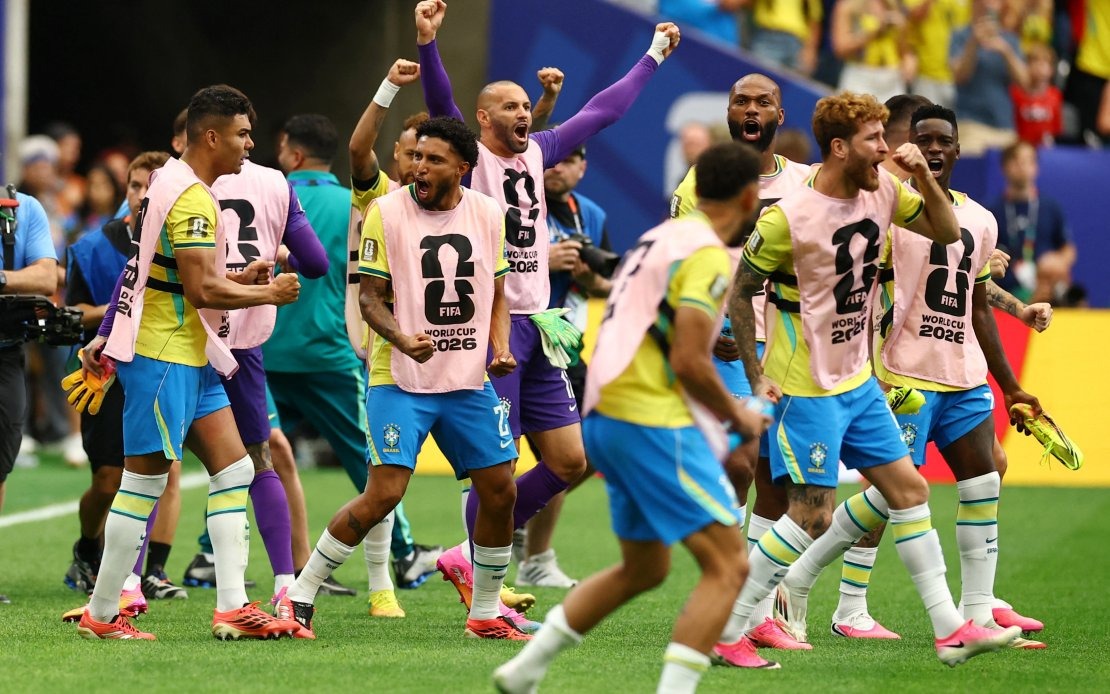
Gabriel Martinelli's composure in the closing moments proved decisive as Brazil fought back from a deficit to defeat Japan 2-1 in their World Cup round-of-32 encounter in Houston on Monday. The five-time world champions' dramatic late surge demonstrated their championship pedigree, with Martinelli's unmarked finish providing the crucial breakthrough when the match appeared headed for a tighter contest. The victory advances Brazil to the knockout stage proper, where they will face the winner between Côte d'Ivoire and Norway.
Both nations had navigated the group phase with impressive credentials, remaining undefeated throughout their preliminary matches. Brazil's dominance in Group C secured them first place with seven points, establishing themselves as favourites heading into the knockout rounds. Japan's progression proved more measured, finishing second in Group F with a single victory and two draws to their name, yet their presence in the last-32 underscored the competitive depth they brought to the tournament.
The historical context between these two football powers adds intrigue to their knockout encounter. Brazil's only previous World Cup meeting with Japan ended in a comprehensive 4-1 victory, appearing to demonstrate clear superiority. However, Japan's footballing evolution became evident in their most recent clash last year, when they sensationally overturned an initial deficit to claim a 3-2 triumph. Such recent form suggested Japan possessed genuine capability to trouble the established powerhouse, creating the conditions for a competitive match.
Brazil's early dominance was evident from kick-off, with their possession-based approach generating numerous opportunities in the opening phases. Matheus Cunha's 14th-minute effort forced Zion Suzuki into a decisive one-handed intervention, signalling the relentless pressure the Brazilians would maintain throughout the opening stages. Despite such early ascendancy, Brazil's inability to convert their territorial advantage into goals would prove consequential as Japan seized an unexpected opportunity.
Japan's breakthrough arrived abruptly in the 29th minute following a critical turnover in possession. Danilo's misplaced pass provided Kaishu Sano the precise opening needed, and the Japanese midfielder capitalised decisively. Sano's forward surge proved sufficiently incisive to brush past Casemiro's defensive positioning before unleashing a strike of considerable precision that evaded Alisson's reach and nestled in the net. The shock goal momentarily shifted momentum, placing Japan in the driver's seat and forcing Brazil to recalibrate their approach.
Despite their numerical dominance in possession, Brazil's attacking forays following Japan's goal lacked the clinical edge required to restore parity. Several chances materialised but few truly threatened Suzuki, suggesting Japan's defensive solidity was proving more resilient than anticipated. The interval provided Tite's squad opportunity to reassess their tactical approach and focus their efforts more precisely toward breaking down a well-organised Japanese defence.
Brazil's second-half resurgence proved more incisive than their early play. The turning point arrived in the 56th minute when Casemiro's aerial prowess, unleashed on a Bruno Guimaraes cross, drew the sides level through a powerful header. The goal represented redemption for the midfielder, who had earlier contributed to the turnover leading to Japan's opener. Brazil's equilibrium restored, the tempo accelerated noticeably as the five-time champions sought the decisive strike.
Vinicius Jr momentarily appeared primed to provide that decisive contribution, executing a mazy run through Japan's defensive lines that showcased individual brilliance. His subsequent strike, however, struck the post with exquisite misfortune, denying Brazil what appeared a certain second goal. The near-miss would have finished most opponents' resistance, yet Japan demonstrated admirable resilience in maintaining their shape and organisational structure.
The match's denouement unfolded in the chaotic final moments of stoppage time, epitomising football's unpredictability. Guimaraes' pinpoint pass discovered Martinelli unmarked in the penalty area, offering the Brazilian forward the clearest of opportunities. Martinelli's clinical execution of the one-on-one situation against Suzuki consigned Japan to defeat with the clock reading 90-plus minutes, leaving no opportunity for a Japanese revival. Japan's desperate pressing in search of an equaliser proved insufficient against Brazil's defending, consigning them to elimination despite a performance meriting greater reward.
The result carries broader implications for the tournament's trajectory. Brazil's advancement is hardly surprising given their credentials, yet Japan's competitive showing and earlier upset of Brazil in non-tournament football demonstrate growing parity in world football. For Southeast Asian football observers, Japan's presence in the knockout stages validates the region's developmental trajectory, though their elimination illustrates the considerable gap separating Asian contenders from established global powerhouses.

