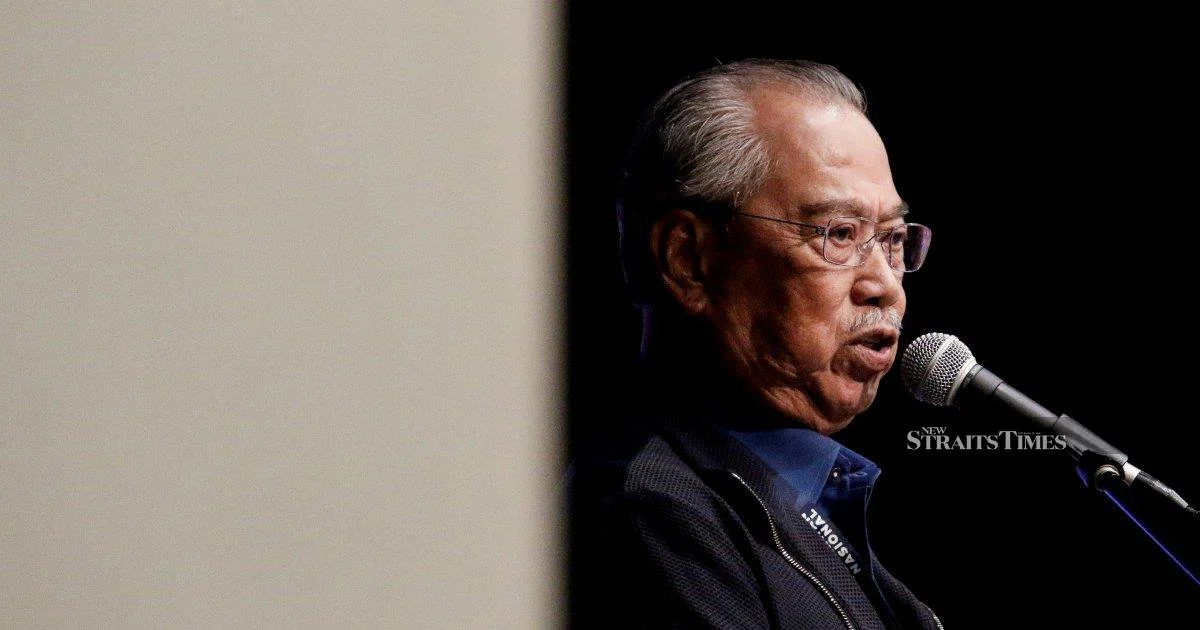
Datuk Dr Marzuki Mohamad has refuted contentions that Perikatan Nasional (PN) foundered in its quest to form the federal government after the 15th General Election (GE15) due to ego-driven disputes or the stubbornness of a particular faction unwilling to cede the premiership to an alternative candidate.
The statement carries significance for understanding the protracted political manoeuvring that followed the November 2022 election, which delivered a fractured Parliament where no coalition commanded a clear majority. In the aftermath, multiple alliances jostled for position to assemble the necessary numbers to form government, ultimately resulting in the Pakatan Harapan-Barisan Nasional coalition taking power under Prime Minister Datuk Seri Anwar Ibrahim.
Marzuki's intervention in this debate reflects ongoing discussions within PN about why the bloc, which had secured respectable electoral support, ultimately failed to translate its parliamentary representation into executive authority. Such post-mortems are common in Malaysian politics, as competing factions within coalitions often dispute responsibility for electoral disappointment or missed opportunities.
The constitutional dimension that Marzuki emphasizes merits closer examination. Malaysia's constitutional framework contains several provisions that impose procedural requirements on government formation. The Yang di-Pertuan Agong's discretionary powers in appointing the Prime Minister, while guided by the convention that the head of government must command majority support in the Dewan Rakyat, do not mandate acceptance of all contenders regardless of circumstances. Additionally, the composition of parliamentary representation itself creates arithmetic constraints that cannot be overcome through negotiation or goodwill.
PN's composition presented particular challenges during coalition negotiations. The bloc included Parti Islam Se-Malaysia (PAS), Bersatu, and several state-based parties. Differences in strategic interests and regional priorities between these components complicated unified positioning during government formation talks. Some parties may have harboured reservations about particular prime ministerial candidates based on demographic considerations, regional representation, or ideological compatibility—factors that transcend mere personal animosity.
The institutional role of the Yang di-Pertuan Agong in such processes cannot be underestimated. When determining whom to commission to form government, the Sovereign considers multiple constitutional and conventional factors beyond simple numerical arithmetic. The willingness of various coalition partners to genuinely commit to government formation, demonstrated through signed statutory declarations of support, plays a crucial role in the Agong's assessment. Ambiguity or wavering commitment from any significant faction can materially affect the calculation.
Marzuki's distinction between ego-driven conflict and constitutional impediment touches on a deeper point about political accountability. If PN's failure resulted primarily from constitutional constraints—such as insufficient parliamentary numbers or inability to secure genuine cross-coalition support—then the responsibility lies with voters or with broader political dynamics rather than with individual figures. Conversely, if personal rivalries and refusal to compromise were the primary causes, then accountability would rest more directly with particular personalities within the coalition.
For Malaysian observers, this debate carries lessons extending beyond PN's particular circumstances. Coalition politics inevitably generates tensions between parties with divergent agendas, regional bases, and leadership aspirations. The 15th General Election's outcome forced multiple coalitions to negotiate from comparative weakness, where none could dictate terms unilaterally. Under such conditions, constitutional rules and procedural safeguards become more visible constraints, precisely because arithmetic advantage alone proves insufficient to guarantee government formation.
The timing of Marzuki's remarks also warrants consideration. As PN repositions itself in the current political landscape, narratives about what went wrong carry implications for the coalition's credibility and unity going forward. By attributing the setback to constitutional mechanics rather than human failing, PN leadership can potentially maintain coalition cohesion by avoiding blame-assignment that might generate lasting resentment between components.
Furthermore, Malaysia's experience in 2022–2023 mirrors challenges faced across Westminster democracies when elections produce fragmented parliaments. Australia, India, and other nations have all confronted situations where coalition formation requires negotiation among multiple parties, and where constitutional conventions or legislative procedures determine viable outcomes more decisively than personal preferences. Understanding government formation as fundamentally constrained by institutions rather than personalities reflects this comparative perspective.
The distinction Marzuki draws remains contestable. Other analysts might argue that constitutional constraints and personal rivalry operate simultaneously and cannot be cleanly separated. Individuals within coalitions influence how constitutional rules are interpreted, and personality-based conflicts often manifest through strategic constitutional arguments. Yet Marzuki's insistence on foregrounding institutional factors serves to reframe the narrative around PN's failed attempt at government formation, positioning it as a structural problem rather than a failure of political will or leadership.
Moving forward, PN and other coalitions must grapple with how to structure themselves internally to function more effectively should fragmented parliaments recur. Whether through clearer pre-election understandings about leadership candidates, more robust mechanisms for coalition decision-making, or explicit protocols for different scenarios, Malaysian politics may benefit from technical reforms that reduce constitutional ambiguity. Until then, arguments about what went wrong in 2022 will likely persist, with different actors offering competing interpretations shaped by their broader political interests.