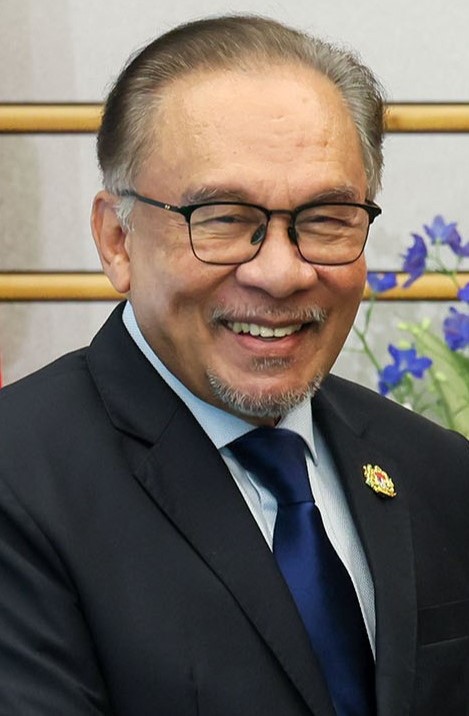
Former Education Minister Maszlee Malik has stepped into the election spotlight by confirming his participation in a high-profile debate with Johor Menteri Besar Onn Hafiz Ghazi, marking a significant moment in the state's political campaign. The announcement comes as Pakatan Harapan intensifies its push ahead of the Johor state election, with Maszlee running as the coalition's candidate for the Puteri Wangsa seat.
Maszlee's acceptance of the challenge reflects a strategic move to engage voters through substantive political discourse. In a Facebook statement, he framed his decision as rooted in respect for democratic principles and his conviction that public debates serve a vital function in shaping voter understanding. The former minister's language suggests an attempt to position himself and his coalition as champions of reasoned political engagement, contrasting with what some view as increasingly combative electoral contests in Malaysian politics.
The proposed "Johor State Election Grand Debate" originated from social media influencer Muhamad Harris Nasril and gained traction through online amplification on the Redaksi.com Facebook page. This grassroots origin underscores how civil society actors are attempting to elevate the quality of campaign discourse, moving beyond traditional rally announcements and soundbites. The fact that multiple stakeholders have reached out to Maszlee seeking confirmation of his involvement demonstrates the public hunger for substantive exchanges between candidates on key policy matters.
Pakatan Harapan has committed significant resources to the Johor contest, fielding 56 candidates across the three coalition partners. The distribution reflects careful negotiation: PKR is contesting 20 seats, Amanah holds 19, and DAP 17. This coalition architecture has been tested in previous elections and continues to be the primary vehicle for opposition politics in Malaysia, making the Johor election a crucial barometer of PH's electoral health and internal cohesion.
The election timeline has been set with precision by the Election Commission. Nomination day falls on this Saturday, with early voting scheduled for July 7 and the main polling day set for July 11. This compressed schedule leaves candidates with roughly two weeks to campaign and build momentum, making high-impact events like the proposed debate particularly valuable for gaining voter attention and media coverage.
Maszlee's career trajectory adds weight to his candidacy in Puteri Wangsa. His tenure as Education Minister during the PH administration afforded him visibility and platform, though his tenure was not without controversy. Running for state office represents a step back from the federal level, suggesting either electoral pragmatism or a recalibration of political ambitions following the coalition's loss of federal power in 2020. His acceptance of the debate frame positions him as a serious contender willing to substantively defend his policy record.
The contrast between Maszlee and his likely opponent, Onn Hafiz, sharpens the ideological and stylistic differences within Johor politics. Onn Hafiz, as Menteri Besar, commands the machinery of state government and the symbolic authority that comes with executive office. Maszlee, by contrast, must rely on coalition machinery and his personal brand to mobilize voters, making his willingness to debate a calculated bet that voters will reward clarity of argument over incumbency advantage.
For Malaysian politics more broadly, this debate reflects evolving expectations among urban, digitally-connected voters who increasingly demand substantive engagement rather than personalised politics. The involvement of social media influencers and online platforms in driving the debate proposal signals how electoral campaigns are being shaped by non-traditional actors and how voter expectations around political communication are shifting. This trend has implications for how all parties must approach campaigning in subsequent elections.
The debate also offers PH an opportunity to shift narrative focus. Having lost federal power, the coalition has struggled to maintain electoral momentum and member unity. A strong debate performance by Maszlee could reinvigorate supporters and demonstrate that PH candidates can compete effectively on a platform of ideas. Conversely, Onn Hafiz has the advantage of governing outcomes he can point to, though state-level economic performance and service delivery may present vulnerabilities if economic pressures have affected ordinary voters.
Johor holds strategic importance within Malaysian electoral politics that extends beyond the state itself. The state is a crucial swing region, with significant urban centres like Johor Bahru alongside more rural constituencies. Performance in Johor often signals broader trends in peninsular voting patterns, making the outcome of this election relevant to federal politics. Both PH and the ruling coalition will scrutinize results carefully for signs of shifting voter sentiment.
Maszlee's framing of the debate as an opportunity to elevate "the culture of mature politics" carries implicit criticism of current political discourse, which has become increasingly personalised and tribal. His rhetoric suggests a conviction that substance and policy differentiation remain meaningful to voters despite growing polarization. Whether this optimism proves justified will become apparent as the campaign develops and the debate itself takes place.
The weeks ahead will test whether this debate becomes a model for more serious campaign engagement or remains a singular moment of political theatre. Given the compressed timeline and the intensity of multi-candidate contests in a first-past-the-post system, sustained policy debate is challenging. Nevertheless, the precedent being set—where candidates and influencers collaborate to demand substantive exchange—may influence how future Malaysian elections are conducted, particularly as younger, digital-native voters become an increasingly dominant electoral force.