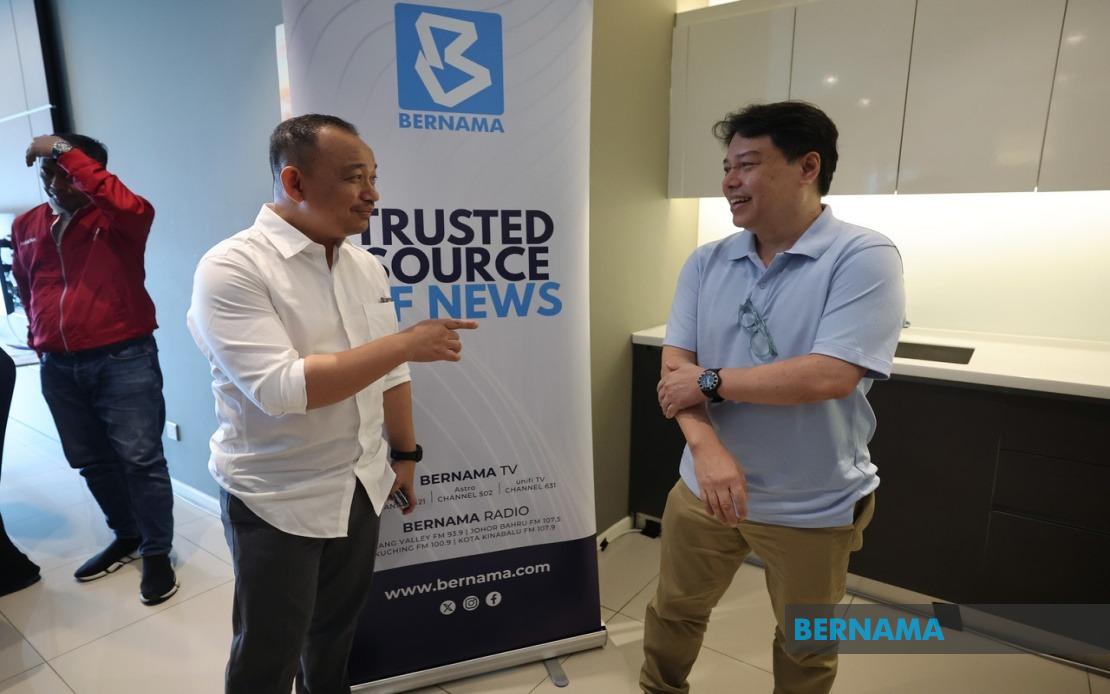
Dr Maszlee Malik, the Pakatan Harapan contender for the Puteri Wangsa state seat in Johor, accepted an online challenge to navigate a Perodua Myvi through the Tebrau and Ulu Tiram route, a direct attempt to gain practical insight into the infrastructure grievances that have accumulated among constituents over an extended period. The former education minister embarked on this journey to transform abstract complaints into tangible understanding, driving from Kampung Melayu Tebrau through Pandan and Kangkar Tebrau before reaching Ulu Tiram and returning toward the city centre.
The stunt reflected a campaign strategy increasingly common among Malaysian politicians seeking to demonstrate empathy and responsiveness to voters. Rather than relying solely on constituent reports or policy briefings, Maszlee elected to personally experience the deteriorating road surfaces and traffic bottlenecks that have frustrated residents navigating these corridors daily. This ground-level approach carries particular weight in state elections where local infrastructure issues often dominate voter priorities, and candidates are frequently judged on their ability to articulate genuine comprehension of community challenges.
Maszlee's vivid description of the driving experience—comparing the road jolts to sailing in a traditional wooden boat through Tanjung Surat—underscored the severity of the deterioration residents face. The imagery served dual purposes: it conveyed the physical reality of navigating severely compromised road surfaces while also suggesting that his experience had converted abstract statistics into visceral understanding. His acknowledgment that "what they said is absolutely true" functioned as implicit validation of constituent frustrations, a rhetorical move designed to establish credibility with voters skeptical of political promises.
The infrastructure problems plaguing Tebrau, Ulu Tiram, and surrounding areas stem fundamentally from urban planning miscalculations during Johor's rapid expansion. Residential developments in Taman Daya, Taman Pelangi Indah, and adjacent zones have multiplied residential populations without corresponding enhancements to the road network serving these areas. This pattern mirrors challenges across Malaysia's rapidly urbanising regions, where township developments frequently outpace infrastructure provisioning. The resulting congestion during peak hours creates significant quality-of-life degradation and represents a common failure point where local elected representatives are expected to intervene.
Maszlee's proposed solutions emphasised institutional coordination and long-term strategic planning rather than quick fixes. His advocacy for collaborative engagement between the Public Works Department, urban planners, and community stakeholders acknowledged the multi-agency nature of infrastructure challenges. Such an approach recognises that piecemeal road repairs without holistic traffic management prove ineffective, a lesson learned painfully across Malaysia's metropolitan regions. His prior experience as a federal-level minister provided him grounds to claim familiarity with implementation pathways, positioning himself as someone capable of navigating bureaucratic complexity.
The timing of this campaign activity coincided with the final weeks before polling, when candidate positioning becomes critical for undecided voters. By physically demonstrating engagement with the specific grievances raised by residents, Maszlee attempted to differentiate himself from competitors who might rely on conventional campaigning. This approach particularly resonates with younger, digitally-connected voters who initiated the challenge—constituents who value authenticity and direct evidence of politician engagement over rhetorical flourishes alone.
The Puteri Wangsa constituency presented a complex electoral landscape, featuring five competing candidates across the political spectrum. Maszlee faced competition from Rashifa Aljunied of MUDA, representing the younger, reform-oriented segment; Teow Chia Ling from Barisan Nasional, defending traditional coalition support; Nicholas Paul Vincent of Parti Bersama Malaysia; and Wang Wee Siong, standing as an independent. This fragmented contest meant that winning required constructing a coalition of support spanning multiple voter groups with diverse priorities. Infrastructure quality emerged as a unifying concern transcending demographic divisions, making Maszlee's focus on road conditions strategically sound.
With 128,723 registered voters across ordinary citizens and police personnel, the Puteri Wangsa constituency represented a moderate-sized electorate where grassroots engagement could meaningfully influence outcomes. Early voting scheduled for July 7, ahead of the July 11 general polling date, provided an initial indication of voter sentiment. Maszlee's direct engagement with voter concerns positioned him to capitalise on this early voting period if his road-testing campaign effectively conveyed responsive leadership.
The broader implications of Maszlee's campaign approach extended beyond Puteri Wangsa, offering perspective on contemporary electoral strategies in Malaysia. As social media increasingly channels constituent complaints directly to politicians, candidates face growing pressure to acknowledge and address grievances with specificity rather than generalised promises. The willingness to perform constituent service in highly visible fashion—driving a humble Myvi rather than official vehicles—communicated a humility calculated to appeal to cost-conscious voters irritated by perceptions of political entitlement.
Yet the challenge also illuminated persistent infrastructure governance challenges across Malaysia's urban landscape. No single state election campaign could resolve systemic issues rooted in decades of uneven development planning. Maszlee's acknowledgment that resolving congestion "would require long-term planning and active engagement with the local community" demonstrated realistic assessment of the scale involved. Whether voters would reward such honesty or demand more ambitious promises remained uncertain as the campaign entered its final phase.
The Myvi journey ultimately represented performative politics with substantive undertones. By transforming social media commentary into lived experience, Maszlee sought to bridge the perception gap between politician and constituent. Whether this gesture translated into electoral advantage depended partly on voters' assessment of whether his proposed collaborative approach could realistically deliver infrastructure improvements, and partly on the comparative competence and credibility he could establish against four other contenders competing for their support.

