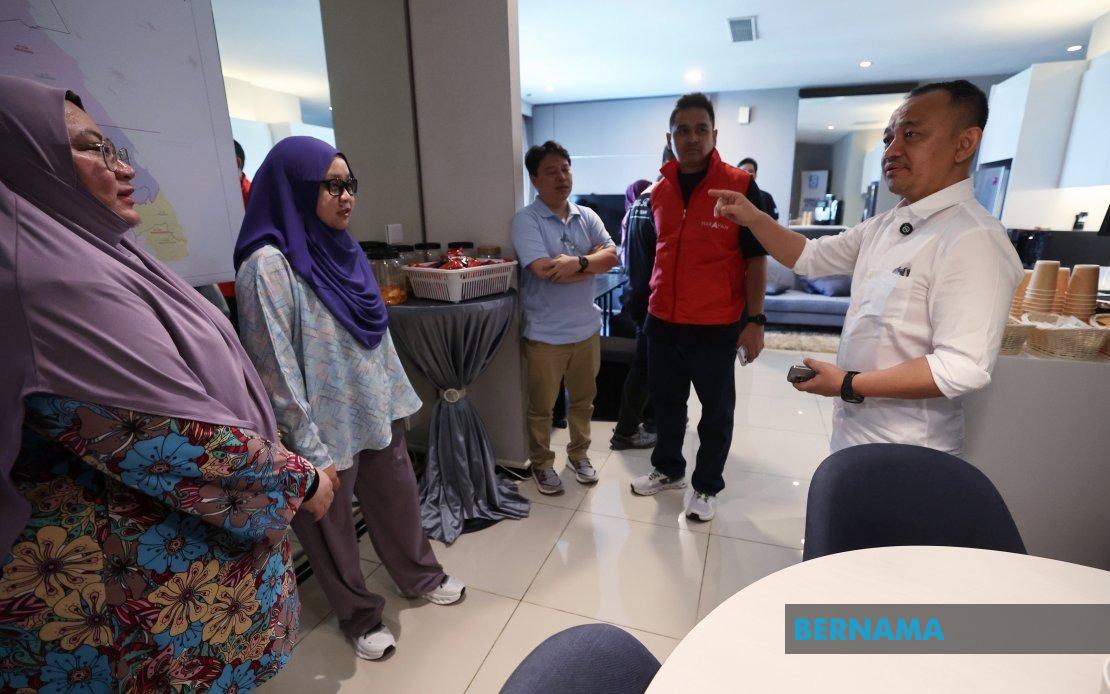
Dr Maszlee Malik, the Pakatan Harapan candidate contesting the Puteri Wangsa state seat in the upcoming Johor election, is positioning technology as a central pillar of his constituent service strategy. The former education minister plans to launch a dedicated mobile application designed to simplify how residents report local grievances and lodge complaints, should he secure victory in the polling scheduled for July 11. This digital-first approach reflects a growing recognition among Malaysian politicians that traditional door-to-door campaigning alone cannot adequately service constituencies with complex, dispersed populations and varying socio-economic conditions.
The Puteri Wangsa constituency presents particular logistical challenges that Maszlee believes warrant a technological solution. The seat encompasses a broad geographical expanse and houses residents from markedly different economic backgrounds, spanning affluent enclaves such as Austin Heights alongside Felda Ulu Tebrau settlements. This diversity means that constituent needs vary dramatically within a single electoral district, making uniform service delivery problematic through conventional channels. Maszlee argues that a practical, technology-enabled framework becomes not merely convenient but essential for representing such a varied population effectively and equitably.
Beyond simply receiving complaints, Maszlee envisions the mobile application functioning as an intelligence-gathering tool to identify residents in genuine need of government support. Single mothers and persons with disabilities often navigate complex bureaucratic systems unprepared, and many eligible beneficiaries never access available assistance due to information gaps or administrative friction. By creating a digital platform that residents can access directly, Maszlee aims to bridge this gap and ensure that vulnerable groups receive targeted support based on real-time data rather than sporadic administrative sweeps. This represents a departure from reactive governance toward proactive identification of citizen needs.
The candidate drew inspiration from urban governance models employed in major international cities. He specifically referenced the community engagement methodology adopted by New York City Mayor Zohran Mamdani, who integrates dedicated applications with social media platforms to create direct, unfiltered communication channels between elected officials and constituents. Maszlee acknowledged that this international approach offers valuable lessons for Malaysian context, though adaptation would be necessary given different demographic patterns, digital literacy levels, and administrative structures. The model emphasizes removing intermediaries from the feedback loop, allowing officials to understand citizen concerns in their original form rather than filtered through bureaucratic layers.
Alongside the proposed application, Maszlee commits to maintaining substantive engagement through established channels. Regular collaboration with non-governmental organisations, residents' associations, and government agencies would continue, supplemented by town hall meetings to address locality-specific concerns. This layered engagement strategy suggests recognition that different residents prefer different communication methods—some favour digital platforms whilst others remain more comfortable with face-to-face interaction. By maintaining multiple channels simultaneously, the approach accommodates diverse preferences and ensures no constituent group becomes invisible.
The campaign strategy extends into digital space with deliberate targeting designed to reach voter segments typically underserved by conventional campaigning. Young voters, particularly those of Generation Z, and Malaysians working across the border in Singapore represent constituencies difficult to reach through walkabouts and traditional community events. These groups face genuine time constraints and geographical separation that render physical campaigning methods impractical. Social media platforms offer direct access to these voters without requiring them to disrupt work or travel schedules, making digital engagement not supplementary but primary for reaching these demographics.
Maszlee's team has recognised that Malaysian working in Singapore warrant particular attention given their voting power and distinct concerns. The campaign specifically targets members of the Chinese community working in Singapore, acknowledging that this subset may hold different priorities regarding education policy, business regulation, and cross-border services compared to residents living permanently in the constituency. By tailoring messaging to address these specific interests, the campaign avoids generic appeals in favour of demonstrating understanding of particular voter circumstances.
However, the candidate acknowledged that digital campaigning presents genuine obstacles that technology alone cannot overcome. Algorithmic systems that govern social media platforms often create echo chambers where campaign messages reach only voters already predisposed toward supporting that candidate. Breaking through these algorithmic filters requires sophisticated content strategy and sustained resource investment. Maszlee's response involves creating location and demographic-specific content variations, ensuring that messages address the particular socio-economic contexts, ethnic backgrounds, and life circumstances of different voter groups rather than broadcasting identical appeals across platforms.
This stratified messaging approach recognises that working professionals, residents in non-urban areas, and different ethnic communities genuinely hold divergent priorities and concerns. A policy message resonating with urban middle-class professionals may hold little relevance for rural residents focused on agricultural subsidies or basic infrastructure. By acknowledging these differences explicitly rather than assuming voter homogeneity, the campaign attempts to demonstrate that the candidate understands local variation and will govern accordingly. This represents a more sophisticated political communication strategy than campaigns that treat entire constituencies as undifferentiated voting blocs.
The Puteri Wangsa contest itself involves five-way competition, with Maszlee facing Rashifa Aljunied from the Malaysian United Democratic Alliance, Barisan Nasional's Teow Chia Ling, Nicholas Paul Vincent representing Parti Bersama Malaysia, and independent candidate Wang Wee Siong. This crowded field suggests that no single candidate can assume victory, requiring sustained differentiation to consolidate support. Maszlee's emphasis on technology-driven constituent services and targeted digital engagement positions his campaign as forward-looking and pragmatic, potentially appealing to younger, more digitally-native voters whilst the breadth of engagement channels addresses traditional voters who remain sceptical of exclusively digital politics.
The broader context of Johor politics deserves consideration when evaluating Maszlee's strategic positioning. Johor has historically been Barisan Nasional's stronghold, and any opposition candidacy faces structural disadvantages in terms of incumbent advantages and established party machinery. By emphasising innovation and direct constituent engagement, Maszlee attempts to frame the contest not as traditional party politics but as a choice between conventional and progressive governance models. This narrative positioning may prove effective in reaching younger, more reform-oriented voters frustrated with politics as usual.
The polling date of July 11, with early voting on July 7, provides the immediate electoral timeline against which these campaign promises will be tested. Between now and the election, voters will assess whether Maszlee's technology-focused approach represents genuine innovation or rhetorical flourish disconnected from practical implementation capacity. The commitment to app-based constituent services, if concrete and functional, could offer a tangible point of differentiation in a crowded field, though successful implementation would require sustained post-election investment and technical competence—factors that extend beyond campaign rhetoric into governance capacity.

