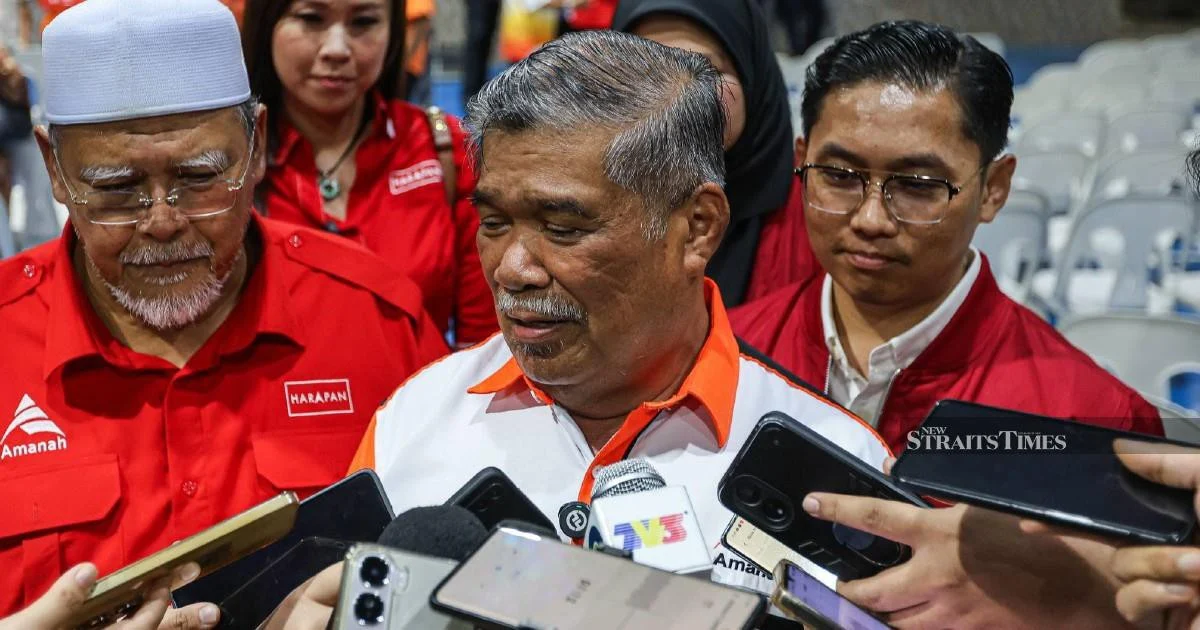
At a public event in Batu Pahat, Amanah president Datuk Seri Mohamad Sabu launched a pointed critique at PAS, his political rival, contending that the party's issuance of religious guidance lacks authentic theological foundation and instead serves narrow partisan calculations. The Amanah leader specifically called on voters to exercise critical judgment when encountering political directives couched in religious language, suggesting that PAS frequently alters its positions depending on what benefits the party's current strategic interests.
This confrontation between Amanah and PAS reflects deeper theological and political tensions within Malaysia's Islamic political landscape. The distinction Mat Sabu draws—between genuine religious principle and opportunistic political messaging—strikes at a fundamental legitimacy question that animates Malaysian Islamic politics. PAS has long positioned itself as a guardian of Islamic values, but this positioning faces regular scrutiny from competing Islamic-oriented parties who argue that PAS frequently compromises doctrinal consistency when it serves electoral or coalition interests.
The accusation carries particular weight because Malaysian voters, especially those in heartland constituencies, often regard religious guidance as carrying transcendent authority beyond ordinary political messaging. When a party's fatwas appear to shift with political winds rather than immutable Islamic principle, it potentially undermines the moral authority that such directives traditionally command. Mat Sabu's strategy appears designed to expose what he frames as a fundamental hypocrisy—using religious language as a political tool rather than genuine theological commitment.
For Malaysian observers tracking intra-opposition dynamics, this intervention reveals ongoing fractures within the non-Malay-majority opposition coalition. Amanah emerged partly as a reformist Islamic alternative, attempting to position itself as principled without being doctrinally rigid. This statement suggests Amanah intends to prosecute a harder case against PAS's credibility, particularly among Muslim voters who may feel manipulated by what they perceive as expedient religious pronouncements that serve party survival rather than faith authenticity.
The broader context involves Malaysia's evolving religious politics, where competing parties increasingly deploy Islamic messaging to mobilize constituencies. The government, various opposition factions, and civil society organizations frequently invoke religious authority to legitimize different political positions. This proliferation of competing religious claims has created confusion among voters about which sources of Islamic guidance merit genuine deference. Mat Sabu appears to be exploiting this confusion by suggesting that voters should distinguish between authentic Islamic teaching and political exploitation of religious language.
PAS's history includes documented instances where party positions on specific issues have shifted according to strategic considerations. Critics point to variations in PAS stances on matters ranging from cooperation with secular-oriented parties to positions on specific policy questions, suggesting these changes reflected political opportunity rather than theological evolution. Whether such shifts represent legitimate Islamic jurisprudential development or opportunistic repositioning remains contested, but Mat Sabu's framing clearly positions them as the latter.
The timing of Mat Sabu's statement carries significance for Malaysian electoral dynamics. As the country approaches potential electoral contests, opposition parties compete intensely for voter confidence, particularly among Muslim populations traditionally receptive to Islamic-framed political messaging. Amanah's willingness to directly challenge PAS's religious credibility suggests a calculation that this strategy can differentiate Amanah within Muslim constituencies without appearing hostile toward Islam itself—a delicate positioning that Amanah must navigate carefully.
For voters processing these competing claims, several considerations emerge. Religious guidance divorced from consistent theological principle risks losing its binding force, becoming merely another tool of political persuasion rather than genuine spiritual authority. Yet simultaneously, voters must evaluate whether criticisms of PAS similarly reflect partisan interest rather than objective theological assessment. This competitive delegitimization creates a challenging information environment where Malaysian voters must somehow discern authentic Islamic principle amid layers of partisan disputation.
The Malaysian Islamic intellectual community bears responsibility for clarifying which Islamic authorities merit genuine deference and on what grounds theological positions rest. When competing political parties deploy competing religious claims without transparent theological reasoning, it diminishes the standing of Islamic guidance generally. Mat Sabu's intervention implicitly highlights this broader crisis of authority within Malaysian Islamic politics—the challenge of distinguishing genuine religious teaching from political messaging merely dressed in religious language.
The implications extend beyond current electoral competition to Malaysia's longer-term religious and political development. A political culture where Islamic guidance becomes instrumentalized for partisan advantage ultimately corrodes the authority of religious institutions and teachings themselves. Voters who repeatedly encounter shifting religious directives keyed to political interest may develop skepticism toward religious authority more broadly, potentially damaging the institutional credibility of legitimate Islamic scholarship and guidance.
For Southeast Asian readers observing Malaysian politics, this dispute illustrates how Islamic-majority democracies navigate tensions between religious authority and political pluralism. The challenge of maintaining authentic religious principle while competing in democratic politics confronts not only Malaysia but various other contexts where Islam shapes political cultures. Mat Sabu's challenge to PAS raises fundamental questions about how religious guidance functions within competitive democratic systems.

