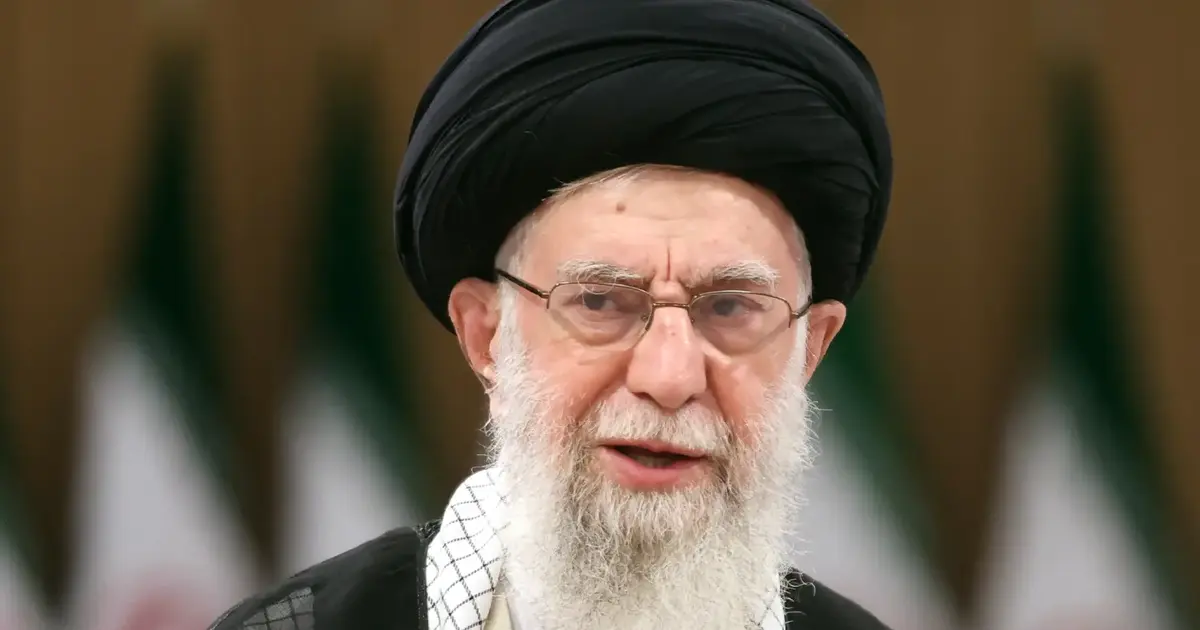
Prime Minister Anwar Ibrahim announced on Tuesday that Agriculture and Food Security Minister Mohamad Sabu will represent Malaysia at the funeral of Iran's Supreme Leader Ayatollah Ali Khamenei in Tehran. The decision reflects Malaysia's diplomatic protocol for honouring the death of significant regional and international leaders, with the selection of a senior cabinet member signalling the country's respect for Iran's role in Middle Eastern geopolitics.
The funeral, scheduled for the following day, represents a significant moment in Iran's political landscape following Khamenei's death. As Supreme Leader since 1989, Khamenei had served as the highest-ranking political and religious authority in Iran for over three decades, wielding influence across the country's governance structures and its foreign policy orientation. His passing marks a pivotal juncture for the Islamic Republic and has prompted international delegations from across Asia, the Middle East, Africa, and beyond to attend the ceremonial proceedings.
Malaysia's decision to dispatch Mohamad Sabu, rather than a foreign minister or parliamentary speaker, carries particular significance given the portfolio he holds. As the minister responsible for agriculture and food security, his attendance underscores Malaysia's commitment to maintaining stable bilateral relations with Iran, a nation with which Malaysia has engaged on trade, cultural, and diplomatic matters. The gesture also demonstrates the importance Malaysia places on preserving connections with major players in global affairs, despite the complex geopolitical tensions that characterise the Middle East.
The selection of ministerial representatives for state funerals follows established diplomatic conventions. Countries typically send high-ranking officials whose position reflects the deceased's importance and the relationship between nations. For Malaysia, a Muslim-majority country with historical ties to Islamic scholarship and governance across the region, attending the funeral of Iran's Supreme Leader carries both religious and geopolitical dimensions. The Iranian leadership has maintained dialogue with ASEAN nations, including Malaysia, on issues ranging from maritime security to regional stability.
Iran's relationship with Southeast Asia has evolved over recent years, with Iranian officials engaging in bilateral and multilateral discussions within regional forums. Malaysia, as a major ASEAN economy and a nation with significant maritime interests, has participated in these dialogues while maintaining its traditional foreign policy of non-alignment and pragmatic engagement with diverse powers. The attendance of a Malaysian minister at such a high-profile funeral reinforces these diplomatic channels and signals continuity in bilateral relations amid global uncertainties.
The timing of Khamenei's death and the subsequent funeral ceremony occur against a backdrop of heightened regional tensions in the Middle East. The Israeli-Palestinian conflict, which has intensified significantly in recent months, and Iran's role as a key supporter of various regional actors, have placed Iran at the centre of international attention. Malaysia, while maintaining its own principled stance on international conflicts, has sought to preserve constructive relationships across the region and beyond. By sending an official representative, Malaysia balances its diplomatic obligations with its broader foreign policy objectives.
Modamad Sabu's presence at the funeral will likely involve participation in ceremonial proceedings, bilateral meetings with other delegations, and potential discussions on matters of mutual interest between Malaysia and Iran. Such occasions, despite their solemn nature, often provide valuable opportunities for senior officials to engage in diplomatic conversations outside regular channels. The agricultural and food security portfolio, while seemingly domestic in focus, intersects with international trade and regional cooperation initiatives that Iran actively participates in.
The attendance also reflects Malaysia's role within the Islamic world, where religious and cultural considerations influence foreign policy decisions. As a nation with a Muslim majority and significant Islamic institutions, Malaysia views its engagement with other Islamic states as an important dimension of its international identity. Iran, despite its distinct theological and political traditions, remains a significant Islamic nation, and diplomatic courtesy toward its leadership carries weight in this context.
For Malaysian observers, the sending of Mohamad Sabu carries secondary significance regarding Malaysia's internal political dynamics. His prominence as a senior cabinet member reflects his standing within the current administration and his ministry's importance to the government's development agenda. However, the primary message conveyed through his attendance is Malaysia's commitment to international diplomacy and its recognition of Iran's geopolitical significance, even as Malaysian policymakers navigate the complex realities of regional and global power balances.
The funeral ceremony itself will serve as a gathering point for international delegations, offering observers insights into how various nations view their relationships with Iran and the broader Islamic Republic. Malaysia's participation, through Mohamad Sabu's attendance, places the country within a broader international community response to a significant moment in Iran's political history. Looking forward, the funeral and subsequent developments within Iranian governance structures may influence regional dynamics affecting Malaysia's strategic interests in maritime security, trade routes, and regional stability—areas where Malaysian policymakers maintain active engagement and concern.

