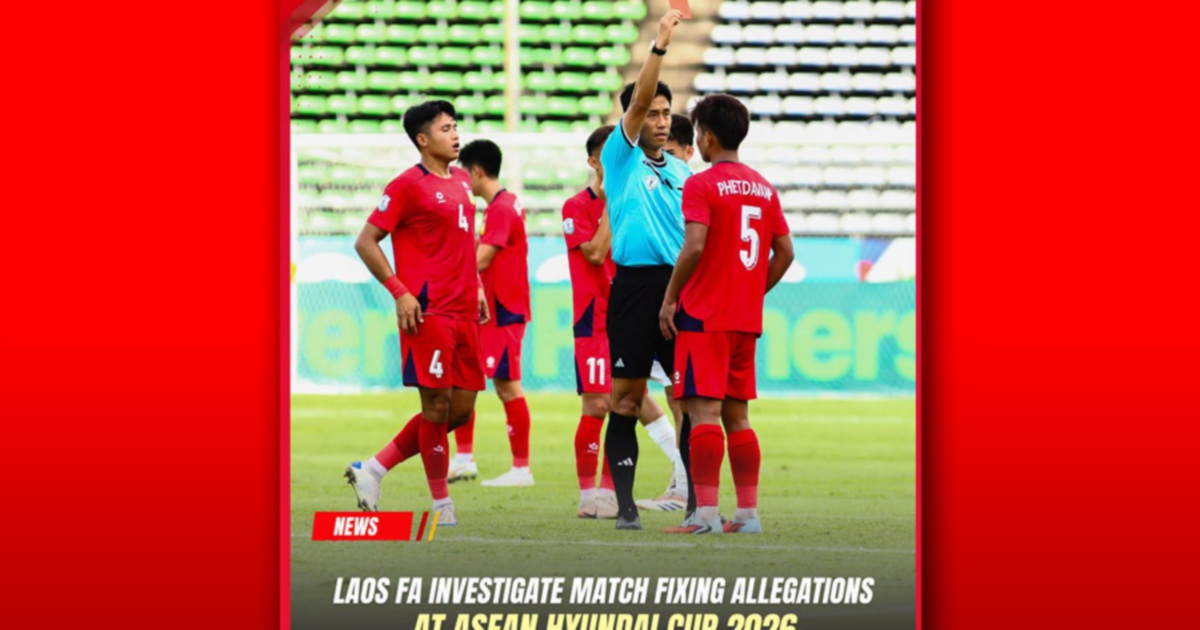
Regional football authorities are confronting a corruption crisis after the Lao Football Federation formally requested a comprehensive inquiry into suspected match-fixing schemes, financial impropriety, and gambling violations connected to representatives of the national squad. The allegations have exposed vulnerabilities in competitive integrity across Southeast Asia's sporting landscape during a period when the Asean Cup represents the region's premier football showcase.
The investigation marks a critical moment for the LFF, which faces mounting pressure to demonstrate institutional commitment to transparency and ethical governance. By initiating the formal probe, federation officials signalled acknowledgement of potential systemic failures while attempting to restore public confidence in Laotian football administration. The timing of the scandal coincides with heightened scrutiny of match-fixing networks that have periodically surfaced across the region, suggesting organised corruption may operate beyond individual incidents.
Match-fixing conspiracies in Southeast Asian football typically involve coordinated arrangements between players, team officials, and external gambling syndicates seeking to manipulate match outcomes for financial gain. The alleged involvement of national team members amplifies reputational damage to Laos, which aspires to strengthen its competitive standing within Asean football competitions. Such scandals undermine the credibility of regional tournaments and discourage investment in player development and infrastructure.
The alleged bribery component indicates that corruption may extend beyond players making deliberate errors to include administrative figures complicit in suppressing evidence or facilitating rule violations. Financial incentives offered to match-fixers typically originate from illegal gambling operations, which thrive in jurisdictions with weak regulatory frameworks. Southeast Asia's geographic positioning and economic disparities create conditions where wealthy syndicates can exploit athletes facing limited earning opportunities outside football.
Illegal gambling networks operating across the region present particular challenges for enforcement authorities, as organised criminal enterprises frequently operate across multiple jurisdictions with minimal coordination between national law enforcement agencies. The Asean Cup's elevated media attention and international betting markets likely attracted criminal operators seeking profitable opportunities. Players participating in prestigious tournaments become targets for approach campaigns by fixers offering lucrative payments in exchange for predetermined match results.
The LFF's decision to pursue investigation rather than suppress allegations suggests potential influence from Asean football governance bodies or international federations emphasising accountability standards. FIFA's increasing emphasis on match-fixing prevention and disciplinary consequences has created pressure on member associations to address corruption transparently. Failure to investigate could result in sanctions against the federation itself, including competitive restrictions or financial penalties affecting national team participation rights.
Southeast Asian football has experienced periodic match-fixing revelations affecting clubs and national teams across multiple countries, yet systemic prevention mechanisms remain underdeveloped compared to European and established Asian leagues. Limited funding for integrity monitoring, insufficient player education on corruption risks, and inadequate whistleblower protection create environments where opportunistic criminals operate with minimal fear of detection. The Laos case demonstrates how these structural weaknesses enable corruption to reach national team level.
The scandal's emergence during an Asean Cup tournament carries particular significance, as the competition attracts substantial media coverage and international interest in regional football development. Audiences across Southeast Asia expect the tournament to showcase talent and sporting achievement rather than institutional corruption. Casual observers may develop cynicism about match legitimacy, while serious fans question whether their teams faced opponents compromised by fixing conspiracies.
Investigation outcomes will likely influence how other Southeast Asian federations approach suspected corruption within their own systems. Should the LFF identify and sanction guilty parties decisively, the precedent establishes accountability expectations that peer associations may struggle to resist. Conversely, incomplete or ineffectual investigations might suggest regional football governance tolerates corruption, discouraging player and official cooperation with future integrity inquiries.
The broader implications extend beyond football to regional governance credibility. International businesses and sporting organisations evaluate investment decisions based partly on institutional transparency and anti-corruption commitment. Football federations demonstrating strong integrity frameworks enhance their federation's standing with global partners and potentially attract sponsorship or hosting privileges. The Lao Football Federation's investigation represents an opportunity to rebuild confidence through rigorous, professional accountability processes.
Players and coaches within Laotian football face increased scrutiny regarding personal conduct and financial relationships, creating pressure on athletes to maintain ethical standards or risk investigation involvement. Young players aspiring to national team selection must navigate an environment where previous colleagues faced corruption allegations, potentially influencing recruitment and retention dynamics.
The investigation's international dimensions warrant attention, particularly regarding cooperation with regional football bodies and potential coordination with law enforcement agencies in neighbouring countries where gambling syndicates may operate. Effective corruption prevention increasingly requires transnational investigation capacity and information sharing protocols that Southeast Asian nations are developing incrementally.
Resolution of this scandal will contribute to longer-term regional football culture evolution, signalling whether competitive integrity receives institutional prioritisation or remains secondary to commercial and political interests. The Lao Football Federation's investigation response will substantially influence how Southeast Asian football addresses corruption challenges during coming years.

