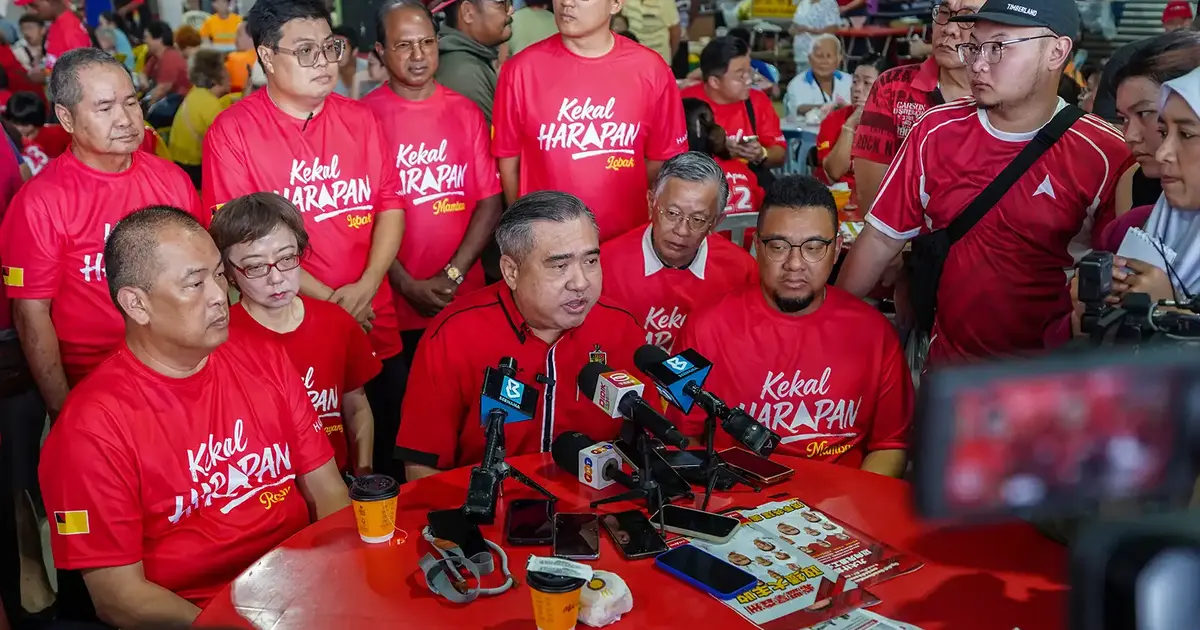
DAP secretary-general Anthony Loke has raised concerns that the Malaysia Chinese Association (MCA) has borne the heaviest burden in Negeri Sembilan under the recent electoral pact between Barisan Nasional and Perikatan Nasional, with the party surrendering three traditionally held seats to circumvent triangular contest scenarios. The warning underscores the complex power dynamics at play as coalition arrangements continue reshaping Malaysia's political landscape, particularly in states where multiple competing factions maintain historical strongholds.
Loke's observation highlights a pattern of compromise that characterises the BN-PN coordination framework in the state. By withdrawing from three constituencies where MCA has historically commanded voter support, the party aimed to prevent the emergence of three-cornered battles that would fragment the vote among opposition-friendly segments. This tactical withdrawal reflected a broader understanding that splitting anti-government forces across multiple candidates could hand victories to opposition contenders, particularly in areas where voter sentiment remains sensitive to coalition coherence.
The underlying logic of such arrangements rests on a simple but consequential calculation: in Malaysia's first-past-the-post electoral system, vote division frequently determines electoral outcomes. When multiple candidates from allied parties contest the same seat, the combined opposition vote often dominates, even if each government-aligned candidate individually represents a minority position. MCA's concessions thus represented a strategic sacrifice aimed at maximising overall coalition performance in the state, even if it came at considerable cost to the party's own seat count and negotiating leverage.
However, Loke's assertion that Bersatu disrupted this carefully calibrated arrangement reveals the fragility of such inter-party agreements. Bersatu, which joined the formal alliance relatively recently compared to BN's established components, apparently did not adhere to the coordination framework that had already been negotiated and communicated to MCA. This deviation suggests either unclear communication channels between coalition partners or a calculated decision by Bersatu leadership to prioritise its own electoral ambitions over collective stability. The resulting complications would have forced MCA into an untenable position, having sacrificed its own electoral prospects only to face competition it had sought to avoid.
The Negeri Sembilan situation reflects broader challenges confronting Malaysia's coalition politics. Since the 2020 general election dramatically reshuffled the country's political alignments, the process of negotiating seat allocations has become increasingly contentious. Unlike the decades-long BN supremacy that created settled expectations around who contests which constituencies, the current configuration of alliances lacks historical precedent and established conventions. Parties jockey aggressively for positions, viewing each negotiation as a zero-sum competition rather than a collaborative enterprise aimed at maintaining coalition integrity.
MCA's position warrants particular attention given its historical trajectory. The party, which dominated Chinese representation during the formative decades of Malaysian independence, has witnessed a steady erosion of political relevance. Surrendering three seats in Negeri Sembilan may therefore represent not merely a tactical concession but a strategic capitulation that acknowledges the party's diminished electoral appeal. By stepping aside from these constituencies, MCA tacitly accepted that contested races would likely produce unfavourable outcomes, making withdrawal the preferable alternative to potential humiliation at the ballot box.
The implications for BN's broader coalition strategy cannot be overstated. If component parties like MCA cannot reliably depend on adherence to negotiated arrangements, incentives for future compromises diminish substantially. MCA might reasonably calculate that surrendering seats without receiving equivalent reciprocal benefits serves no strategic purpose. This creates a prisoner's dilemma scenario where collective interests deteriorate as individual parties prioritise self-preservation, particularly when agreements prove unenforceable or subject to unilateral reinterpretation.
Bersatu's apparent non-compliance with the agreed framework also reflects its particular position within Malaysian politics. As a relative newcomer to formal coalition arrangements following its defection from its original Mahathir-led movement, Bersatu may harbour ambitions to rapidly establish itself as a consequential political force capable of determining electoral outcomes. Expanding its seat allocations beyond initially negotiated quantities could represent an effort to demonstrate electoral viability and bargaining strength ahead of future negotiations. Yet such short-term tactical gains potentially undermine the longer-term coalition cohesion necessary for sustained electoral success.
For Negeri Sembilan voters and the broader Malaysian electorate, these internal coalition disputes carry substantive consequences. When allied parties fail to coordinate effectively, electoral contests become genuinely competitive across multiple fronts, potentially resulting in outcomes that satisfy neither the government-aligned coalition nor coherent opposition alternatives. This fragmentation can produce state governments lacking clear mandates or parties lacking sufficient legislative representation to effectively function as either government or opposition.
Loke's public articulation of MCA's sacrifice suggests DAP views this situation as symptomatic of wider coalition dysfunction requiring addressing before future elections. As a significant BN component, DAP's assessment of internal fairness carries weight in broader negotiations. If parties perceive that negotiated agreements prove ephemeral, willingness to make compromises for collective benefit progressively erodes, potentially accelerating the fragmentation that has increasingly characterised Malaysian politics since 2020.

