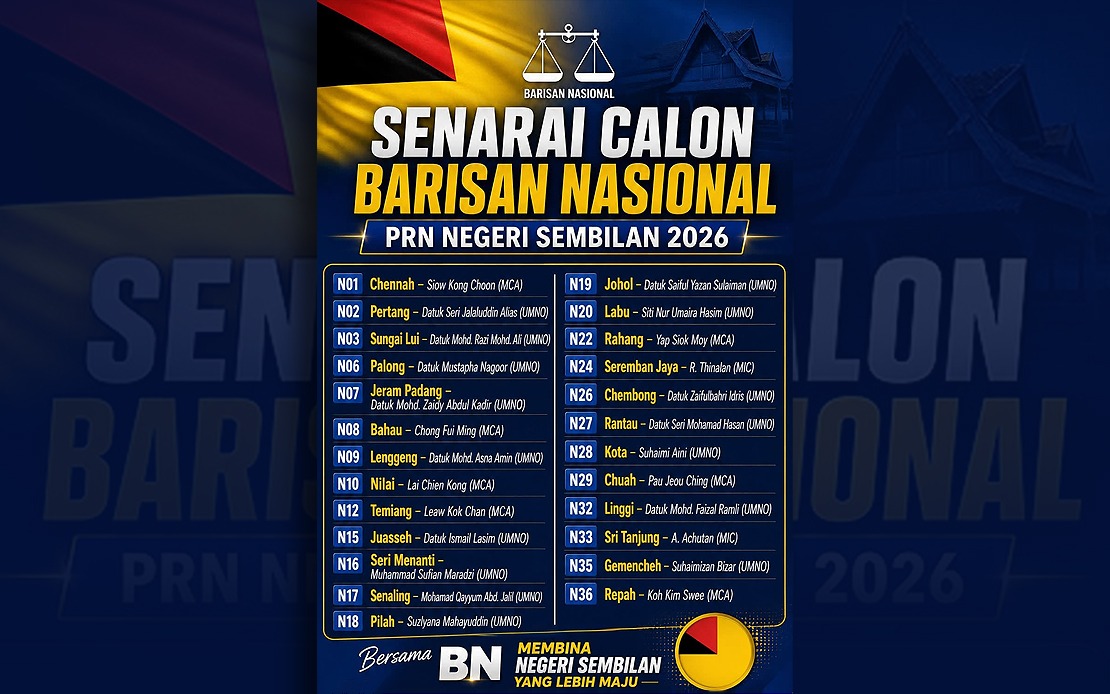
Barisan Nasional's leadership has confirmed the seat allocation for component parties contesting the 16th Negeri Sembilan state election, with the Chinese-majority MCA receiving seven State Legislative Assembly positions while the Indian-focused MIC has been given four seats. BN chairman Datuk Seri Dr Ahmad Zahid Hamidi, who also serves as Deputy Prime Minister, announced the distribution following a gathering of prospective candidates at Wisma UMNO Negeri Sembilan in Seremban on July 15. The decision reflects the coalition's strategy for maximising electoral prospects across the state's diverse constituencies.
The seat allocation process followed established BN protocols that have governed coalition politics during state and national elections. Ahmad Zahid explained that the formula for determining which party receives which seats took into careful consideration the expected viability of individual candidates within their respective electoral divisions. This methodology ensures that the coalition deploys its campaigning resources where they are most likely to yield victories, particularly important given the tight electoral landscape in Negeri Sembilan.
All prospective candidates participating in the seat allocation underwent a formal process that included signing undertakings and pledging their allegiance directly to Ahmad Zahid as BN chairman. This procedural requirement, which has become standard practice across BN's electoral campaigns, underscores the hierarchical nature of the coalition's candidate selection and serves to bind candidates to party discipline and coalition commitments during the campaign period and beyond.
The BN leadership's announcement came as part of a comprehensive meeting with prospective candidates from across the coalition's component parties. These discussions provided an opportunity for leadership to align candidates with the coalition's electoral strategy and to reinforce messaging ahead of the formal campaign period. Ahmad Zahid emphasised that such coordination meetings were routine practice preceding state elections, by-elections, and general elections throughout Malaysia's electoral cycle.
The official unveiling of the complete BN candidate slate was scheduled for later that evening at Stadium Tuanku Abdul Rahman Paroi in Seremban, where supporters and the broader public would receive comprehensive details of the coalition's nominees for all contested seats. This two-step announcement process—first the seat allocation framework, then the full candidate list—is typical of how BN manages information flow during election preparation phases.
The Election Commission has established a clear timeline for the electoral process in Negeri Sembilan. Nomination day falls on July 18, providing candidates with a formal deadline to lodge their papers and officially enter the race. Early voting has been scheduled for July 28, allowing essential workers, election officials, and others unable to vote on polling day to cast their ballots in advance. The main election will take place on August 1, concluding a campaign period that will determine the state's next government.
Understanding the current political landscape in Negeri Sembilan requires examining the results from the previous state election. In the 15th Negeri Sembilan state election, BN secured 14 seats, positioning it as the largest single bloc but falling short of the 23-seat majority required to form government. Pakatan Harapan dominated with 17 seats, establishing it as the governing coalition, while Perikatan Nasional captured five seats. This distribution meant that despite BN's organisational strength, it had faced defeat at the polls, and any change in the August 1 outcome would represent a significant swing in voter sentiment.
For MCA specifically, contesting seven seats in Negeri Sembilan represents a meaningful portion of its statewide campaign focus. The party has historically performed well in areas with substantial Chinese populations, and the allocation suggests that BN strategists believe these seven constituencies represent the strongest opportunities for MCA candidates to win. The party's performance in these seats will significantly influence how it fares across Malaysia more broadly, particularly given the importance of urban and semi-urban Chinese voters in determining electoral outcomes.
MIC's allocation of four seats reflects its traditional electoral base among Indian Malaysian communities in Negeri Sembilan. While smaller in numerical terms than MCA's allocation, these seats often represent areas of considerable electoral significance where MIC enjoys strong organisational presence and community connections. The party's campaign in these constituencies will be closely watched as an indicator of Indian Malaysian voting preferences heading into broader electoral considerations.
The allocation decisions carry implications extending beyond Negeri Sembilan's borders. How effectively BN's coalition partners can mobilise their respective community bases will influence broader discussions about coalition viability and the distribution of political power within Malaysia's federal system. The election will serve as a barometer of voter sentiment across different demographic groups, particularly in relation to economic management, education, healthcare, and other policy concerns affecting urban and semi-urban constituencies that MCA and MIC traditionally emphasise in their campaigning.
From a strategic perspective, BN's approach in Negeri Sembilan appears designed to maximise synergies between the coalition's component parties while concentrating candidate resources in winnable areas. By allocating seats to MCA and MIC in constituencies where these parties possess established ground organisations and community trust, BN effectively distributes the electoral burden across partners with distinct constituencies. This coalition model, while periodically subject to internal tensions, has enabled BN to maintain electoral competitiveness across Malaysia's diverse political landscape, and the Negeri Sembilan election will test whether this approach can translate into electoral recovery after the previous state election defeat.

