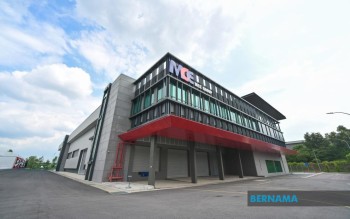
MCE Holdings Bhd has officially opened the MCE Auto Hub, a RM50 million advanced manufacturing facility located within the UMW High Value Manufacturing Park in Serendah, marking a significant milestone for the company and Malaysia's automotive electronics sector. Investment, Trade and Industry Minister Datuk Seri Johari Abdul Ghani officiated the launch, underscoring the government's backing for the investment as a crucial development in reinforcing the country's competitive position in automotive manufacturing.
The 5.52-hectare facility represents the opening salvo of an ambitious long-term capital deployment programme totalling up to RM200 million. When fully operational, the MCE Auto Hub is expected to more than double the company's existing production capacity whilst simultaneously expanding the group's technical footprint in design, engineering, manufacturing and research capabilities. This expansion comes at a pivotal moment when Malaysia's automotive industry faces intensifying regional competition and the urgent need to transition towards electric vehicle technologies.
MCE Holdings, which has maintained a presence in the automotive supply chain for more than thirty years, has progressed from a component manufacturer into a tier-one supplier commanding both original equipment manufacturing and original design manufacturing credentials. The company's evolution reflects broader trends in Malaysian automotive development, where local suppliers increasingly participate in complex value-added activities rather than simple assembly operations. This trajectory positions MCE as a domestic champion capable of competing alongside international competitors.
During the launch ceremony, company executives outlined the strategic rationale underpinning the expansion. MCE group managing director Dr Goh Kar Chun traced the company's journey from supplying remote alarms and central locking systems to the domestic market in 1990 through to its current sophisticated portfolio encompassing advanced automotive electronics and mechatronic solutions. The firm now serves customers across Malaysia, fellow ASEAN nations, and the United States, reflecting its success in building export-oriented operations that generate foreign revenue for the country.
The MCE Auto Hub has been engineered specifically to comply with Industry 4.0 manufacturing standards, incorporating clean room production zones and precisely controlled manufacturing environments necessary for the fabrication of increasingly sophisticated automotive electronics components. These manufacturing specifications prove essential as automakers transition towards electrified powertrains, which demand components with substantially higher reliability and performance parameters compared to conventional internal combustion engine systems. The facility's design therefore positions MCE to capture opportunities across both traditional vehicle and emerging electric vehicle market segments.
With the facility now operational, MCE's workforce has expanded to 680 employees distributed across manufacturing and engineering roles. Critically, the company has concentrated 90 engineers across its operations in Johor Bahru, Port Klang and the newly opened Serendah location, substantially strengthening its capacity to undertake simultaneous development programmes serving both established internal combustion engine customers and emerging electric vehicle manufacturers. This engineering concentration underscores the capital-intensive, knowledge-driven nature of modern automotive electronics supply.
Investment Minister Johari emphasised that the expansion exemplifies Malaysia's continued appeal to manufacturing investors and reinforces local confidence in the automotive sector's future prospects. He highlighted the imperative for domestic suppliers to pursue operational excellence through sustained cultivation of engineering talent, innovation capacity and technological advancement—framing the challenge in terms of competitive survival within global supply chains. This messaging reflects government recognition that Malaysia cannot compete solely on cost grounds against lower-wage manufacturing destinations and must instead emphasise quality, innovation and technical sophistication.
MCE's expansion occurs within a broader strategic imperative to increase local content and vertical integration within Malaysia's automotive ecosystem. The company's leadership notes that the MCE Auto Hub strengthens the group's positioning to support greater localisation of automotive production, potentially creating opportunities for Malaysian engineers, technology firms and component suppliers to participate in designing, developing and manufacturing advanced automotive technologies domestically. This ecosystem development approach contrasts with earlier manufacturing models that relied heavily on foreign technology transfer and imported components.
Dr Goh articulated a vision wherein Malaysia's automotive future depends upon enhanced collaboration between vehicle manufacturers, tier-one suppliers like MCE, and supporting ecosystem participants including semiconductor firms and electrical and electronics companies. This collaborative model seeks to integrate Malaysian-developed technologies into automotive applications and regional supply chains, whilst positioning the country as a regional headquarters for automotive electronics innovation and manufacturing. Such positioning offers potential to capture higher-value activities and retain greater profit margins within Malaysia.
The MCE Auto Hub will function as the group's central manufacturing and engineering headquarters, consolidating design capabilities with advanced production facilities and technical development operations. The facility serves customers across the Malaysian domestic market, ASEAN region and international destinations, with particular emphasis on high-value automotive electronics and mechatronic solutions portfolios. This geographic diversification insulates MCE from dependence upon any single market whilst positioning it to capture growth throughout the region as automotive electrification accelerates.
The investment also carries significant implications for Malaysian employment and skills development, particularly regarding the availability of specialised engineering talent. The concentration of engineering staff at MCE Auto Hub indicates the company's commitment to sustaining sophisticated design and development capabilities domestically rather than outsourcing such functions to regional centres. This retention of knowledge-intensive activities supports Malaysia's broader objective of transitioning towards a high-value manufacturing economy capable of capturing greater economic rent from automotive production.
Looking ahead, MCE's expansion trajectory will likely influence other tier-one suppliers' investment decisions within Malaysia's automotive sector. The company's confidence in committing RM200 million across multiple phases suggests optimism regarding local automotive demand and Malaysia's continued viability as a manufacturing location despite rising competition from regional competitors. The success of the MCE Auto Hub may therefore establish a benchmark for how Malaysian suppliers can upgrade their capabilities and compete effectively within increasingly technology-intensive automotive markets.

